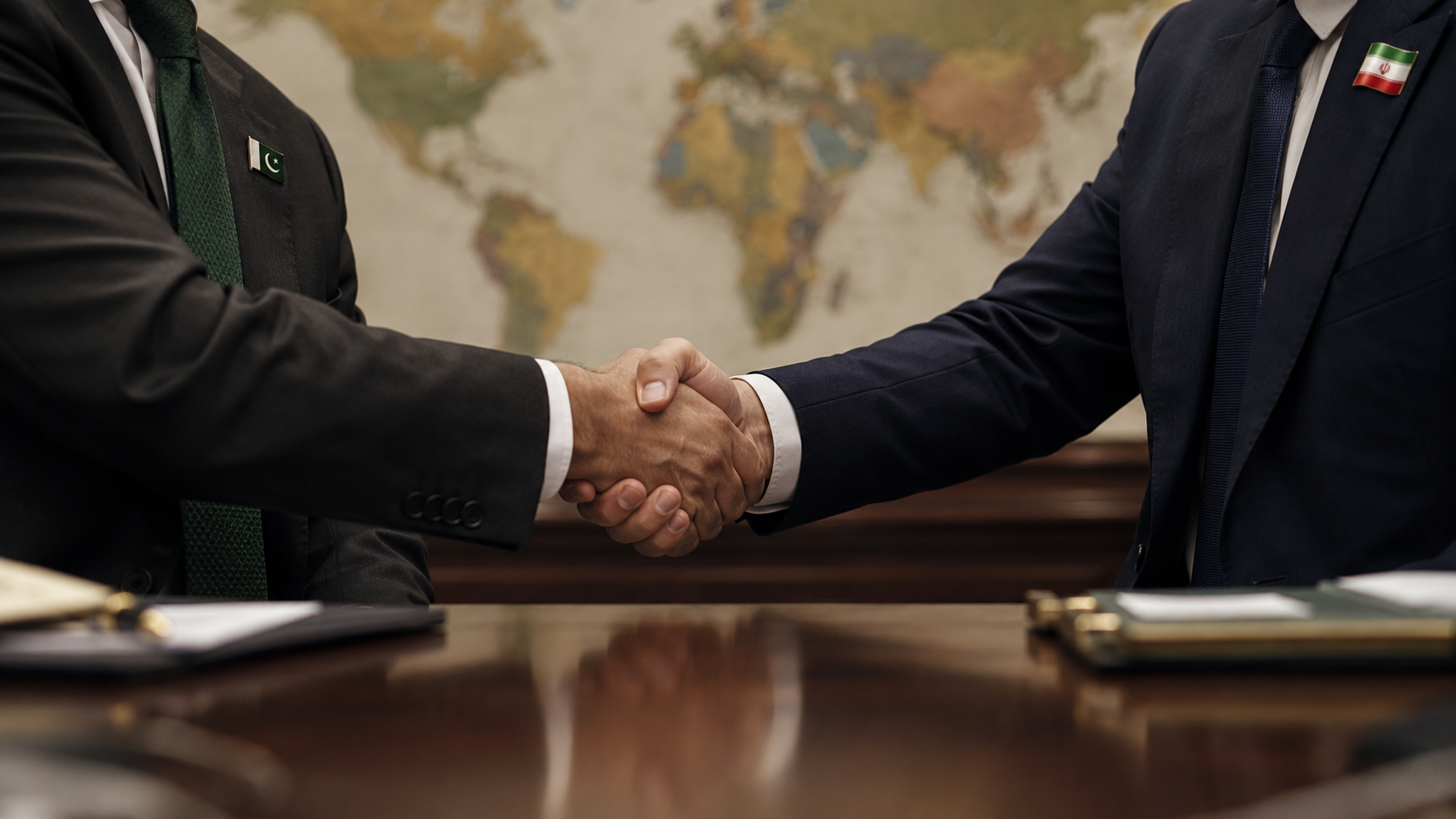
Hopes for a US-Iran peace deal 2026 have revived after Islamabad and Tehran held high-level diplomatic talks this week. According to Arab News, reported 11 hours ago, both sides discussed “regional stability and economic cooperation” amid backchannel signals from Washington. While no agreement is signed yet, the US-Iran peace deal 2026 talks are the most serious since the JCPOA collapse in 2018. For Pakistan, this is not just foreign news — it directly impacts energy, security, and trade. Here’s why the Islamabad-Tehran meeting matters now.
What’s Happening: The Islamabad-Tehran Meeting on US-Iran Peace Deal 2026
Arab News reported that Pakistan’s Foreign Minister met Iran’s envoy in Islamabad to “coordinate positions” on a possible US-Iran thaw. Sources say Pakistan offered to act as a “bridge” given its ties with both Tehran and Washington. The timing of US-Iran peace deal 2026 discussions is critical. The US presidential elections are in November 2026, and the Biden successor team wants a foreign policy win. Iran faces 40% inflation and needs sanctions relief before its own 2026 elections. Pakistan wants gas, trade, and border calm.
1. Pakistan’s 3 Economic Stakes in a US-Iran Peace Deal 2026
If a US-Iran peace deal 2026 happens, Pakistan wins big: 1. Iran-Pakistan Gas Pipeline: The IP pipeline, stalled since 2014 due to US sanctions, could finally restart. Pakistan faces gas shortages and pays $2B+ yearly for LNG. Iranian gas is 30% cheaper. 2. Border Trade & Barter: Balochistan’s economy depends on Iran trade. Sanctions relief means legal banking channels, ending risky barter deals for oil and rice. 3. Transit to Central Asia: Peace means Pakistan can push Iran-Afghan-CAR trade routes under CPEC Phase 2. China supports this to reduce reliance on Malacca Strait.
2. Security Angle: Why Islamabad Wants US-Iran Peace Deal 2026
A US-Iran clash would pull Pakistan into chaos. In January 2024, both Iran and Pakistan exchanged airstrikes in Balochistan. A US-Iran peace deal 2026 reduces the risk of Pakistan becoming a battlefield for proxies. It also helps with TTP and BLA, which exploit Iran-Pak border tensions.
3. The Saudi Factor: Can Pakistan Balance Both?
Pakistan’s challenge: Saudi Arabia and UAE oppose Iran’s regional role. But in 2026, Riyadh and Tehran restored ties via China. Pakistan’s Foreign Office is now telling Gulf allies that a US-Iran peace deal 2026 won’t hurt them — it will stabilize oil prices and pilgrimage routes.
Roundup: 3 Regional Signals This Week
1. Oman Backchannel Active Again
Reuters reported US and Iranian officials met in Muscat 3 days ago. Oman hosted the 2015 JCPOA talks. Pakistan is now offering to host the “next round” in Islamabad — a diplomatic coup if accepted.
2. China’s Quiet Role in US-Iran Peace Deal 2026
China brokered Saudi-Iran peace in 2023. Now Beijing wants Iran stable to secure Belt and Road projects. A US-Iran peace deal 2026 helps China’s energy security. Pakistan benefits as the “connector.”
3. India Watching Closely
India imports 80% of oil via Hormuz. Peace lowers oil prices, helping India. But Chabahar Port — India’s route to Afghanistan — competes with Gwadar. If Iran opens up, India may shift from Chabahar to Gwadar via Pakistan.
Analysis: 3 Scenarios for US-Iran Peace Deal 2026
1. Best Case: Limited Deal Before Nov 2026
US lifts some oil sanctions, Iran freezes 60% uranium enrichment. Pakistan gets IP pipeline waiver. Oil drops to $70. Win for all.
2. Most Likely: Talks Drag Into 2027
US election politics and Iran’s hardliners delay deal. Pakistan keeps “facilitator” role for diplomatic points but no gas yet.
3. Worst Case: Talks Collapse
If Israel strikes Iran or Trump wins and exits talks, region heats up. Pakistan faces refugee crisis and oil at $120. The US-Iran peace deal 2026 failure would hit Pakistan’s IMF program.
Final Take: Why Pakistan Is Pushing Hard
For Islamabad, a US-Iran peace deal 2026 is not charity — it’s survival. Cheaper energy, stable borders, and diplomatic relevance are at stake. After a week of Marka-e-Haq and Bunyan-um-Marsoos headlines, this is Pakistan playing offense in diplomacy. If the deal happens, 2026 could be the year Pakistan moves from “crisis manager” to “regional bridge.” Do you think the US and Iran will reach a deal in 2026? Comment below. Sources: Original reporting by Arab News, Reuters. Related: Iran-Pakistan Gas Pipeline Updates and Marka-e-Haq Security Context.
Recent News
- AJK Election Results Trigger Coalition Rift as PPP Alleges Rigging, PML-N Claims Sweeping Win NEW
- AJK Police Say Banned JAAC Has Become an Armed Group Attacking Police and Security Forces NEW
- AJK Protest Spirals: Four Police Officers Martyred in Violent Clashes NEW
- AJK Security Forces Request Signals Deepening Unrest Ahead of Elections NEW
- Allama Nasir Madni Heart Attack Rumours Denied: What Really Happened NEW
- Apna Ghar Scheme 2026: Pakistan’s Biggest Housing Dream Is Finally Being Unlocked for Millions NEW
- Armed Forces Committed to Eradicating All Forms of Terrorism: Field Marshal NEW
- Asim Munir Turkey Visit Strengthens Pakistan-Turkiye Defence Partnership NEW
- Ashura 2026 Pakistan Confirmed for June 26 — Moon Not Sighted, KP Declares Holiday NEW
- Avengers Doomsday Trailer Sends Marvel Fans Into a Frenzy NEW