

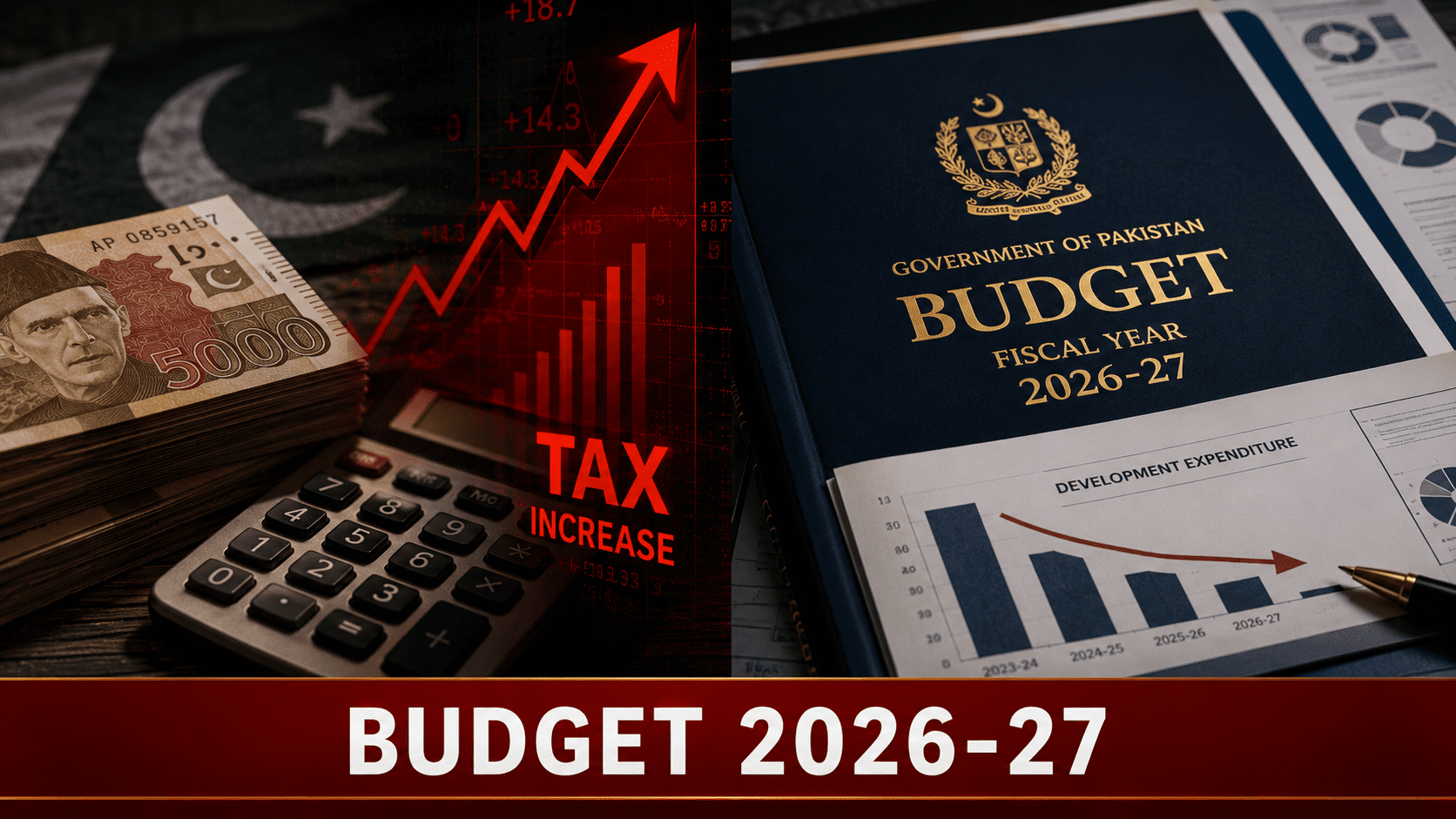
Punjab has presented its provincial budget for the upcoming fiscal year, revealing a sharp rise in tax collection targets alongside a significant reduction in development spending — a combination that has already triggered debate among economists, traders, and political analysts.
Thank you for reading this post, don't forget to subscribe!The provincial government has officially unveiled the Punjab Budget 2026-27, setting a total outlay of Rs5.9 trillion for the upcoming fiscal year. While officials have described the budget as “people-friendly,” the numbers tell a more complex story — one defined by aggressive tax measures and a substantial pullback in development expenditure.
According to Dawn’s report by Ahmad Fraz Khan, the Punjab Budget 2026-27 includes a 42 percent increase in the province’s tax collection target, even as its Annual Development Programme (ADP) has been slashed by 40 percent to Rs752 billion.
Tax Collection Target Jumps by 42 Percent
One of the most striking elements of the Punjab Budget 2026-27 is the provincial government’s decision to raise its tax collection target by a substantial 42 percent for the coming fiscal year. Dawn reported that Punjab plans to collect significantly more tax revenue compared to the outgoing fiscal year, a move that will directly affect businesses, property owners, and service providers across the province.
The Express Tribune, in a separate report by Shahram Haq, confirmed that the Punjab Budget 2026-27 raises tax rates across multiple categories. While the exact breakdown of new tax measures will become clearer as the Punjab Assembly debates the budget, early indications suggest a broad-based effort to increase the province’s own-source revenue rather than relying solely on federal transfers.
This aggressive revenue target raises an important question that economists and the public alike will be watching closely: will Punjab’s tax machinery be able to deliver on such an ambitious 42 percent jump, or will it fall short as similar targets have in previous fiscal years?
Development Budget Slashed by 40 Percent
In sharp contrast to the rising tax targets, the Punjab Budget 2026-27 has reduced the province’s Annual Development Programme (ADP) by 40 percent, bringing it down to Rs752 billion. The ADP funds critical infrastructure projects, including roads, schools, hospitals, and public utilities — making this cut one of the most consequential elements of the entire budget.
Development budgets are often the first casualty when provincial governments face fiscal pressure, since they are easier to scale back compared to recurring expenditures like salaries, pensions, and debt servicing. The steep reduction in Punjab’s ADP suggests the province is prioritizing fiscal discipline and possibly debt management over new infrastructure investment in the short term.
For citizens, this could mean a slower pace of new public projects, delays in ongoing infrastructure schemes, or a reprioritization toward only the most essential development initiatives.
Rs5.9 Trillion Total Outlay: A “People-Friendly” Budget?
Geo News described the overall Punjab Budget 2026-27 package — with its Rs5.9 trillion total outlay — as a “people-friendly” budget. This characterization typically points toward increased allocations in social sectors such as health, education, and welfare programs, even as overall development spending contracts.
Provincial governments in Pakistan often frame budgets this way to emphasize subsidies, relief packages, or social protection schemes that directly benefit lower and middle-income citizens, even when headline numbers like development spending show cuts. Whether the Punjab Budget 2026-27 genuinely lives up to this “people-friendly” label will become clearer once the full breakdown of sector-wise allocations is made public and debated in the Punjab Assembly.
Why Is Punjab Raising Taxes While Cutting Development Spending?
Several broader economic factors likely influenced the structure of the Punjab Budget 2026-27:
1. Fiscal Pressure from Federal Obligations
Provincial governments in Pakistan operate under National Finance Commission (NFC) award arrangements, which determine how revenue is shared between the federal government and provinces. Rising federal fiscal targets — often tied to International Monetary Fund (IMF) program commitments — can place pressure on provinces to boost their own tax collection.
2. Debt Servicing and Recurring Expenditure
As recurring costs like salaries, pensions, and debt repayments rise, provinces often have less fiscal space for development spending, forcing cuts to the ADP even when overall budget size increases.
3. Need for Greater Fiscal Self-Reliance
Increasing the tax collection target by 42 percent suggests Punjab is attempting to reduce its reliance on federal transfers and build a more self-sustaining revenue base — a goal that aligns with broader national fiscal reform discussions in Pakistan.
Potential Impact on Businesses and Citizens
The Punjab Budget 2026-27 is likely to have wide-ranging effects across different segments of society:
- Businesses and traders may face higher tax rates on services, property transactions, and provincial levies, potentially increasing the cost of doing business in Punjab.
- Property owners could see increased property tax assessments as part of the broader revenue push.
- Contractors and construction firms tied to government development projects may experience reduced new contract opportunities due to the ADP cut.
- General citizens will be watching closely to see whether the “people-friendly” elements of the budget — likely in health, education, or subsidy programs — offset the impact of higher taxes.
Reaction and Political Context
Budget announcements of this scale typically generate immediate political and public reaction in Pakistan. Opposition parties in the Punjab Assembly are likely to scrutinize the 42 percent tax hike as burdensome for an already inflation-strained population, while the provincial government will likely defend the Punjab Budget 2026-27 as a necessary step toward fiscal responsibility and long-term economic stability.
Business chambers and trade associations across Punjab are also expected to weigh in, particularly regarding the specific tax measures introduced and their practical implementation timeline.
What Happens Next?
The Punjab Budget 2026-27 will now move through the standard legislative process:
- Assembly debate: Members of the Punjab Assembly will debate and propose amendments to specific budget line items.
- Sector-wise breakdown: Detailed allocations for health, education, infrastructure, and social welfare will be released.
- Implementation: Once passed, the new tax measures and development allocations will take effect from the start of the new fiscal year.
- Public and business feedback: Trade bodies, civil society, and citizens will continue providing input as the budget moves toward formal approval.
Read Also: Pakistan’s Defence Budget Hits Record Rs3 Trillion: How Provinces Are Funding the Military Surge
Conclusion: A Budget of Trade-offs
The Punjab Budget 2026-27 represents a clear set of trade-offs — higher tax targets in exchange for fiscal discipline, and reduced development spending in pursuit of long-term financial sustainability. With a total outlay of Rs5.9 trillion, the province has set an ambitious course for the year ahead, but its success will ultimately depend on effective tax collection, transparent allocation of social spending, and the government’s ability to manage public expectations amid rising costs.
As the budget moves through the Punjab Assembly, all eyes will remain on how these numbers translate into real impact for the province’s businesses, workers, and families.
Pakkhabar.com will continue tracking the Punjab Budget 2026-27 as it moves through the legislative process, with updates on sector-wise allocations and public reaction.