
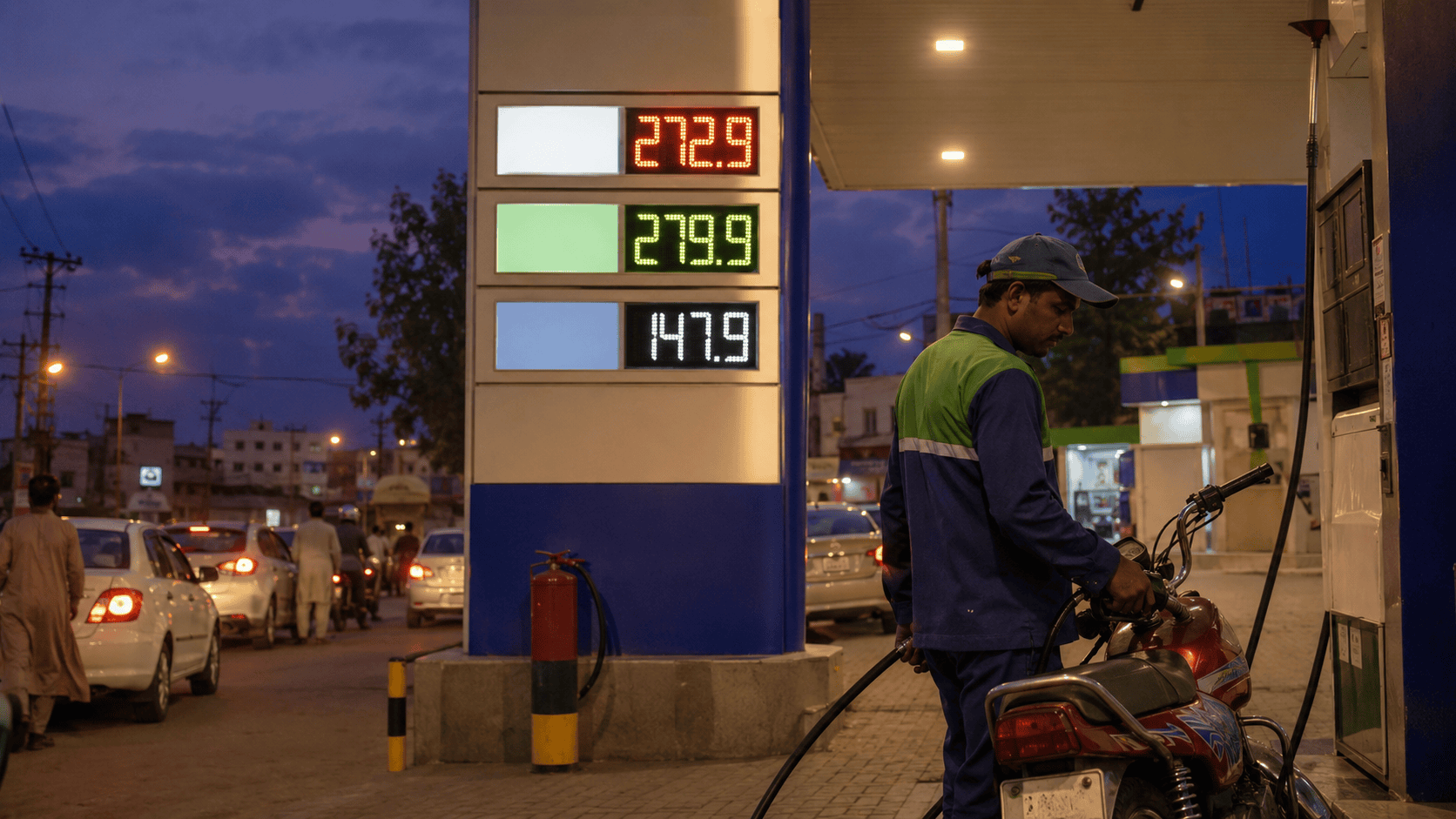
Pakistani motorists got a brief reprieve this weekend after the Petroleum Division confirmed that petrol diesel prices unchanged status would hold for July 26 and 27, pausing a run of five consecutive daily increases that had pushed fuel costs to fresh highs. The notification, issued Saturday, means petrol continues to sell at Rs335.18 per litre while high-speed diesel (HSD) remains priced at Rs383.46 per litre — the same rates set a day earlier.
Officials said the pause was procedural rather than a policy shift, explained by the fact that international Platts oil price benchmarks are not published over the weekend, leaving no fresh data point to justify an adjustment either way. According to The Express Tribune, the government introduced a daily fuel price review mechanism only last week, tying domestic rates to a rolling average of international oil markets. Since that system took effect, petrol has risen by a cumulative Rs24.47 per litre and diesel by Rs60.16 per litre.
Why Petrol Diesel Prices Unchanged Status Followed Days of Increases
The shift to daily pricing was itself a response to volatility in global oil markets following renewed hostilities in the Middle East. Petroleum Minister Ali Pervaiz Malik has said the cabinet and prime minister authorised the Oil and Gas Regulatory Authority (OGRA) to set ex-depot prices daily rather than weekly, arguing the change allows domestic rates to track international movements more quickly and transparently, according to Dawn.
The government currently collects Rs110 per litre in taxes and duties on petrol and Rs96 per litre on diesel, figures that remain a significant share of the pump price regardless of short-term fluctuations in global crude costs. Diesel prices, while still elevated, have eased considerably from a peak of Rs520.35 per litre recorded on April 3, when the disruption caused by the Iran-US conflict first began pushing import costs sharply higher.
Not everyone has welcomed the shift to daily adjustments. The All Pakistan Dealers Association has publicly opposed the mechanism, and a related group, the Pakistan Petroleum Dealers Association, briefly moved toward a one-day nationwide strike earlier in the week before internal divisions left the scale of any shutdown uncertain, according to reporting from Arab News.
Separate Pressure From Oil Tanker Operators
Even as retail prices held steady, a separate dispute has been building in the fuel supply chain. Oil tanker owners and contractors issued a 72-hour ultimatum to the government this week, demanding higher freight rates and the withdrawal of a commercial loading policy they say has squeezed their margins. Association representative Abidullah Afridi said freight rates have not been revised in three years despite motorway and National Highway Authority toll charges rising by 180 percent over the same period. If unresolved, the association has warned it could escalate into a nationwide wheel-jam strike, a move that would affect fuel distribution rather than pump prices directly.
That dispute is distinct from the retail pricing mechanism but adds another layer of uncertainty to Pakistan’s fuel supply chain at a moment when the government is trying to demonstrate pricing stability to consumers already strained by months of elevated costs.
https://pakkhabar.com/petrol-price-hike-pakistan-2026/
https://pakkhabar.com/pakistan-petrol-diesel-price-cut-rs1-97-per-litre/
https://pakkhabar.com/pakistan-petrol-price-cut-rs74-diesel-rs67-relief/
What This Means
The decision to leave petrol diesel prices unchanged this weekend is a technical pause built into the new daily pricing formula, not a signal that cost pressures have eased. With Platts data resuming on Monday, consumers should expect prices to move again in either direction depending on how international crude markets behaved over the weekend — and given the recent trend, another increase remains plausible if Middle East tensions continue affecting supply routes.
The bigger story may be structural rather than day-to-day. Pakistan’s move to daily pricing represents a genuine attempt to align domestic fuel costs more closely with global markets, reducing the lag that used to leave consumers exposed to sudden, large weekly jumps. But the transition has visibly unsettled parts of the supply chain — dealers unhappy with margins, tanker operators unhappy with freight rates and loading policy — suggesting the government will need to manage relations with these groups carefully to avoid supply disruptions layering on top of price volatility.
For ordinary households and transport operators, the practical takeaway is that today’s stability is temporary by design. The real test of the new system will come over the following weeks, as international benchmarks resume publishing and the government faces its first real test of whether daily pricing can hold up against both market swings and organised pressure from within the fuel distribution network itself.
Get updates like this on WhatsApp before anywhere else — join our Channel [https://whatsapp.com/channel/0029Vb8fffCKrWQzEVBQ6v00]
Recent News
- AJK Election Results Trigger Coalition Rift as PPP Alleges Rigging, PML-N Claims Sweeping Win NEW
- AJK Police Say Banned JAAC Has Become an Armed Group Attacking Police and Security Forces NEW
- AJK Protest Spirals: Four Police Officers Martyred in Violent Clashes NEW
- AJK Security Forces Request Signals Deepening Unrest Ahead of Elections NEW
- Allama Nasir Madni Heart Attack Rumours Denied: What Really Happened NEW
- Apna Ghar Scheme 2026: Pakistan’s Biggest Housing Dream Is Finally Being Unlocked for Millions NEW
- Armed Forces Committed to Eradicating All Forms of Terrorism: Field Marshal NEW
- Asim Munir Turkey Visit Strengthens Pakistan-Turkiye Defence Partnership NEW
- Ashura 2026 Pakistan Confirmed for June 26 — Moon Not Sighted, KP Declares Holiday NEW
- Avengers Doomsday Trailer Sends Marvel Fans Into a Frenzy NEW