

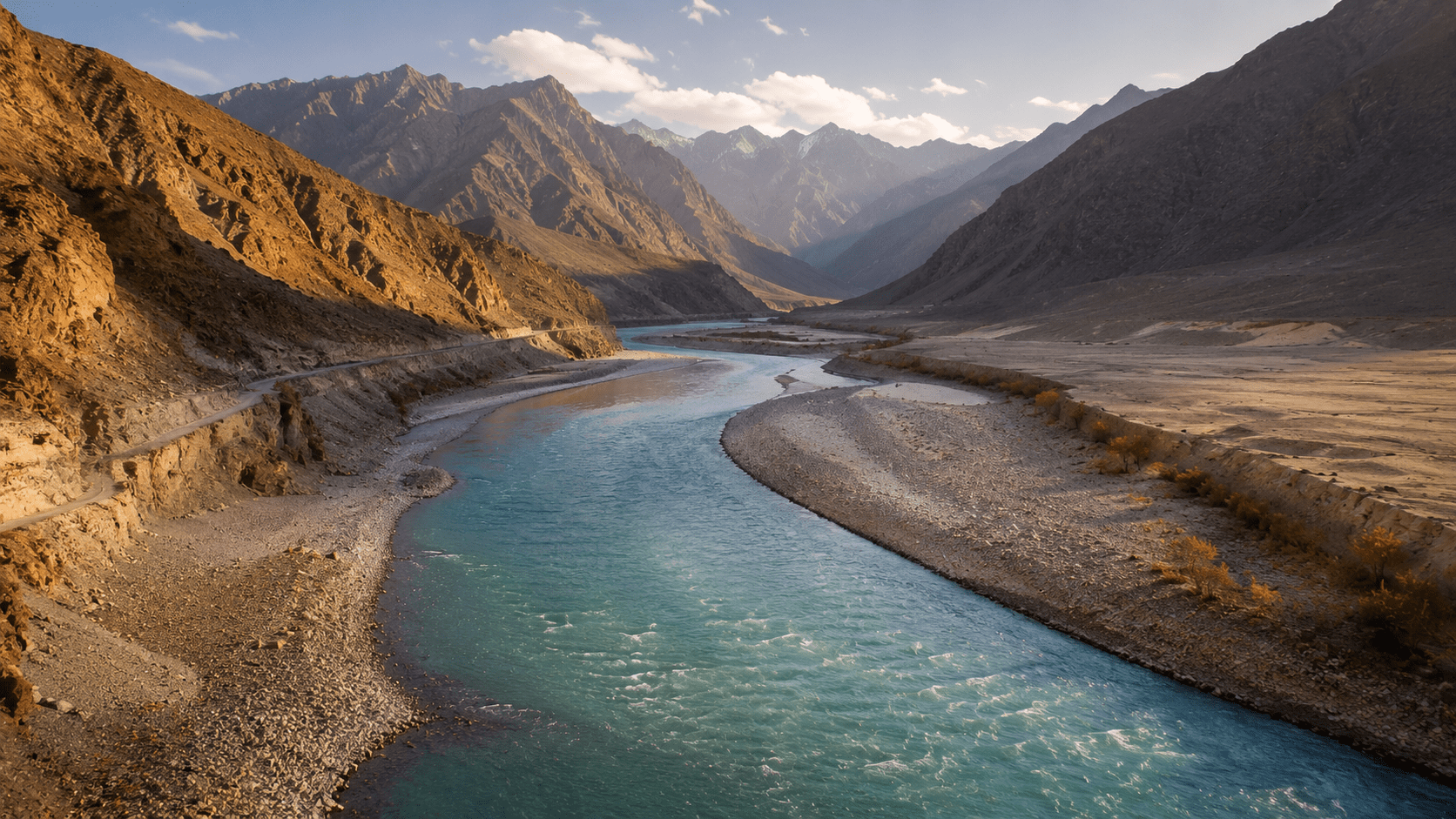
A 66-Year-Old Agreement Returns to the Spotlight
The Indus Waters Treaty, signed in 1960 and long regarded as one of the most durable water-sharing agreements between two rival nations, has re-emerged as a central point of friction between India and Pakistan. The renewed Indus Waters Treaty dispute has drawn statements from senior officials on both sides in recent days, reflecting how deeply water security is now intertwined with broader India-Pakistan relations.
Thank you for reading this post, don't forget to subscribe!The Indus Waters Treaty dispute, brokered with World Bank facilitation, divided control of the Indus river system’s six rivers between the two countries: Pakistan was allocated the western rivers — the Indus, Jhelum and Chenab — while India received the eastern rivers, the Ravi, Beas and Sutlej, alongside limited rights to use western river water for specified non-consumptive purposes such as hydroelectric power generation, as outlined in coverage by NewsX.
How the Current Dispute Developed
According to reporting by CNBC, the Indus Waters Treaty dispute has remained suspended since the two countries’ conflict last year. India’s foreign ministry stated on June 5 that the treaty would remain in abeyance “until Pakistan completely stops cross-border terrorism,” a position New Delhi has maintained in subsequent statements.
Days later, India’s water resources minister, C.R. Patil, reiterated New Delhi’s stance in remarks to the news agency ANI, stating that efforts were underway to ensure the flow of Indus waters to Pakistan would stop, and that the matter was being monitored directly under government oversight. Pakistani officials, for their part, have said they have formally raised concerns with India on multiple occasions, with one official cited by CNBC noting that Islamabad had written to New Delhi twice in 2025 and once again in May 2026 regarding unusual flow variations on the Chenab River.
Pakistan’s Defence Minister Raises National Security Framing
The Indus Waters Treaty dispute drew wider international attention after Pakistan’s Defence Minister, Khawaja Asif, linked the water issue directly to national security in an interview with ARY News. “The moment we feel that our national security — and water is part of our national security — is being threatened, we will go to war against India,” Asif said, according to multiple outlets including BusinessToday. He also stated that current developments did not, in his assessment, warrant military action at this stage.
Asif additionally alleged that India was altering water flows on the Chenab River and withholding hydrological data, while acknowledging, as reported by The Tribune (India), that he did not have updated information on developments over the past year.
India’s Response on Indus Waters Treaty dispute
India’s Ministry of External Affairs responded sharply to the remarks. Spokesperson Randhir Jaiswal dismissed Asif’s comments as an attempt to “cover its own failings and divert attention away from its human rights abuses,” according to a report by NDTV. The ministry also addressed separate issues raised regarding Pakistan-administered Kashmir during the same briefing.
The exchange reflects the broader diplomatic chill between the two nuclear-armed neighbours, who have not held substantive talks on the treaty’s status since its suspension following last year’s conflict.
Domestic Water Pressures in Pakistan
Independent of the bilateral Indus Waters Treaty dispute, Pakistan is also grappling with internal water management challenges. According to data from Sindh’s irrigation department cited by The Tribune (India), several canal systems in the province are facing significant shortfalls, with local officials in Sindh and Balochistan voicing concern over the impact on agriculture and livelihoods. Such domestic factors are often cited by analysts as compounding the urgency Pakistan attaches to the treaty’s resolution, regardless of how the bilateral dispute with India develops.
What the Indus Waters Treaty Means for the Region
The Indus river system supports agriculture, drinking water, and hydroelectric power for hundreds of millions of people across both countries, making the treaty one of the most consequential water-sharing arrangements in the world. Its continued suspension raises questions for water planners, farmers, and policymakers on both sides of the border, particularly in Pakistan’s Punjab and Sindh provinces, which rely heavily on the western rivers for irrigation.
International water law experts have historically pointed to the treaty’s resilience through previous periods of India-Pakistan tension, including past wars, as a rare example of sustained cooperation between the two countries. Whether that resilience holds amid the current Indus Waters Treaty dispute remains to be seen, with both sides so far signalling no indication of returning to the negotiating table in the near term.
Looking Ahead Indus Waters Treaty dispute
With India maintaining that the treaty will remain suspended pending action on cross-border terrorism, and Pakistan continuing to raise the issue through formal diplomatic channels, the Indus Waters Treaty dispute appears likely to remain a significant point of tension in India-Pakistan relations in the coming months. Analysts following the situation note that any resolution would likely require renewed diplomatic engagement, potentially involving international facilitation similar to the treaty’s original 1960 framework.
Read Also: https://pakkhabar.com/muharram-security-arrangements-pakistan-10th/
Conclusion
The Indus Waters Treaty, once held up as a model of cross-border cooperation even amid conflict, now sits at the centre of one of the most closely watched disputes between India and Pakistan. As both governments continue to issue firm public statements, the path toward resolving the Indus Waters Treaty dispute will likely depend on diplomatic developments in the months ahead, with regional and international observers watching closely given the treaty’s significance for water security across South Asia.