

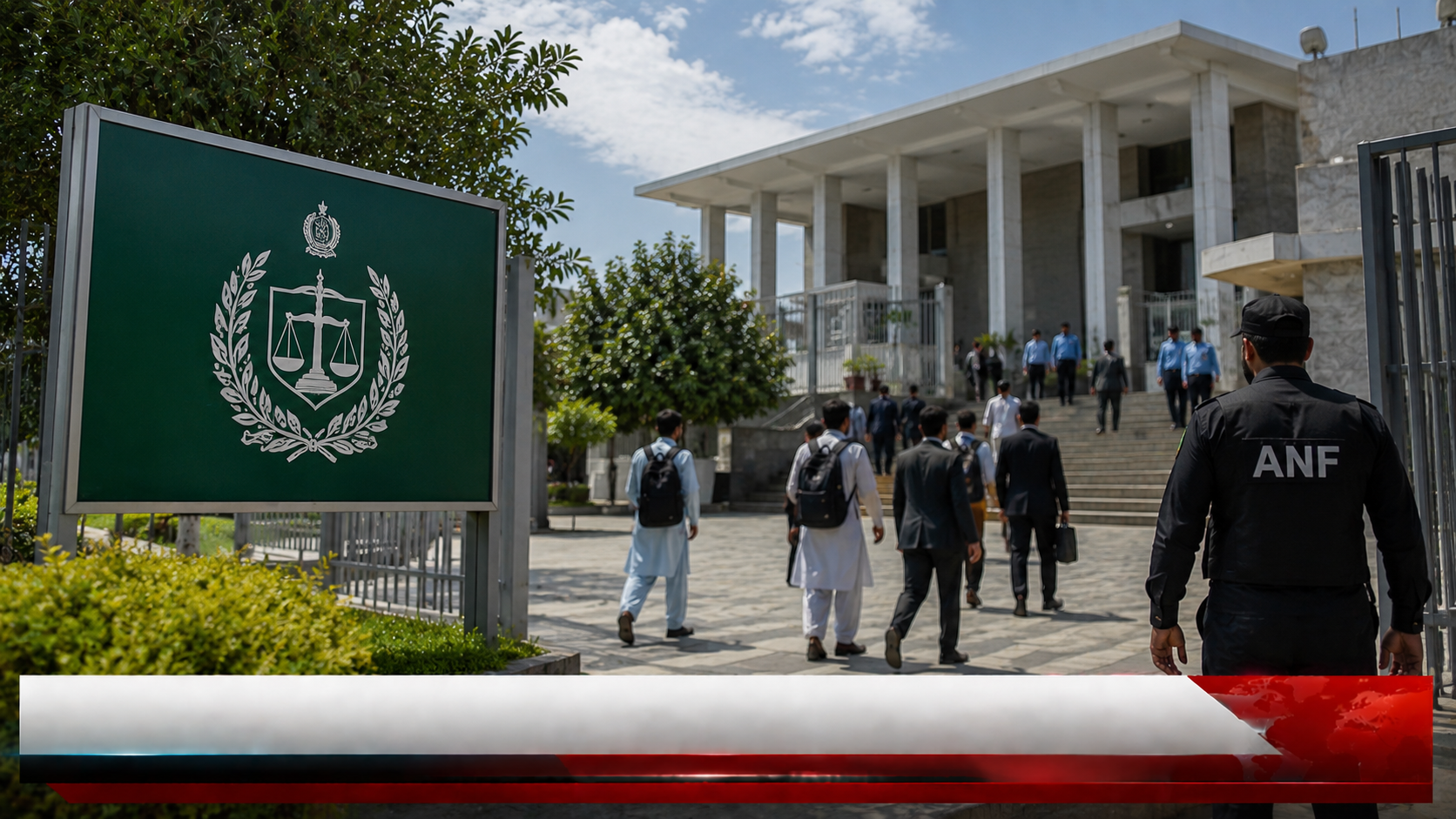
Islamabad — The Islamabad High Court has ordered relevant authorities to submit comprehensive reports on anti-drug measures in educational institutions across the federal capital, Dunya News reported. The directive aims to assess what steps are being taken to protect students from narcotics and substance abuse.
Thank you for reading this post, don't forget to subscribe!The move comes amid growing concerns over drug use among youth and the need for stronger preventive frameworks in schools, colleges, and universities. The IHC seeks reports on anti-drug measures in educational institutions to evaluate compliance with existing policies and identify gaps in enforcement.
IHC Seeks Reports on Anti-Drug Measures in Educational Institutions: Court Directive
The Islamabad High Court has taken notice of the issue after reports of increasing drug availability near educational campuses. The IHC seeks reports on anti-drug measures in educational institutions from the Ministry of Federal Education, Anti-Narcotics Force, and Islamabad Capital Territory administration.
The court has asked for details on awareness campaigns, surveillance mechanisms, counseling services, and disciplinary actions implemented by institutions. The IHC seeks reports on anti-drug measures in educational institutions to determine whether current strategies are effective in deterring drug use among students.
While the Dunya News card did not specify the case number or petitioner, judicial oversight of drug prevention in schools has been a recurring matter in Pakistan’s courts. The IHC seeks reports on anti-drug measures in educational institutions to ensure constitutional protections for the health and safety of minors and young adults.
Background: Drug Abuse Concerns in Pakistan’s Schools and Colleges
Drug abuse among students has been flagged as a public health and security challenge by multiple organizations. The Anti-Narcotics Force has previously stated that educational institutions are vulnerable to narcotics trafficking due to their youth demographic.
According to the United Nations Office on Drugs and Crime, Pakistan is both a transit and consumer country for narcotics, with synthetic drugs and cannabis being areas of concern. The UNODC has partnered with Pakistan on awareness programs targeting educational institutions.
In 2018 and 2019, several high-profile cases of drug use in elite schools prompted parliamentary committees to demand action. The Ministry of Narcotics Control launched the “Drug-Free Pakistan” campaign, which included outreach to schools and universities. The IHC seeks reports on anti-drug measures in educational institutions to review progress on such initiatives.
What Anti-Drug Measures Exist in Educational Institutions?
The IHC seeks reports on anti-drug measures in educational institutions that may include:
1. Awareness and Education Programs
Many universities run seminars and workshops on the dangers of drug abuse. The Higher Education Commission has issued guidelines for drug-free campuses. The IHC seeks reports on anti-drug measures in educational institutions to verify if these programs are being implemented.
2. Surveillance and Security
Some institutions have installed CCTV cameras, deployed security staff, and restricted entry points to prevent drug peddling. The Anti-Narcotics Force conducts surprise checks near campuses. The IHC seeks reports on anti-drug measures in educational institutions to assess the effectiveness of these steps.
3. Counseling and Rehabilitation
Universities such as Quaid-i-Azam University and NUST have student counseling centers that address substance abuse. The IHC seeks reports on anti-drug measures in educational institutions to determine if adequate mental health support exists.
4. Disciplinary Policies
Educational boards and universities have codes of conduct that prescribe penalties for drug possession or use. The IHC seeks reports on anti-drug measures in educational institutions to review enforcement consistency.
5. Coordination with Law Enforcement
The ANF and police have liaison officers who work with school administrations. The IHC seeks reports on anti-drug measures in educational institutions to evaluate inter-agency cooperation.
Judicial Role in Public Health and Student Safety
The Islamabad High Court has jurisdiction over federal territory and often hears public interest petitions related to education and health. When the IHC seeks reports on anti-drug measures in educational institutions, it exercises its authority under Article 199 of the Constitution of Pakistan to ensure fundamental rights are protected.
Article 9 guarantees the right to life, which courts have interpreted to include the right to a safe and healthy environment. The IHC seeks reports on anti-drug measures in educational institutions as part of its mandate to uphold these rights for students.
In past judgments, the Supreme Court of Pakistan has directed provinces to implement drug testing in schools and establish rehabilitation centers. The IHC seeks reports on anti-drug measures in educational institutions to build on this jurisprudence at the federal level.
Challenges in Implementing Anti-Drug Measures
Even as the IHC seeks reports on anti-drug measures in educational institutions, experts note several challenges:
1. Stigma and Underreporting
Students and parents may avoid reporting drug use due to social stigma. Institutions may underreport cases to protect reputation.
2. Resource Constraints
Public schools often lack funds for counselors, cameras, or awareness programs. The IHC seeks reports on anti-drug measures in educational institutions to identify resource gaps.
3. Evolving Drug Trends
Synthetic drugs and vaping products present new challenges that traditional policies may not address. The IHC seeks reports on anti-drug measures in educational institutions to push for updated strategies.
4. Legal Jurisdiction
Private institutions follow different regulatory frameworks than public ones. The IHC seeks reports on anti-drug measures in educational institutions to ensure uniform standards.
Impact of IHC Directive on Policy and Enforcement
The fact that the IHC seeks reports on anti-drug measures in educational institutions will likely have several outcomes:
1. Accountability
Government departments and university administrations must compile data and demonstrate action. The IHC seeks reports on anti-drug measures in educational institutions to create a paper trail for oversight.
2. Policy Review
If gaps are found, the court may direct the Ministry of Federal Education to revise policies. The IHC seeks reports on anti-drug measures in educational institutions to inform judicial recommendations.
3. Public Awareness
Media coverage of the directive raises public attention. The IHC seeks reports on anti-drug measures in educational institutions, prompting parents and civil society to engage.
4. Inter-Agency Coordination
The ANF, police, and education departments will need to collaborate on the reports. The IHC seeks reports on anti-drug measures in educational institutions to improve joint action.
Read Also: Punjab CM Visits Tomb of Heydar Aliyev During Official Baku Trip
Read Also: Armed Forces Committed to Eradicating All Forms of Terrorism: Field Marshal
Read Also: PM Shehbaz Arrives in Quetta on Day-Long Visit to Review Provincial Affairs
Reaction from Education and Health Experts
Educationists have welcomed judicial attention to the issue. The Pakistan Medical Association has repeatedly called for school-based interventions to prevent addiction. Child protection NGOs note that early prevention is more effective than rehabilitation.
The Higher Education Commission has previously circulated a “Policy on Drug and Tobacco Abuse Control” to all universities. The IHC seeks reports on anti-drug measures in educational institutions to check compliance with that policy.
What Happens Next
After the IHC seeks reports on anti-drug measures in educational institutions, the court will review submissions in upcoming hearings. Based on findings, it may issue further directions such as mandatory drug testing, parent-teacher committees, or regular ANF briefings.
The Ministry of Federal Education and Professional Training is expected to coordinate the response from public and private institutions in Islamabad. The Anti-Narcotics Force will likely submit data on arrests and seizures near campuses.
Conclusion
The Islamabad High Court’s decision as the IHC seeks reports on anti-drug measures in educational institutions underscores the judiciary’s role in safeguarding student welfare. Drug abuse poses risks to health, academic performance, and public safety.
By demanding accountability, the IHC seeks reports on anti-drug measures in educational institutions to ensure that schools and universities are not only centers of learning but also safe environments. The effectiveness of this intervention will depend on timely, transparent reporting and follow-up action by all stakeholders.
As the case proceeds, the focus will remain on whether the IHC seeks reports on anti-drug measures in educational institutions leads to tangible improvements in prevention, enforcement, and student support systems across Islamabad.
Sources:
- Dunya News: https://dunyanews.tv/
- Islamabad High Court: http://www.ihc.gov.pk/
- Anti-Narcotics Force Pakistan: https://anf.gov.pk/
- United Nations Office on Drugs and Crime – Pakistan: https://www.unodc.org/pakistan/
- Ministry of Federal Education & Professional Training: http://www.mofept.gov.pk/