

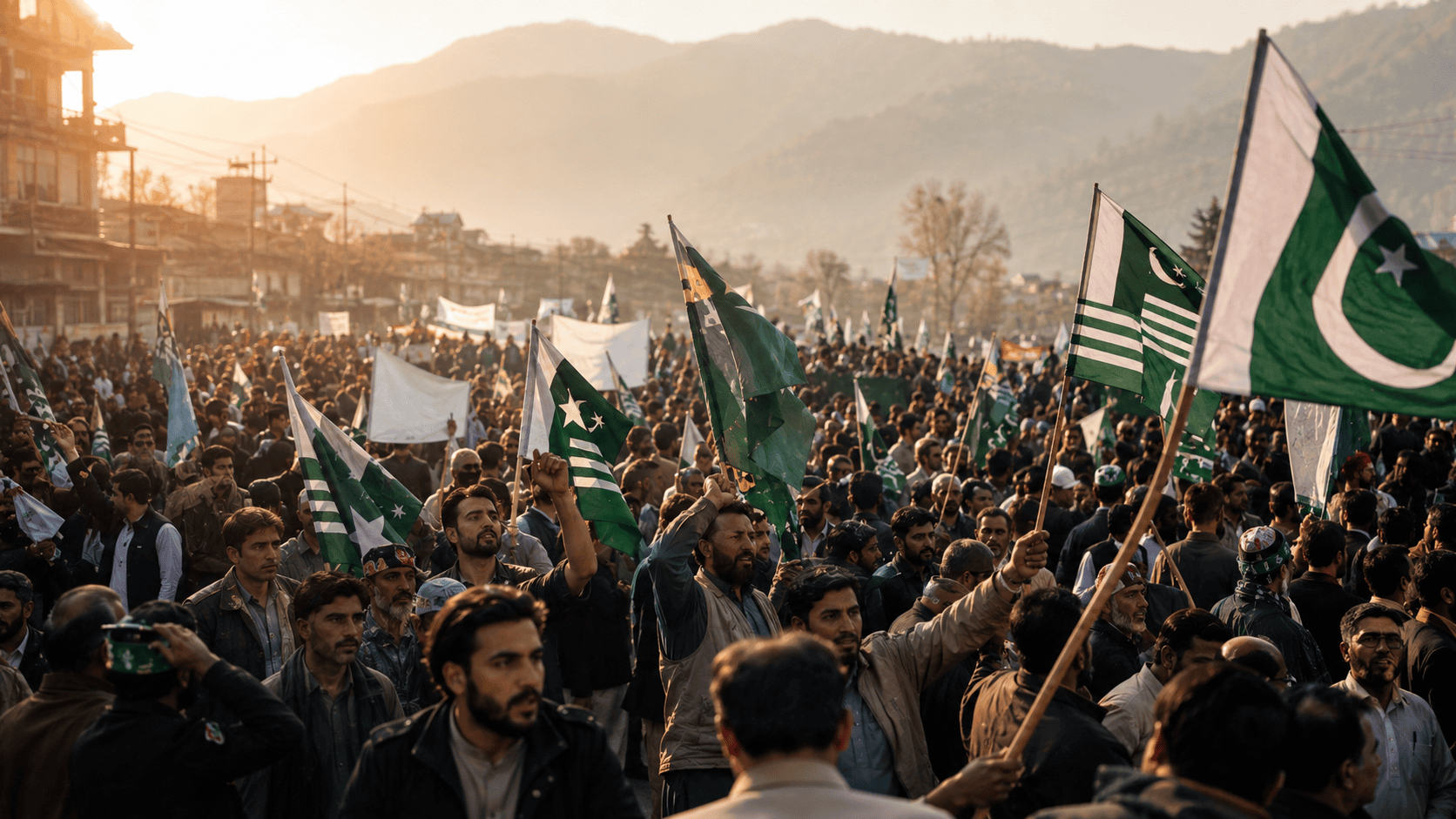
The call for Kashmir self-determination returned to the center of national attention this week as Pakistan observed Youm-e-Ilhaq-e-Pakistan, or Kashmir’s Accession to Pakistan Day, with senior leaders renewing their appeal to the international community to help resolve one of South Asia’s longest-running disputes. The annual observance, marked across Pakistan, Azad Jammu and Kashmir, and among the Kashmiri diaspora, commemorates a historic resolution passed nearly eight decades ago and continues to shape the political conversation around the region today.
Thank you for reading this post, don't forget to subscribe!A Resolution Rooted in 1947
The origins of the day trace back to July 19, 1947, when the All Jammu and Kashmir Muslim Conference unanimously adopted a resolution during a session in Srinagar, expressing the political aspirations of the region’s Muslim population and calling for the princely state’s accession to Pakistan ahead of the partition of British India. According to officials, the resolution called upon the region’s then-rulers to respect the will of the people, a principle that continues to underpin Pakistan’s modern-day advocacy for Kashmir self-determination.
Now in its 78th year of observance, the day was marked with public rallies, seminars, and gatherings across the country, along with formal statements from Pakistan’s top leadership reaffirming the government’s long-standing position on the issue.
Leadership Reaffirms Support for Kashmir Self-Determination
In separate messages issued to mark the occasion, President Asif Ali Zardari and Prime Minister Shehbaz Sharif reaffirmed what they described as Pakistan’s unwavering diplomatic, political, and moral support for the Kashmiri people’s right to self-determination. The Prime Minister stated that Pakistan would continue to extend this support “until the people of Jammu and Kashmir are able to exercise their inalienable right to self-determination,” framing the day as both a historical commemoration and a renewed policy commitment.
President Zardari, in his own statement, called on the international community, and the United Nations in particular, to fulfill its responsibility in supporting efforts toward realizing Kashmir self-determination, tying Pakistan’s position directly to relevant UN Security Council resolutions on the dispute.
The Prime Minister also emphasized that lasting peace in South Asia would require a resolution of the Kashmir dispute that reflects both international frameworks and the expressed wishes of the Kashmiri people themselves, describing the 1947 resolution as an important historical milestone in what he called the region’s ongoing political struggle.
For readers interested in the international legal dimension of the dispute, background on relevant resolutions can be found through the United Nations Security Council’s official documentation, which has addressed the Kashmir issue on multiple occasions since the late 1940s.
Regional Voices Join the Call for Kashmir self-determination
Beyond the federal government, leaders within Azad Jammu and Kashmir also used the occasion to reinforce the broader message tied to Kashmir self-determination. The AJK Prime Minister described the bond between Pakistan and Kashmir as one built on shared faith, sacrifice, and history, while the region’s Acting President called the day a reminder to renew commitment to the ongoing struggle until what he termed its ultimate achievement.
Civil society and advocacy groups, including Hurriyat organizations, also issued statements urging bodies such as the United Nations and the Organization of Islamic Cooperation to take a more active role in protecting the rights of people living in Indian-administered Kashmir and in helping resolve the dispute in line with existing UN resolutions.
Context: Elections and Recent Unrest in Azad Kashmir
This year’s observance comes at a particularly sensitive moment for the region. Azad Jammu and Kashmir is preparing for legislative elections scheduled for July 27, following weeks of unrest linked in part to a dispute over refugee seat allocations in the region’s Legislative Assembly. Reports indicate the unrest resulted in dozens of deaths and prompted a significant security deployment across the territory, raising questions about whether campaigning and polling could proceed smoothly.
This backdrop adds an additional layer of complexity to discussions around Kashmir self-determination, as the political rights and representation of residents within Pakistan-administered Kashmir itself have become a subject of local debate even as the federal government continues to focus its messaging on the broader international dispute with India.
Independent reporting on the region’s political and human rights situation is regularly published by organizations such as Human Rights Watch and the International Crisis Group, which track developments on both sides of the Line of Control.
Why This Debate Continues to Matter
The Kashmir dispute remains one of the most enduring unresolved territorial and political disagreements in South Asia, with both Pakistan and India maintaining competing claims over the wider Jammu and Kashmir region since 1947. Pakistan’s position, reiterated annually through Youm-e-Ilhaq-e-Pakistan, centers on the argument that the future of the region should ultimately be determined by the will of its people, a principle it frames as consistent with international law and UN resolutions on the subject.
India has historically maintained a different position on the matter, and the dispute has remained a persistent source of tension between the two nuclear-armed neighbors for decades. The renewed emphasis on Kashmir self-determination during this year’s commemorations reflects Pakistan’s continued effort to keep the issue on the international diplomatic agenda, even as ground realities within the region, including the upcoming AJK elections, present their own set of political challenges.
Looking Ahead of Kashmir self-determination
As Azad Jammu and Kashmir moves toward its July 27 elections amid heightened security concerns, the broader conversation around Kashmir self-determination is likely to remain active both domestically and on the international stage. Pakistan’s leadership has signaled that its diplomatic advocacy on the issue will continue, while regional analysts will be watching closely to see whether the upcoming elections proceed smoothly and what impact recent unrest may have on the territory’s political landscape going forward.
Read Also:AJK Security Forces Request Signals Deepening Unrest Ahead of Elections
Conclusion
This year’s Youm-e-Ilhaq-e-Pakistan observance underscored how central the principle of Kashmir self-determination remains to Pakistan’s national political identity, nearly eight decades after the original 1947 resolution. With renewed statements from the country’s top leadership, ongoing advocacy from regional voices, and a politically sensitive election on the horizon in Azad Jammu and Kashmir, the coming weeks are likely to keep the Kashmir dispute firmly in the regional and international spotlight.
This article reports on Pakistan’s official position and public statements regarding the Kashmir dispute. Kashmir remains a contested territory claimed by both Pakistan and India, and readers seeking a fuller picture are encouraged to consult multiple sources representing different perspectives on the issue.
Get updates like this on WhatsApp before anywhere else — join our Channel [https://whatsapp.com/channel/0029Vb8fffCKrWQzEVBQ6v00]