

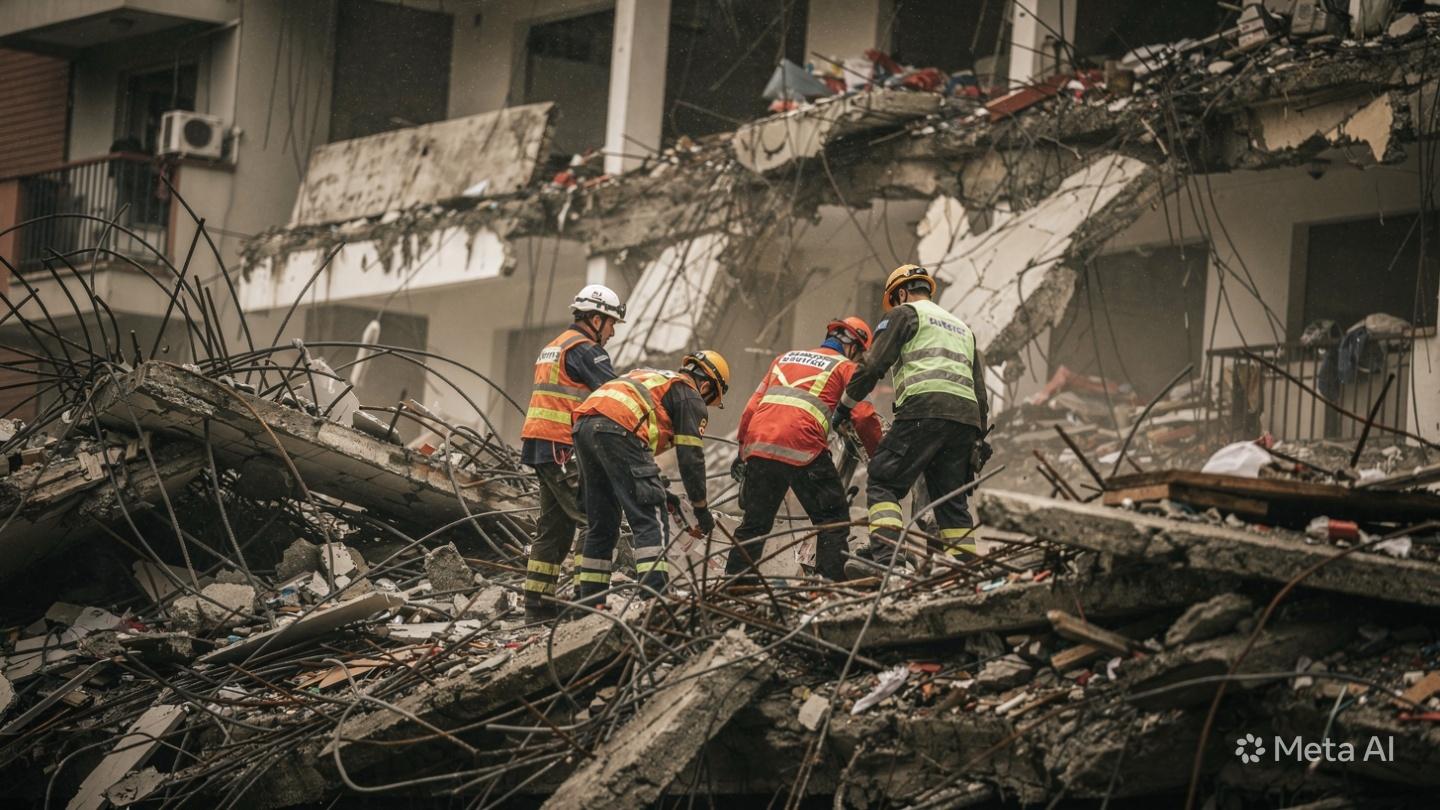
Three days after twin earthquakes tore through northern Venezuela, the human cost of the disaster continues to grow. The Venezuela earthquake death toll has now risen to at least 1,430, according to Jorge Rodríguez, the president of Venezuela’s National Assembly, who confirmed the figure during a televised update on Saturday. More than 3,200 people have been injured, and rescue teams from around the world have now joined Venezuelan responders in a race against time to find survivors still buried beneath collapsed buildings.
Thank you for reading this post, don't forget to subscribe!The scale of destruction has made this one of the deadliest natural disasters to hit the South American country in more than a century, with entire neighborhoods reduced to rubble and tens of thousands of families displaced from their homes.
How the Disaster Unfolded Venezuela earthquake death toll
The crisis began on Wednesday evening when two powerful earthquakes struck Venezuela within seconds of each other. The first, a magnitude 7.2 quake, was quickly followed by a stronger magnitude 7.5 mainshock, with both originating near San Felipe in Yaracuy state. The shaking caused widespread destruction across northern Venezuela, with the coastal state of La Guaira and the capital, Caracas, suffering the heaviest damage.
Venezuela earthquake death toll, Acting President Delcy Rodríguez declared a nationwide state of emergency in the immediate aftermath, describing La Guaira as a disaster zone. Interior Minister Diosdado Cabello confirmed that several states had been affected by the quakes, while authorities ordered gas supplies cut off in parts of Caracas to prevent explosions in damaged buildings.
According to seismologists, the mainshock was the strongest earthquake to hit Venezuela since a major quake in 1900, underscoring the rare and severe nature of the event.
Desperate Search Continues Amid Mounting Frustration
Venezuela earthquake death toll, In the hours and days following the earthquakes, rescue workers, soldiers, and ordinary citizens have been digging through the wreckage of collapsed apartment buildings, often with little more than their bare hands and basic tools. Officials say more than 14,000 personnel have been deployed in La Guaira alone, one of the hardest-hit areas, where access remains restricted as crews continue to comb through the rubble.
Venezuela earthquake death toll, Families have gathered near damaged buildings, anxiously waiting for any sign that loved ones might still be found alive. Rescue teams have described a narrow “golden window” of time in which survivors trapped beneath debris have the best chance of being recovered safely, adding urgency to every passing hour.
Some residents have voiced frustration with the pace of the official response, saying the scale of the disaster has overwhelmed emergency services that were already strained before the earthquakes struck. Venezuela’s healthcare system, long affected by years of economic difficulty, has also come under significant pressure, with officials reporting that at least 13 hospitals across the country sustained damage.
International Aid Pours In Venezuela earthquake death toll
Venezuela earthquake death toll, as the scale of the disaster became clear, international support began arriving within days. Rescue convoys and specialized search teams from countries including Mexico, El Salvador, the Dominican Republic, Spain, Colombia, and the United States have been deployed to assist Venezuelan responders. The United Nations has also sent emergency teams and humanitarian aid, warning that nearly seven million people across the country could be affected by the disaster in some way.
The European Union’s Civil Protection and Humanitarian Aid Operations confirmed it had deployed emergency assistance to Venezuela following the earthquakes and Venezuela earthquake death toll, joining a broader wave of international solidarity. The United States has also pledged financial support, with officials confirming that aid commitments now exceed $150 million, alongside the deployment of additional search-and-rescue teams.
Acting President Delcy Rodríguez said she had spoken directly with US officials, who reaffirmed their commitment to supporting Venezuela’s recovery efforts through rescue personnel, specialized equipment, and humanitarian assistance for displaced families.
Rebuilding a Shattered Region
Venezuela earthquake death toll, Beyond the immediate search for survivors, attention is increasingly turning to the long road of recovery ahead. Hundreds of homes have been destroyed or severely damaged, and authorities have established temporary shelters in school buildings and other public facilities to house displaced residents. Classes have been suspended nationwide, and some educational facilities are now being used as donation and relief centers.
A reconstruction fund worth $200 million has reportedly been established to support the repair of hospitals, homes, and other critical infrastructure damaged in the disaster. Officials have also acknowledged the difficult diplomatic backdrop against which this international relief effort is unfolding, though humanitarian coordination has so far continued despite broader political tensions.
Electricity and basic services are also being gradually restored in the worst-affected areas, with officials reporting that roughly 60 percent of pre-earthquake power capacity has been returned to La Guaira as of the latest update.
Read more:AJK Protest Spirals: Four Police Officers Martyred in Violent Clashes
A Test of Regional and Global Solidarity
The Venezuela earthquake death toll disaster has become a significant test of international humanitarian cooperation, drawing in agencies and governments that do not always see eye to eye on political matters. Aid organizations have emphasized that the immediate priority remains saving lives, with search-and-rescue operations expected to continue for as long as there remains a realistic chance of finding survivors.
As the death toll continues to climb, the disaster serves as a sobering reminder of the destructive power of major seismic events and the importance of coordinated emergency response in their aftermath. For now, rescue teams on the ground remain focused on the painstaking work of searching through rubble, neighborhood by neighborhood, in the hope of bringing more survivors home safely.
For continued coverage of the relief effort, readers can follow updates from international humanitarian bodies such as the United Nations and emergency response coordination from the European Civil Protection and Humanitarian Aid Operations.