

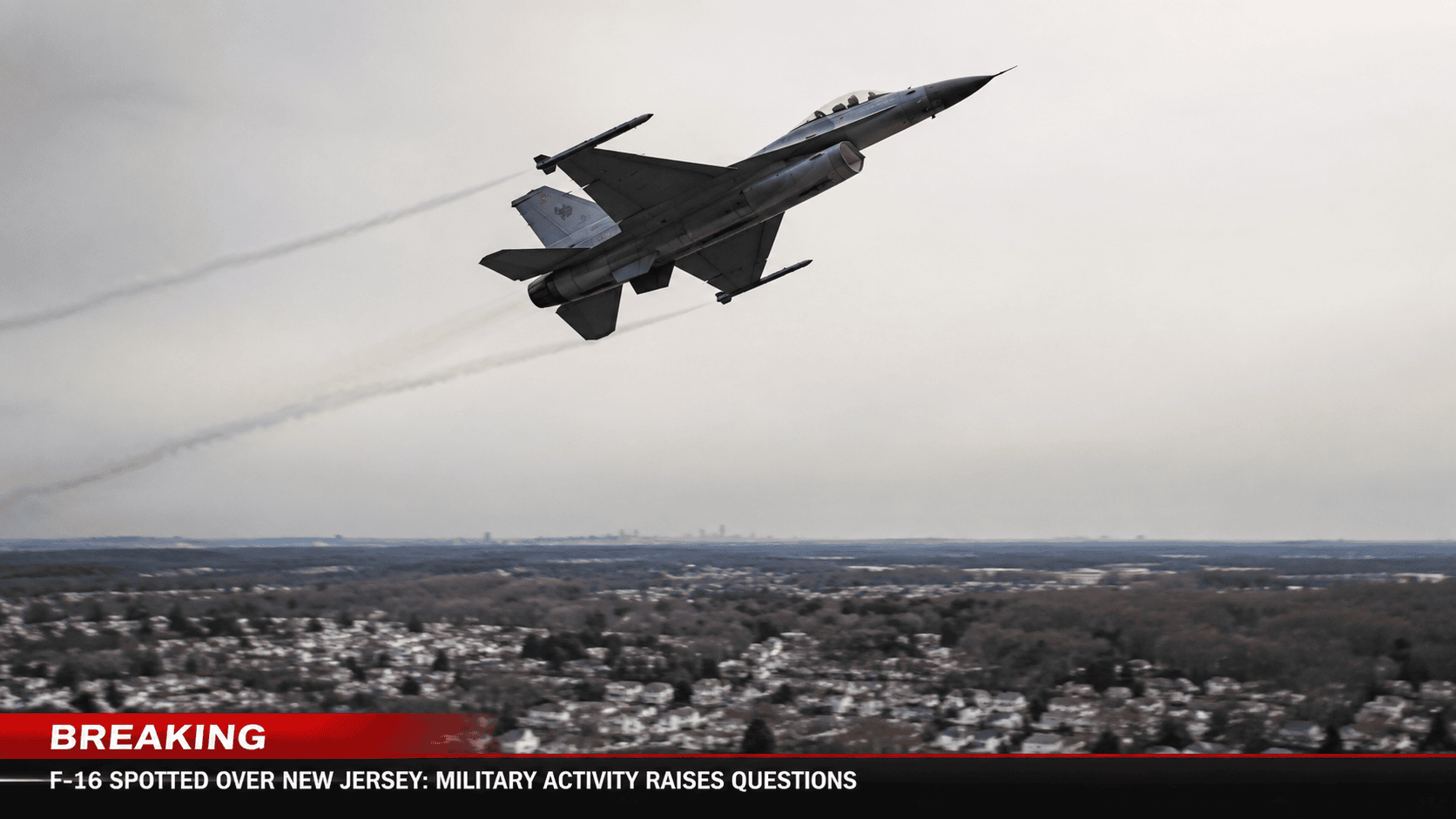
A dramatic NORAD F-16 intercept unfolded over northern New Jersey on Sunday, as fighter jets were scrambled to confront multiple aircraft that strayed into restricted airspace above Bedminster and East Rutherford. The incident, confirmed by the North American Aerospace Defense Command, briefly disrupted the skies over one of the busiest regions on the East Coast and served as a stark reminder of how seriously temporary flight restrictions are enforced.
Thank you for reading this post, don't forget to subscribe!The NORAD F-16 intercept operation was carried out by the Continental U.S. NORAD Region, headquartered at Tyndall Air Force Base in Florida, which oversees the defense of American airspace. According to officials, more than ten general aviation aircraft entered the restricted zone that day, with three requiring direct intervention from NORAD’s fighter jets.
What Triggered the NORAD F-16 Intercept
Temporary flight restrictions, commonly known as TFRs, are issued by the Federal Aviation Administration to protect sensitive locations or high-profile events from unauthorized air traffic. On the day of the NORAD F-16 intercept, such a restriction was active over Bedminster and East Rutherford, two New Jersey communities that were hosting significant activity at the time, including a major public event at a large regional stadium.
Pilots flying in the area are required to check NOTAMs, or Notices to Airmen, before takeoff to confirm whether airspace ahead of them is open. Despite these advisories being publicly available, more than ten general aviation aircraft entered the restricted zone, prompting NORAD to respond swiftly. General aviation aircraft typically refers to non-commercial planes, which can include private, recreational, or small business aircraft.
Flares Deployed During NORAD F-16 Intercept Operations
During two of the three intercepts, NORAD’s F-16 fighter jets released flares in an effort to capture the attention of pilots who had not responded to standard radio communication. Officials emphasized that the flares posed no danger to anyone on the ground, noting that they burn out quickly and completely and are used strictly as a visual signal.
The sight of flares in the sky drew attention from residents in the surrounding area, some of whom reported seeing bright streaks near the horizon. NORAD addressed the visibility of the event directly in an official statement, explaining that the flares were deployed with the highest regard for public safety. Following each NORAD F-16 intercept, the affected aircraft were escorted out of the restricted zone without further incident, and no injuries or damage were reported.
Standard Protocol for a NORAD F-16 Intercept
NORAD has established clear procedures for pilots who find themselves the subject of a NORAD F-16 intercept. Once intercepted, pilots are instructed to immediately switch their radio to one of two emergency frequencies, 121.5 or 243.0 megahertz, and to reverse course until they receive further instructions from military personnel. Failure to comply with these instructions can escalate the situation and result in additional enforcement action.
Officials reiterated that violations of restricted airspace, whether intentional or accidental, can lead to a range of consequences for pilots, including formal warnings, financial penalties, or suspension of flying privileges. The rules apply equally to manned aircraft and drones, both of which fall under FAA oversight during active flight restrictions.
Context Behind the Restricted Airspace
The temporary flight restriction over Bedminster and East Rutherford was tied to a period of heightened security in the region, with both locations seeing significant public and official activity that weekend. Restrictions of this kind are not unusual around high-security sites or major public gatherings, and NORAD has previously carried out similar operations over other sensitive locations across the country.
This latest NORAD F-16 intercept adds to a broader pattern of vigilance the command maintains across U.S. skies. NORAD routinely monitors and enforces airspace restrictions tied to significant national events, and officials have used past incidents like this one to reinforce public messaging about the importance of pre-flight planning for general aviation pilots.
Why This NORAD F-16 Intercept Matters
Beyond the immediate incident, the NORAD F-16 intercept highlights an ongoing challenge for aviation authorities: ensuring that private pilots remain aware of ever-changing airspace restrictions, particularly around major events. With large public gatherings increasingly requiring layered security measures, incidents like this are likely to continue occurring whenever pilots fail to check the latest advisories before flying.
Aviation analysts note that most violations of restricted airspace are unintentional, often resulting from pilots overlooking last-minute NOTAM updates rather than deliberate attempts to breach security. Still, each NORAD F-16 intercept requires a full military response, underscoring the resources dedicated to protecting even brief windows of restricted airspace.
For the aviation community, the episode serves as a fresh reminder that flight planning tools and NOTAM checks are not optional formalities but essential steps that can prevent a routine flight from turning into a national security response. NORAD has repeatedly urged pilots to consult official resources before every flight, particularly during periods when high-profile events may quietly reshape the airspace map.
Read Also:Kashmir Self-Determination Back in Spotlight as Pakistan Marks Historic Accession Day
Conclusion
The NORAD F-16 intercept over Bedminster and East Rutherford ended without injury or damage, but it offered a vivid demonstration of how quickly restricted airspace violations can escalate into a full military response. With flares lighting up the sky and fighter jets scrambled within minutes, the incident reinforced NORAD’s ongoing commitment to protecting sensitive airspace, while also renewing calls for pilots nationwide to stay informed before takeoff. As large-scale public events continue to draw temporary security measures, similar intercepts may remain a recurring feature of U.S. airspace enforcement in the months ahead.
Get updates like this on WhatsApp before anywhere else — join our Channel [https://whatsapp.com/channel/0029Vb8fffCKrWQzEVBQ6v00]