

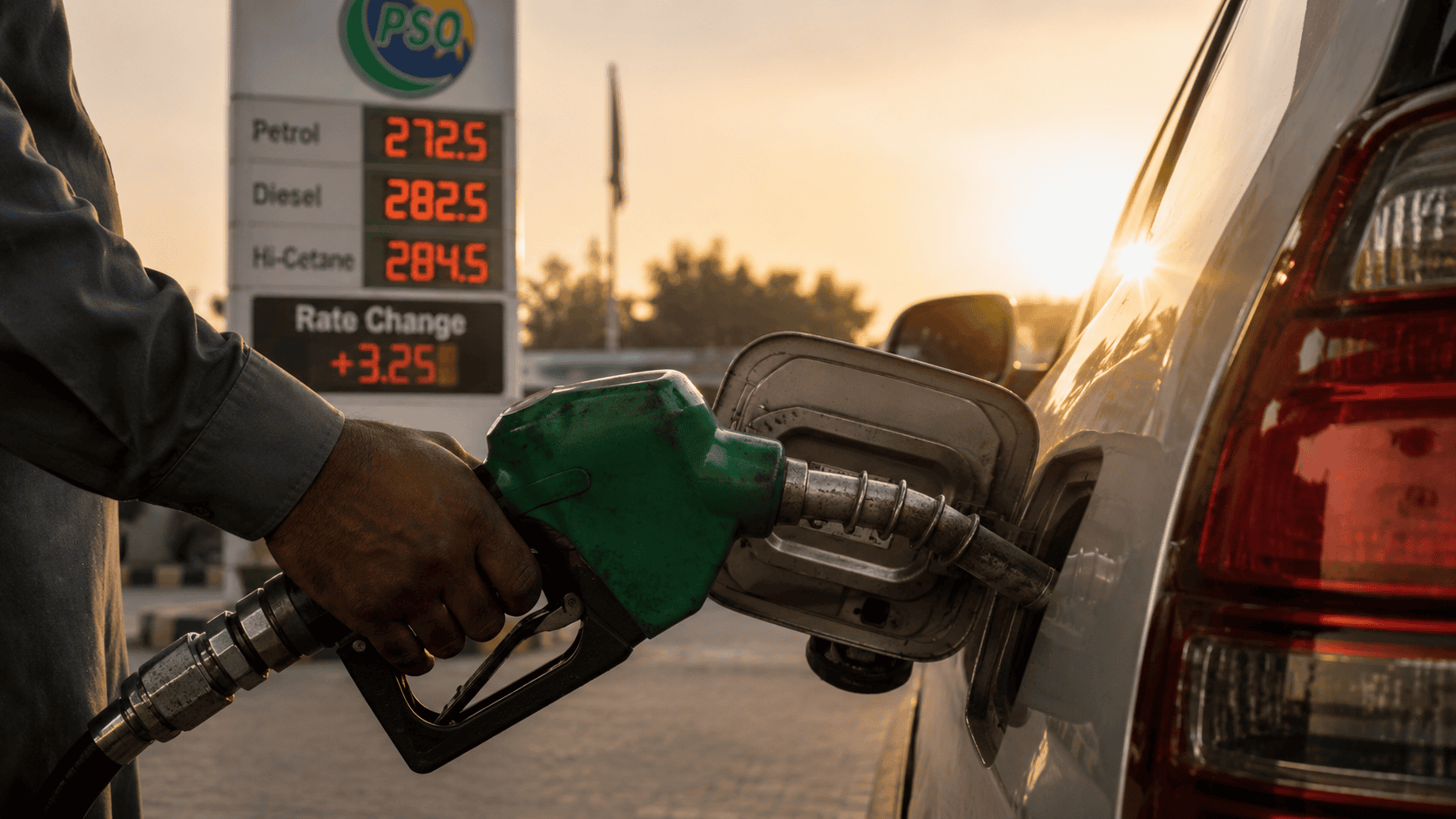
Pakistan is grappling with another petrol price hike as the federal government announced a steep increase in fuel rates, adding fresh strain on households and businesses already battling high living costs. The latest revision, which took effect from midnight on Friday, has pushed petrol and diesel prices sharply upward, reversing a brief period of relief consumers enjoyed just weeks earlier.
Thank you for reading this post, don't forget to subscribe!Details of the Latest Petrol Price Hike
According to a notification issued by the Ministry of Energy’s Petroleum Division, the price of petrol has been raised by Rs13.18 per litre, taking the new rate to Rs310.71 per litre, up from Rs297.53. High-speed diesel (HSD) saw an even steeper rise, increasing by Rs13.80 per litre to reach Rs323.30 per litre. The revised prices will remain in effect for the coming week, through July 17.
This latest petrol price hike comes just weeks after the government had actually reduced fuel prices by Rs1.97 per litre in the previous fortnightly review, offering brief respite to consumers. That relief has now been completely erased, with rates climbing well beyond their earlier levels.
Why the Petrol Price Hike Happened
The primary driver behind this petrol price hike is renewed volatility in global oil markets, largely triggered by escalating tensions between the United States and Iran. Fresh military exchanges between the two countries earlier this week rattled international energy markets, pushing crude oil prices higher and disrupting the fragile calm that had followed an interim peace agreement reached last month.
Global benchmark prices, including Brent crude, saw notable swings amid fears that the conflict could disrupt shipping through the Strait of Hormuz — one of the world’s most vital oil transit routes. Although prices later eased slightly as traders grew hopeful that shipping disruptions would be temporary, the earlier spike was enough to trigger this petrol price hike in Pakistan’s domestic market, given the country’s heavy reliance on imported crude and refined products.
Beyond international factors, domestic fiscal measures have also played a role. Since July 1, the government doubled the climate support levy to Rs5 per litre and adjusted the petroleum levy structure as part of its ongoing commitments under the International Monetary Fund (IMF) programme. Currently, the government charges approximately Rs70 per litre in petroleum levy on petrol and around Rs80 per litre on diesel, on top of the base price, further compounding the impact of this petrol price hike on end consumers.
Impact on Households and Businesses
The petrol price hike is expected to have a wide-reaching effect across Pakistan’s economy. Petrol is the fuel of choice for private motorists, motorcyclists, and small transport operators such as rickshaws, meaning the increase will be felt most acutely by middle- and lower-income households who rely on personal vehicles for daily commuting.
Diesel, meanwhile, powers a much broader segment of the economy. It is used extensively in heavy transport, agricultural machinery, industrial generators, and power plants. As a result, the diesel price increase carries a heavier inflationary ripple effect, as higher transportation and production costs are typically passed on to consumers through higher prices for essential goods, from food items to manufactured products.
Political reaction to the petrol price hike was swift. Opposition voices, including Jamaat-e-Islami (JI), criticized the increase, lamenting the broader tax burden on ordinary citizens and arguing that repeated fuel price adjustments are deepening the cost-of-living crisis for average Pakistanis already squeezed by high utility bills and stagnant wages.
Historical Context
While painful for consumers, it is worth noting that the current rates remain below Pakistan’s record highs. Diesel prices, for instance, are still considerably lower than the peak of Rs520.35 per litre reached earlier this year, and petrol remains below its previous high of Rs458.41 per litre. Still, for a population already stretched thin by persistent inflation, even incremental increases like this petrol price hike carry significant weight on household budgets.
Petrol and diesel together represent Pakistan’s highest-selling petroleum products, with combined monthly consumption estimated between 700,000 and 800,000 tonnes. This scale underscores why every fortnightly price revision draws such close public and political attention, as it directly affects transportation costs, food prices, and overall economic sentiment nationwide.
What Comes Next
Analysts tracking the situation suggest that future adjustments will largely hinge on how the US-Iran situation develops in the coming days. If tensions ease and shipping through the Strait of Hormuz normalizes, global oil prices could stabilize, potentially paving the way for relief in Pakistan’s next price review. However, if hostilities persist or intensify, consumers could face further petrol price hike announcements in the weeks ahead.
Economists also point to Pakistan’s continued reliance on the IMF programme as a structural factor that will keep petroleum levies elevated regardless of global price movements, meaning fuel costs are likely to remain a persistent pressure point for the broader economy through the remainder of the fiscal year.
Read Also:Petrol Price Hike Pakistan 2026: Govt Revises Rates for Next Week
Conclusion
This latest petrol price hike highlights the delicate balance Pakistan’s government must strike between meeting international fiscal commitments and shielding citizens from rising living costs. With global energy markets remaining unpredictable amid ongoing Middle East tensions, consumers and businesses alike will be watching closely to see whether the next review brings relief or yet another increase.
For further updates on Pakistan’s fuel pricing policy, readers can refer to the Petroleum Division of Pakistan.