

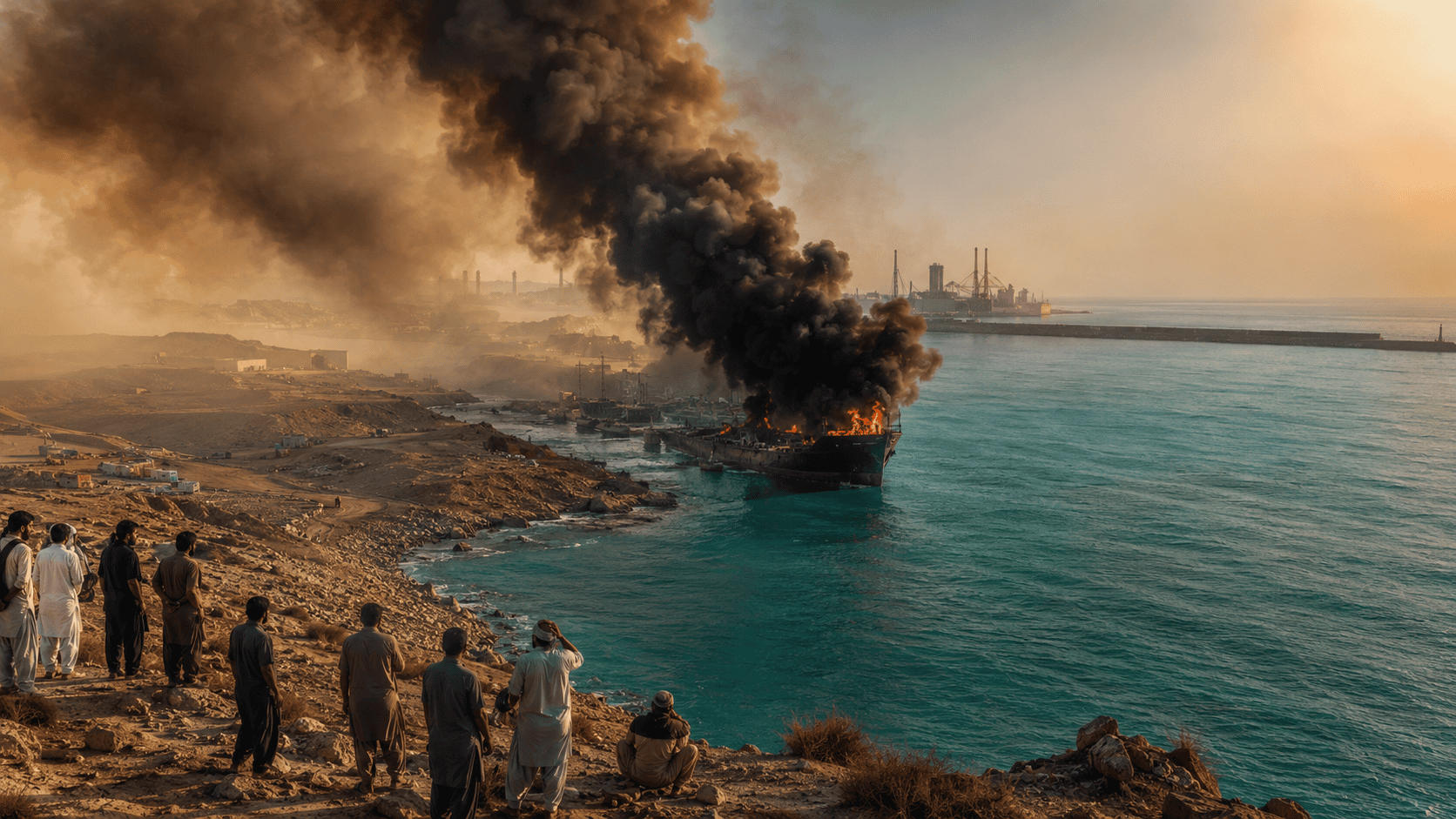
The Islamabad MoU crisis has taken a dangerous turn this week after renewed military exchanges between the United States and Iran threatened to unravel one of the most significant diplomatic breakthroughs in recent Middle East history. Pakistan, which brokered the interim peace framework barely a month ago, has issued an urgent appeal calling on both Washington and Tehran to step back from confrontation and return to the negotiating table.
Thank you for reading this post, don't forget to subscribe!What Sparked the Islamabad MoU Crisis
The trouble began after a fresh wave of attacks on commercial vessels near the Strait of Hormuz triggered a sharp military response. The United States reportedly carried out fresh strikes on Iranian targets, and Tehran responded by targeting American interests elsewhere in the Gulf region. Within hours, the incident had escalated into the most serious flashpoint since the interim agreement was signed, plunging the region back into uncertainty and intensifying the Islamabad MoU crisis narrative dominating regional diplomacy.
The agreement at the center of this storm — formally known as the Islamabad Memorandum of Understanding between the Islamic Republic of Iran and the United States of America — was signed last month as a 14-point interim framework designed to halt hostilities and keep vital shipping lanes open. It was widely seen as a diplomatic milestone, with Pakistan playing a central mediating role between two adversaries with decades of mutual distrust.
Pakistan’s Response to the Escalation
As the situation deteriorated, Pakistan’s Foreign Office moved quickly to address the unfolding Islamabad MoU crisis, issuing a formal statement expressing “deep concern” over the escalation. The statement stressed that renewed conflict serves “no one’s interest” and called on all parties to “exercise restraint and refrain from any actions that may further undermine regional peace and stability.”
Pakistani officials reaffirmed that the memorandum “remains an enduring foundation for understanding, mutual respect and shared prosperity for the region and beyond.” This language reflects Islamabad’s continued investment in preserving the fragile progress achieved through weeks of painstaking shuttle diplomacy.
Beyond public statements, Pakistan’s engagement has extended to the highest levels of government. Prime Minister Shehbaz Sharif held a telephone conversation with Iranian President Masoud Pezeshkian to discuss the deteriorating security situation, while separate outreach was made to Gulf leaders, including Qatar’s leadership, underscoring the breadth of Pakistan’s diplomatic push to contain the fallout from the Islamabad MoU crisis.
Diplomatic Stakes at the United Nations
Pakistan also carried its message to the international stage, raising the issue during a briefing at the United Nations Security Council. Pakistan’s representatives told the council that the interim framework “offers a viable roadmap to address all outstanding issues through diplomatic means,” urging all sides to avoid actions or rhetoric that could deepen misunderstanding during this sensitive period.
This UN-level intervention highlights how seriously the international community is treating the Islamabad MoU crisis, given that the agreement was intended to guide both nations toward a comprehensive settlement within 60 days of signing. Diplomats have acknowledged that several contentious issues — including Iran’s nuclear program, sanctions relief, and broader security arrangements in the Gulf — were deliberately deferred to follow-up negotiations, leaving the framework vulnerable to exactly this kind of pressure.
Regional and Global Reactions
The renewed hostilities have sent ripples far beyond the Gulf. Financial markets in Europe registered some of their sharpest losses in months as investors weighed the risk of a wider regional conflict. Analysts covering the Islamabad MoU crisis note that continued instability in the Strait of Hormuz — one of the world’s most critical energy transit corridors — could have significant implications for global oil supply chains and shipping insurance costs.
Regional mediators, including officials from Qatar and other Gulf states, have also stepped up efforts to prevent a full collapse of the agreement. Reports indicate that diplomatic channels between Tehran and Islamabad remain active, with Iranian officials reportedly voicing frustration over what they view as inconsistent adherence to the memorandum’s terms.
What This Means Going Forward
For Pakistan, the stakes extend beyond regional diplomacy. Islamabad has invested significant political capital in positioning itself as a credible mediator capable of bridging the gap between Washington and Tehran. A collapse of the framework it helped negotiate would represent a setback not only for regional stability but also for Pakistan’s broader diplomatic standing.
Experts following the Islamabad MoU crisis suggest that the coming days will be critical in determining whether the framework can be salvaged. Much will depend on whether both Washington and Tehran are willing to de-escalate rhetoric and resume the technical-level talks that were making incremental progress before this latest flare-up.
For now, Pakistan’s message remains consistent: dialogue, not confrontation, offers the only sustainable path forward. As the Foreign Office noted, “there is no alternative to continued engagement, dialogue and diplomacy” in achieving lasting peace in the region.
Read Also:Pakistan Russia Counterterrorism Alliance Takes Shape at UN Summit
Conclusion
The Islamabad MoU crisis underscores just how fragile recent diplomatic gains in the Middle East remain. While Pakistan continues to position itself as a stabilizing voice, the coming days will test whether the interim agreement can survive its first major stress test. As global attention remains fixed on the Gulf, the international community will be watching closely to see whether restraint prevails over further escalation.
Pakistan Ministry of Foreign Affairs.