

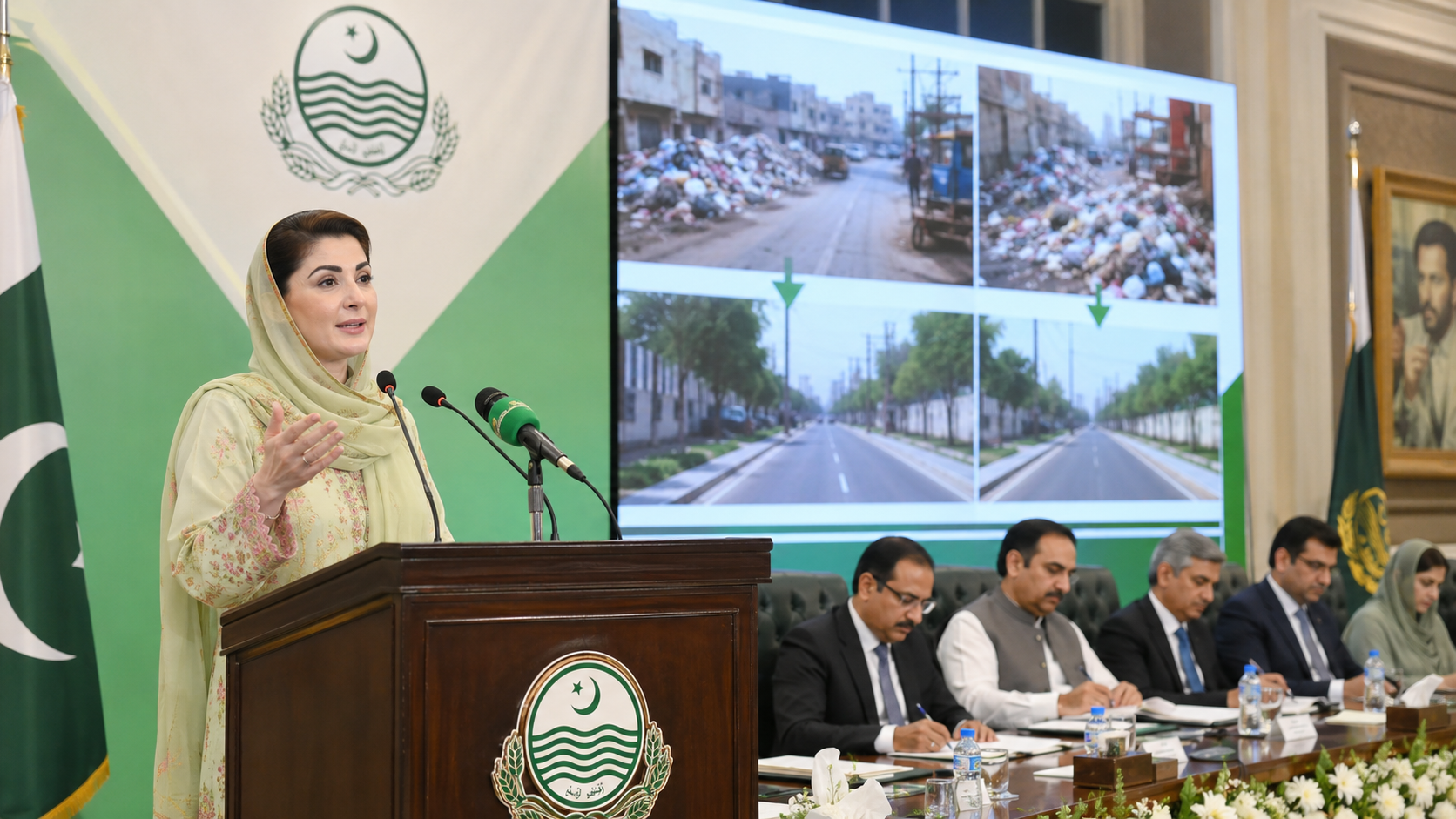
CM Punjab sanitation policy is now the top priority of the provincial govt, as Chief Minister reaffirmed that improving cleanliness and sanitation systems is the top priority of the provincial government. According to the CM Punjab, a clean environment is not just about aesthetics — it is the foundation of a healthy and progressive Punjab. Clear directives have been issued to all district administrations, local government bodies, and relevant departments to take immediate and sustained action.
1. CM Punjab’s Clear Message: “Clean Punjab, Healthy Punjab”
During a recent high-level meeting, the Chief Minister stated that access to clean water, garbage-free streets, and efficient sewerage is a basic right of every citizen. He emphasized that cleanliness and sanitation are not only the government’s responsibility but a collective national duty. The success of this mission depends on active collaboration between the government, institutions, and the public. The Punjab Government is running this initiative under the slogan “Clean Punjab, Healthy Punjab.” The goal is to transform all major cities of Punjab into zero-waste model cities by the end of 2026.
2. Key Points of the Sanitation Action Plan 2026
The provincial government has announced a 5-point action plan to overhaul the sanitation system across Punjab:
| Initiative | Details | Target |
| Daily Waste Collection System | door-to-door collection at Union Council level | 100% coverage by June 2026 |
| Sewerage Line Upgrades | Replacement of old lines + new installations in unserved areas | Phase 1 in 5 major cities |
| Expansion of Sanitation | Staff Recruitment of 20,000 new sanitary workers | Completion in 3 months |
| Public Awareness Campaign | Drives through schools, mosques, and social media | Monthly seminars in every district |
| Waste-to-Energy Projects | New plants in Lahore, Faisalabad, Multan | Operational by end of 2026 |
The CM has directed that every DC and AC must inspect cleanliness in their area daily at 7 AM and submit a report directly to the CM Secretariat. Strict action will be taken against negligent officers.
3. Equal Focus: From Urban Centers to Rural Areas
The CM Punjab cleanliness drive specifically addressed past criticism that cleanliness drives were limited to big cities. This time, rural areas are a central part of the campaign.
- Concrete waste collection points will be built in every village.
- Small-scale treatment plants will be installed to stop sewage water from damaging agricultural land.
- Under the “Saaf Dehat Program,” one mosque and one school in each village will be developed as model cleanliness hubs.
4. Public Participation: Cooperation is Essential
The Chief Minister appealed to citizens to dispose of waste only at designated places, reduce plastic bag usage, and help authorities keep their streets and neighborhoods clean. “No system can succeed without public cooperation,” he stated.
To support this, the “Safai Helpline 1334” has been upgraded. Citizens can now WhatsApp pictures of garbage or sewerage issues to this number. Resolution within 24 hours is now mandatory for all complaints.
5. Positive Impact on Health and Economy
Improved sanitation directly impacts public health. Contaminated water and waste are major causes of cholera, typhoid, and dengue. According to the CM, better sanitation can reduce the burden on hospitals by up to 40%.
Additionally, clean cities attract tourism and investment. The “Saaf Punjab” initiative sends a positive signal to international donors and companies looking to invest in the province. A clean environment also improves overall quality of life and worker productivity.
6. Monitoring and Accountability Mechanism
To ensure transparency, the Punjab government is launching a digital dashboard. It will show real-time progress of waste collection, complaint resolution, and staff attendance for every district. Citizens will be able to track their area’s performance online.
Third-party audits will also be conducted quarterly to verify government claims. This data-driven approach is designed to prevent corruption and ensure funds are used properly.
Conclusion: The Future is a Clean Punjab
The Chief Minister’s resolve that cleanliness and sanitation will remain the provincial government’s top priority is a welcome step. If this plan is implemented in true spirit, Punjab’s landscape could change dramatically within the next two years.
Now, institutions must fulfill their duties with complete honesty, and the public must participate as a civic duty. Because a clean environment is the first step toward a brighter future for Punjab.