

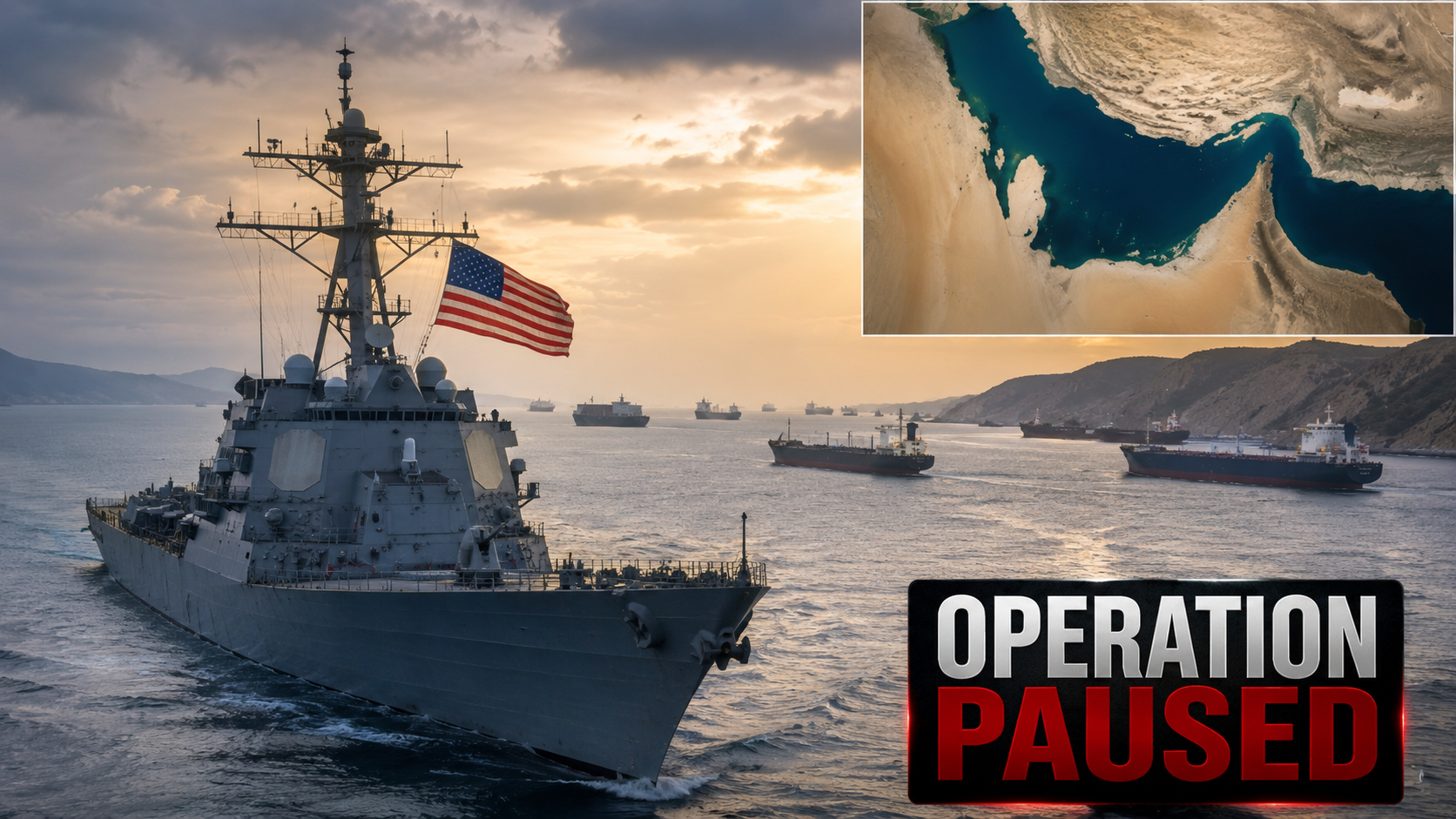
Trump Strait of Hormuz policy took a major turn as former US President Donald Trump announced that the United States will pause its naval operation designed to guide and protect commercial vessels transiting through the Strait of Hormuz. The statement has triggered immediate debate among defense analysts, oil markets, and Middle East policymakers.
Thank you for reading this post, don't forget to subscribe!1. What Is the Trump Strait of Hormuz Operation?
The Strait of Hormuz is one of the world’s most critical maritime chokepoints. Roughly 20% of global petroleum liquids pass through this narrow waterway between Iran and Oman. For years, the US Navy’s Fifth Fleet has run “Operation Sentinel” to deter threats and escort oil tankers and cargo ships.
The mission involves coalition patrols, surveillance drones, and rapid-response teams. Its stated goal is to ensure “freedom of navigation” and prevent any disruption to global energy supply chains. Trump’s call to pause this operation marks a significant shift in US maritime strategy.
2. Why Pause the Trump Strait of Hormuz Operation Now?
According to Trump’s statement, the decision is based on three main factors:
| Factors | Details | Stated Objective |
| Cost Reduction | The operation costs US taxpayers billions annually | Reduce overseas military spending |
| Burden Sharing | Gulf nations should protect their own shipping lanes | Push regional allies to increase naval role |
| Diplomatic Strategy | Pausing escorts may reduce tensions with Iran | Open space for new negotiations |
Trump argued that “America cannot be the world’s policeman forever” and that nations directly benefiting from Gulf oil should contribute more to maritime security.
3. Trump Strait of Hormuz Impact on Oil Markets and Shipping
The Trump Strait of Hormuz announcement sent ripples through global markets within hours. Key impacts include:
- Oil Price Volatility: Brent crude futures rose 3.2% on fears of increased shipping risk. Insurance premiums for tankers are expected to spike due to the Trump Strait of Hormuz policy change.
- Shipping Industry Response: Major firms like Maersk and MSC said they are reviewing routes. Some may opt for longer voyages around Africa, raising costs. For more on global shipping risks, see the International Maritime Organization security updates.
- Regional Reaction: Gulf Cooperation Council states called an emergency meeting. Saudi Arabia and UAE indicated they may expand their own naval patrols.
Energy analysts warn that even a temporary disruption in the Strait of Hormuz could remove 15-20 million barrels per day from global markets. You can read our earlier analysis on how Middle East tensions affect oil prices for more context.illion barrels per day from global markets, causing economic shockwaves.
4. Geopolitical Implications of Trump Strait of Hormuz Decision
Potential Winners:
- Iran: May view this Trump Strait of Hormuz shift as reduced US military pressure.
- China: As the largest importer of Gulf oil, could broker new regional security deals.
- Russia: May gain leverage in energy diplomacy if prices rise.
Potential Losers:
- European & Asian Economies: Heavily dependent on Gulf oil imports.
- Smaller Gulf States: Qatar, Kuwait lack large navies to secure exports.
- US Credibility: Allies may question long-term US security commitments after the Trump Strait of Hormuz pause.

For official US policy documents, refer to the U.S. Department of Defense press releases on maritime operations.
5. What Happens Next After Trump Strait of Hormuz Pause?
- Scenario 1: Full Pause – US withdraws escorts completely. Regional navies fill the gap within 6 months.
- Scenario 2: Partial Handover – US keeps intelligence assets but stops physical escorts. NATO or Arab League takes lead role.
- Scenario 3: Policy Reversal – Pause is temporary. Operation resumes after negotiations or if an incident occurs.
The Pentagon has not yet confirmed implementation timelines. A Defense Department spokesperson said, “All options are under review to protect US interests and global commerce.”
Conclusion: Trump Strait of Hormuz Is a High-Stakes Gamble
The Trump Strait of Hormuz decision to pause US operations is a major foreign policy pivot with worldwide consequences. Supporters call it fiscal responsibility and smart diplomacy for a new era. Critics warn it risks energy security and emboldens adversaries in an already volatile region.
For now, global markets, shippers, and governments are in “wait and watch” mode. The next 90 days will reveal whether this Trump Strait of Hormuz pause reduces tensions or creates a dangerous vacuum in one of the world’s most vital waterways. The outcome will likely shape US Middle East policy for years to come.