

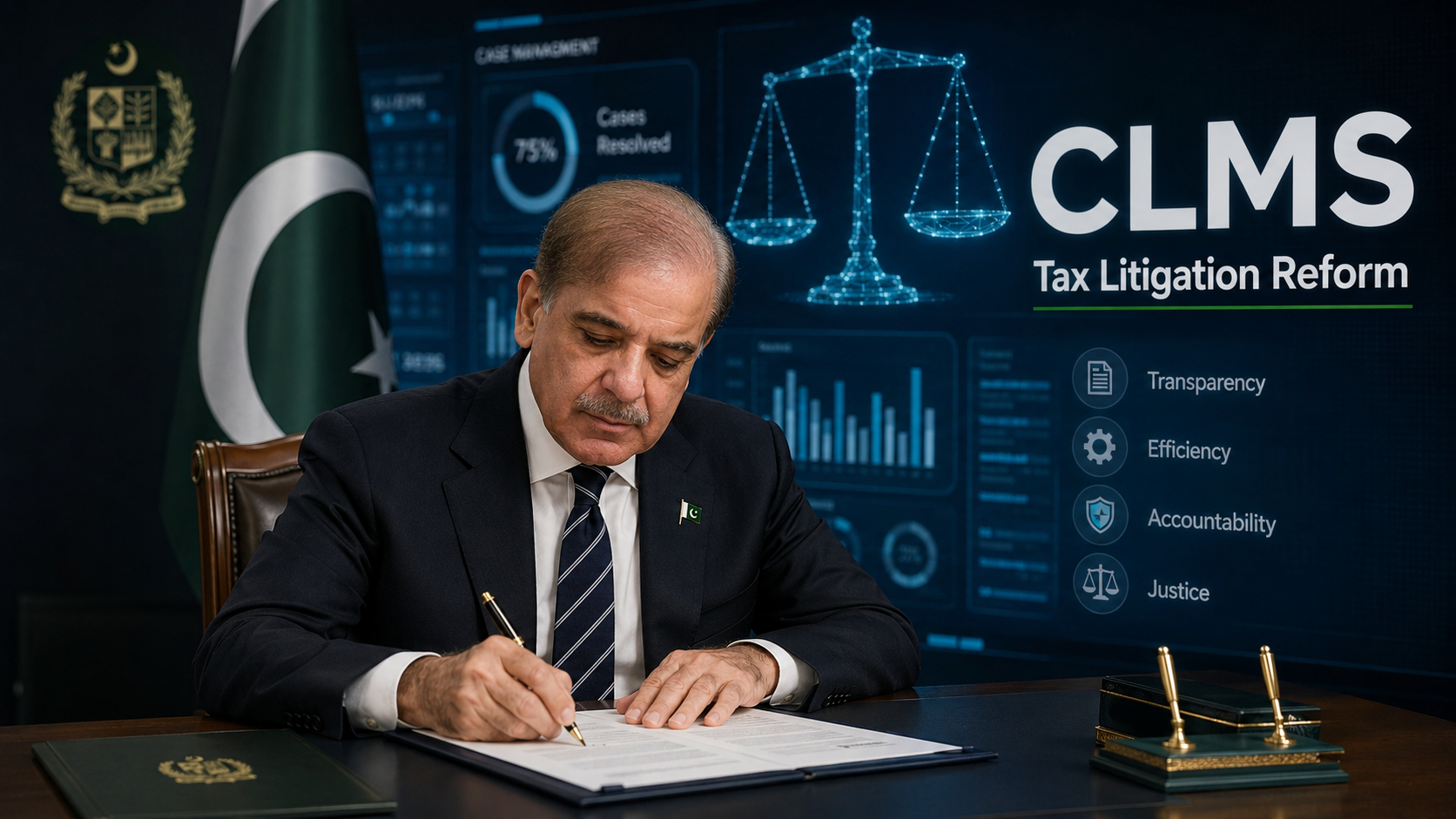
Shehbaz Sharif CLMS approval marks a major reform in Pakistan’s tax justice system. Prime Minister Shehbaz Sharif has approved a Centralised Litigation Management System and a complete overhaul of the tax machinery’s legal system nationwide to expedite the disposal of genuine tax litigation cases.
Thank you for reading this post, don't forget to subscribe!The prime minister took these decisions on the recommendations of a high-level task force headed by former senior Inland Revenue Service (IRS) officer Shad Muhammad Khan. The task force played a key role in reconciling litigation cases at the Supreme Court and facilitated the resolution of around 1,800 cases within just one year.
1. What Is Shehbaz Sharif CLMS and Why It Matters
The Shehbaz Sharif CLMS is a centralized digital platform designed to track, manage, and accelerate tax-related court cases across Pakistan. Currently, tax litigation is scattered across multiple forums including the Appellate Tribunals, High Courts, and the Supreme Court, causing years of delay.
Under the new system, all cases will be monitored through a single dashboard. This will allow the Federal Board of Revenue (FBR), Ministry of Law, and Attorney General’s office to coordinate in real-time. The goal is to reduce the average disposal time from 5-7 years to under 18 months for genuine tax disputes.
2. Task Force Findings: Actual Cases Lower Than FBR Claims
The task force report that led to the Shehbaz Sharif CLMS approval revealed surprising data. The total number of tax cases pending before the Supreme Court of Pakistan stood at 2,800. This is significantly lower than the 5,000 to 6,000 cases earlier cited by the Federal Board of Revenue (FBR).
According to the Supreme Court of Pakistan data reviewed by the task force, many cases were duplicates or had already been disposed of but not updated in FBR records. The new system will fix this data mismatch by creating a verified, unified database of all active tax litigation.
3. Key Features of Shehbaz Sharif CLMS Overhaul
The overhaul approved under Shehbaz Sharif CLMS includes 5 major reforms:
| Reform | Impact | Timeline |
|---|---|---|
| Centralised CLMS Dashboard | Real-time tracking of all tax cases | 6 months |
| Special Tax Benches | Dedicated judges for tax matters in High Courts | 3 months |
| Performance KPIs for Lawyers | FBR panel lawyers to be evaluated quarterly | Immediate |
| Settlement Committees | Out-of-court resolution for cases below Rs 50M | 2 months |
| Legacy Case Cleanup | Withdrawal of weak/frivolous appeals by FBR | 12 months |
The Federal Board of Revenue will be the primary implementing agency for the Shehbaz Sharif CLMS project, with technical support from the Ministry of IT.
4. Economic Impact of Shehbaz Sharif CLMS Initiative
Pending tax litigation blocks billions in government revenue. As per the task force, over Rs 1.7 trillion is stuck in courts due to delayed tax cases. The Shehbaz Sharif CLMS aims to unlock this amount by prioritizing high-value, genuine disputes.
Experts from the Pakistan Institute of Development Economics say faster resolution will improve Pakistan’s ranking in the World Bank’s Ease of Doing Business Index. It will also restore taxpayer confidence. You can read our detailed guide on how tax reforms impact Pakistani businesses for more context.
5. What Happens After Shehbaz Sharif CLMS Launch?
- Phase 1: All Supreme Court and High Court tax cases to be uploaded on Shehbaz Sharif CLMS within 90 days.
- Phase 2: Appellate Tribunal Inland Revenue (ATIR) cases to be integrated by December 2026.
- Phase 3: AI-based analytics to identify case patterns and recommend settlements.
PM Shehbaz Sharif directed that no new case should remain undecided for more than 2 years once the Shehbaz Sharif CLMS is fully operational. The task force head, Shad Muhammad Khan, will continue as Advisor on Tax Litigation to monitor progress.
Conclusion: Shehbaz Sharif CLMS Can Transform Tax Justice
The Shehbaz Sharif CLMS is the most comprehensive attempt to fix Pakistan’s broken tax litigation system in decades. By digitizing case management, fixing data errors, and creating accountability, the government aims to reduce corruption and delays.
If implemented correctly, the Shehbaz Sharif CLMS could recover billions in stuck revenue and make Pakistan’s tax system more transparent for investors and citizens alike.