

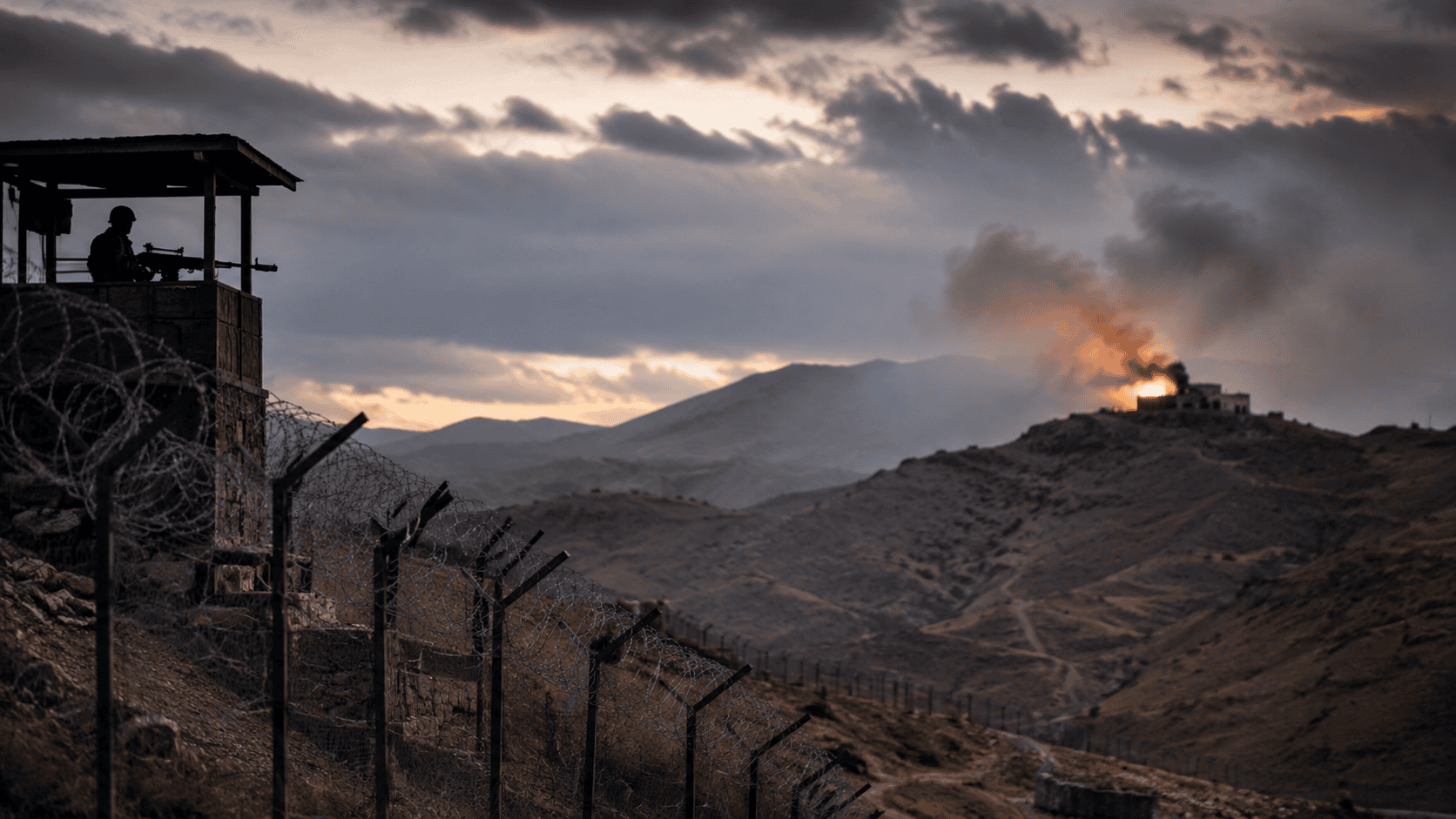
The Pakistan Afghanistan border crisis has entered its most alarming chapter yet, with the two neighboring countries locked in a rapidly escalating military confrontation that has now expanded to include drone warfare, cross-border strikes, civilian casualties, and collapsing diplomatic efforts. What began as a series of isolated military exchanges in late 2025 has grown into a sustained and dangerous conflict that regional and international observers are watching with mounting concern.
Thank you for reading this post, don't forget to subscribe!On July 1, the Taliban’s defence ministry announced that its forces had carried out strikes targeting what it described as militant centers in Pakistan’s Balochistan and Khyber Pakhtunkhwa provinces. Pakistan’s military disputed the characterization, stating that four rudimentary drones launched from Afghan territory into Balochistan were detected immediately after crossing the border and neutralized using sophisticated countermeasures. The Pakistan Afghanistan border crisis had taken yet another sharp turn.
What Triggered the Latest Escalation
The immediate trigger for the latest round of hostilities was Pakistan’s retaliatory strikes inside eastern Afghanistan on June 29, which Islamabad said targeted militant infrastructure in Paktia, Paktika and Kunar provinces. Pakistan claimed that approximately 25 fighters were neutralized in the operation. The Afghan Taliban government, however, stated that the strikes resulted in 36 civilian deaths — a figure Pakistan has not acknowledged. The Taliban vowed a response, and the drone strikes into Balochistan followed within days.
The Pakistan Afghanistan border crisis did not emerge overnight. The first serious escalation between the two neighbors came in October 2025, when they engaged in a week of intense border clashes — the worst since the Taliban’s return to power in 2021. Mediation efforts by Qatar and Turkey produced a fragile ceasefire, but core differences remained unresolved. That ceasefire eventually collapsed, and by early 2026, military confrontation had resumed with greater intensity.
How the Drone Dimension Changes the Conflict
One of the most significant developments in the Pakistan Afghanistan border crisis has been the introduction of drone warfare by the Taliban. These drones, which are essentially commercially available drones modified to carry a small load of explosives, are likely to become a key feature in the conflict between the two countries going forward. They offer a cheap alternative to the Afghan Taliban forces, which continues to lack a fully functional air force.
Pakistan’s military said the drones were intercepted before reaching their targets. But the incident prompted Pakistan’s president to say Kabul had “crossed a red line by attempting to target our civilians.” The use of modified commercial drones to strike targets inside a nuclear-armed state represents an asymmetric escalation that security analysts are treating as a defining and deeply worrying shift in the nature of this conflict.
Pakistan’s Military Response and Operation Ghazab
Pakistan’s posture throughout the Pakistan Afghanistan border crisis has been shaped by its insistence that the Afghan Taliban is providing shelter and support to the Tehreek-e-Taliban Pakistan, known as the TTP, as well as to fighters affiliated with the Islamic State Khorasan Province. The Taliban government in Kabul has consistently denied these accusations, maintaining that Pakistan’s internal security challenges are not of Kabul’s making.
A war began in late February 2026 between Afghanistan and Pakistan following Pakistani airstrikes on militant targets in eastern Afghanistan. Pakistan said the strikes targeted militant camps belonging to the Pakistani Taliban and ISIS–K, in retaliation for recent cross-border attacks in Pakistan, while Afghan authorities and the United Nations Assistance Mission in Afghanistan reported casualties.
Pakistan subsequently launched Operation Ghazab-lil-Haq in response to escalating Taliban border attacks, a large-scale campaign involving aerial and ground operations that significantly intensified the Pakistan Afghanistan border crisis through March 2026.
Civilian Toll and Humanitarian Concerns
The human cost of the Pakistan Afghanistan border crisis has been severe on both sides of the border. The United Nations reported in May that cross-border fighting had killed at least 372 Afghan civilians and injured 397 in the first three months of 2026. Pakistan has also suffered casualties in terrorist attacks and cross-border incidents, with security data indicating a sharp increase in militant activity inside the country throughout the period of escalation.
Earlier this year, some 99 people from both sides, including 13 soldiers and one civilian in Pakistan, and 13 soldiers and 72 civilians in Afghanistan, were killed in the clashes. International humanitarian organizations have raised alarm over the growing impact on civilian populations in border regions on both sides, many of whom have been displaced by the fighting.
Diplomacy Has Failed to Hold
Multiple diplomatic efforts to resolve the Pakistan Afghanistan border crisis have collapsed in succession. Chinese-mediated talks in Urumqi in April produced a temporary reduction in Pakistani strikes and appeared to generate cautious optimism, with Taliban officials reportedly close to offering written security guarantees. However, the lull lasted only about two months before tensions resurfaced in June.
Russia has now publicly entered the diplomatic picture, urging both Pakistan and Afghanistan to resolve their disputes through dialogue rather than military means. India’s government has also issued statements regarding strikes along the Afghan border, which Pakistan has publicly rejected as mischaracterizing the situation. The international dimension of the Pakistan Afghanistan border crisis is clearly widening, drawing in multiple regional and global powers with varying interests in the outcome.
What Analysts Are Saying
Security analysts tracking the Pakistan Afghanistan border crisis warn that the current trajectory carries serious risks. Ricardo Alvarez, a research analyst tracking armed rebellions across South and Central Asia, noted that what started in 2022 as occasional incidents and retaliations has, since 2025, become a consolidated pattern. “That does not mean escalation might not still occur. We have already seen an escalation between October 2025 and March 2026 rounds of conflict. Tit-for-tat has become the norm, but there might still be a gradual escalation ahead, with more decisive attacks from each side.”
The introduction of drone warfare into the Pakistan Afghanistan border crisis has been highlighted as a particularly concerning development. Experts note that as these capabilities become more sophisticated over time, the risk of a miscalculation triggering a broader confrontation increases significantly.
Read More: Pakistan Afghan Border Strikes Kill 29 Fighters Amid Rising Tensions
What Comes Next
The central question hanging over the Pakistan Afghanistan border crisis is whether either side will choose to step back from the current cycle of retaliation or whether the conflict will continue to intensify. Pakistan faces sustained pressure from ongoing terrorist attacks on its soil, which it attributes in large part to groups operating from Afghan territory. The Taliban government, meanwhile, faces pressure to demonstrate strength domestically and resist what it characterizes as Pakistani aggression.
With Chinese-mediated talks having so far failed to produce a durable agreement, and with Russia now entering the diplomatic conversation, the coming weeks may prove critical in determining whether the Pakistan Afghanistan border crisis finds a path toward de-escalation or slides into a more serious and prolonged confrontation.
For ongoing updates and analysis on this developing situation, readers can follow reporting from Al Jazeera, Reuters, and official advisories from the United Nations Assistance Mission in Afghanistan.
Conclusion
The Pakistan Afghanistan border crisis is no longer a contained border dispute — it has evolved into one of South Asia’s most pressing and volatile security challenges of 2026. Drone warfare, recurring airstrikes, civilian casualties on both sides, and repeated failures of international mediation paint a picture of two neighbors locked in a dangerous cycle. Urgent, sustained, and credible diplomatic engagement from regional and global actors will be essential if this crisis is to be resolved before it escalates further.