

Washington — Pakistan key counter-terror partner, says Centcom, according to a report published by Dawn. The US Central Command has publicly acknowledged Pakistan’s role in counter-terrorism efforts, underscoring continued defense cooperation between the two countries.
Thank you for reading this post, don't forget to subscribe!The statement comes amid ongoing discussions in Washington about regional security dynamics in South and Central Asia, particularly concerning Afghanistan and broader counter-terrorism objectives.
Pakistan Key Counter-Terror Partner, Says Centcom Official
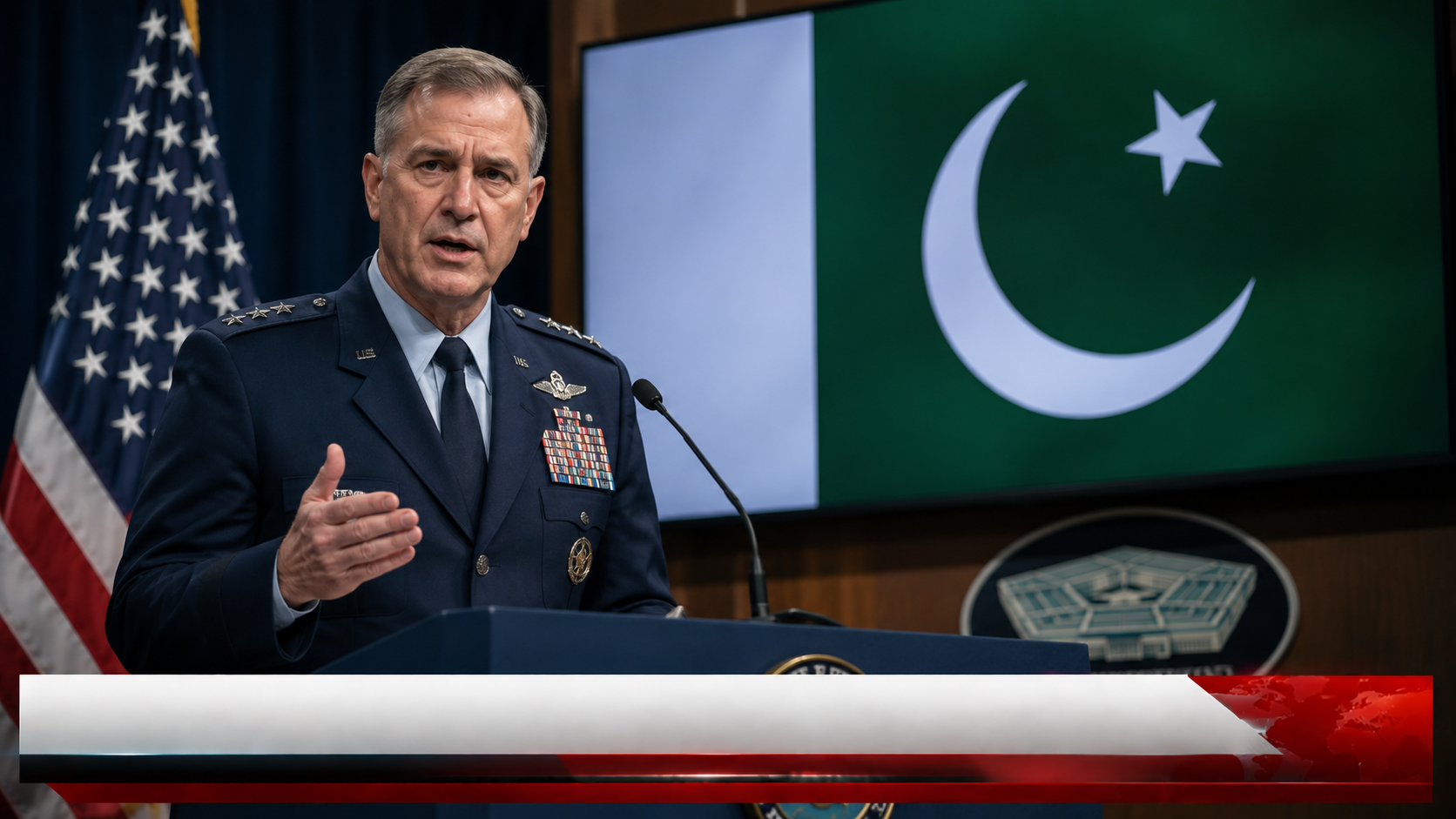
The headline Pakistan key counter-terror partner, says Centcom reflects remarks attributed to a senior US military official, as reported by Dawn. The image accompanying the report shows a uniformed officer speaking at what appears to be an official briefing or congressional testimony.
US Central Command, or Centcom, is the unified combatant command responsible for American military operations in the Middle East, Central Asia, and parts of South Asia. Its area of responsibility includes Afghanistan, Pakistan, and the broader region. Comments from Centcom leadership are closely watched for signals on US defense policy and partnerships.
While the Dawn news card did not include the full quote or context of the statement, the headline indicates a positive assessment of Pakistan’s contributions to counter-terrorism efforts.
Background: US-Pakistan Counter-Terrorism Cooperation
Pakistan and the United States have a long history of cooperation on counter-terrorism, dating back to the post-2001 period. Pakistan was designated a Major Non-NATO Ally in 2004 and has worked with the US on intelligence sharing, border security, and operations against militant groups.
According to the US Department of State’s Country Reports on Terrorism, Pakistan has taken actions against various militant organizations and has suffered significant casualties in counter-terror operations. The US Department of Defense has previously noted Pakistan’s role in supporting stability in Afghanistan and disrupting terrorist networks.
Centcom has regularly engaged with Pakistan’s military leadership through the US-Pakistan Defense Consultative Group and other bilateral channels. These forums address issues including counter-terrorism, defense trade, and regional security cooperation.
Regional Security Context
The statement that Pakistan key counter-terror partner, says Centcom, comes at a time of evolving security challenges in the region. Following the US withdrawal from Afghanistan in 2021, regional states have reassessed counter-terrorism strategies and border management.
Pakistan shares a 2,600-kilometer border with Afghanistan and has expressed concerns about cross-border militancy. The country has conducted multiple military operations in its tribal districts and has fenced large portions of the Pakistan-Afghanistan border to curb movement of militant groups.
The National Counter Terrorism Authority of Pakistan coordinates the country’s counter-terrorism policy under the National Action Plan. Pakistan Key Counter-Terror Partner, Says Centcom & NACTA works with provincial governments and law enforcement agencies to implement counter-extremism and de-radicalization programs.
Areas of US-Pakistan Counter-Terror Cooperation
When Centcom describes Pakistan as a key counter-terror partner, it typically refers to several areas of ongoing or historical cooperation:
1. Intelligence Sharing
The US and Pakistan have shared intelligence on terrorist financing, militant movements, and threats to regional stability. This cooperation has been cited by both sides in official statements.
2. Border Security
Pakistan’s efforts to secure its western border with Afghanistan have been a focus of bilateral discussions. The US has provided support for border management systems and surveillance technology in the past.
3. Counter-IED and Training
The US has provided training and equipment to Pakistani forces for counter-improvised explosive device operations, forensics, and bomb disposal.
4. Countering Terrorist Financing
Pakistan has worked with the Financial Action Task Force to strengthen anti-money laundering and counter-terrorist financing regimes. The US has supported technical assistance in this area.
5. Regional Stability
Both countries share an interest in preventing the resurgence of transnational terrorist groups in Afghanistan. Pakistan Key Counter-Terror Partner, Says Centcom monitors these threats as part of its regional mandate.
Strategic Importance of the Centcom Statement
The remark that Pakistan key counter-terror partner, says Centcom, carries diplomatic and strategic weight. Statements from combatant commands often reflect current assessments used to inform Congress and the Department of Defense.
For Pakistan, such recognition can support continued security assistance, military training programs, and defense dialogue. The US Congress considers partner assessments when reviewing foreign military financing and other cooperation mechanisms.
For the United States, acknowledging Pakistan’s role helps maintain a working relationship with a country critical to South Asian stability. Despite periods of tension, both sides have maintained military-to-military contacts.
The United States Institute of Peace notes that sustained counter-terror cooperation requires trust and regular engagement, even when broader political relations fluctuate.
Challenges in the Bilateral Security Relationship
While Pakistan Key Counter-Terror Partner, Says Centcom’s statement is positive, US-Pakistan counter-terror cooperation has faced challenges over the years. Issues have included differences over regional strategy, concerns about militant sanctuaries, and shifts in US policy priorities.
In recent years, US assistance to Pakistan has been reduced compared to the early 2000s. However, security dialogue has continued through Pakistan Key Counter-Terror Partner, Says Centcom and the State Department. The Pentagon’s annual report to Congress on Pakistan typically includes an assessment of counter-terror cooperation.
Analysts at the Center for Strategic and International Studies point out that the US and Pakistan have converging and diverging interests in the region. Areas of convergence include preventing terrorist attacks and ensuring stability in Afghanistan.
Reaction and Next Steps
As of the Dawn report, there has been no detailed readout from Pakistan Key Counter-Terror Partner, Says Centcom or the Pentagon beyond the headline. Full transcripts of congressional testimony or press briefings often provide additional context on such statements.
Pakistan’s Ministry of Foreign Affairs and Inter-Services Public Relations typically welcome recognition of the country’s counter-terror sacrifices. ISPR has previously highlighted that Pakistan has lost over 80,000 civilians and security personnel to terrorism since 2001.
Observers will watch for whether the Pakistan Key Counter-Terror Partner, Says Centcom statement translates into specific policy actions, such as resumed security assistance, joint exercises, or enhanced intelligence cooperation.
Analysis: What This Means for Regional Policy
When Pakistan key counter-terror partner, says Centcom, it signals that the US military continues to view Pakistan as an important stakeholder in regional security. This is particularly relevant given concerns about ISIS-Khorasan, Tehrik-i-Taliban Pakistan, and other groups operating in the region.
The statement may also influence discussions at multilateral forums, including the United Nations and Financial Action Task Force, where Pakistan’s counter-terror efforts are reviewed.
For regional countries, US-Pakistan security cooperation affects the broader balance of power in South Asia. India, China, and Afghanistan all monitor US-Pakistan military ties closely.
Read Also: Pakistan makes fresh bid to revive US-Iran talks
Read Also: ISPR Responds to Indian Army Chief Remarks at New Delhi Forum
Read Also: SC Says Attack on LEAs Constitutes Terrorism in Landmark Legal Clarification
Conclusion
The assessment that Pakistan key counter-terror partner, says Centcom reaffirms a critical dimension of US-Pakistan relations. Despite complexities in the broader bilateral relationship, counter-terrorism remains an area of shared interest and cooperation.
As Centcom continues to monitor threats emanating from South and Central Asia, partnerships with regional states remain essential to US strategy. Pakistan’s geographic location, military capabilities, and experience in counter-terror operations make it a significant actor in this context.
Further details from Centcom or the Department of Defense will clarify the scope and implications of this assessment. For now, the statement highlights that security cooperation remains an active component of the US-Pakistan relationship.
SOURCES
- US Central Command: https://www.centcom.mil/
- US Department of State – Country Reports on Terrorism: https://www.state.gov/reports/country-reports-on-terrorism/
- Dawn News: https://www.dawn.com/
- National Counter Terrorism Authority Pakistan: https://nacta.gov.pk/
- US Department of Defense: https://www.defense.gov/