

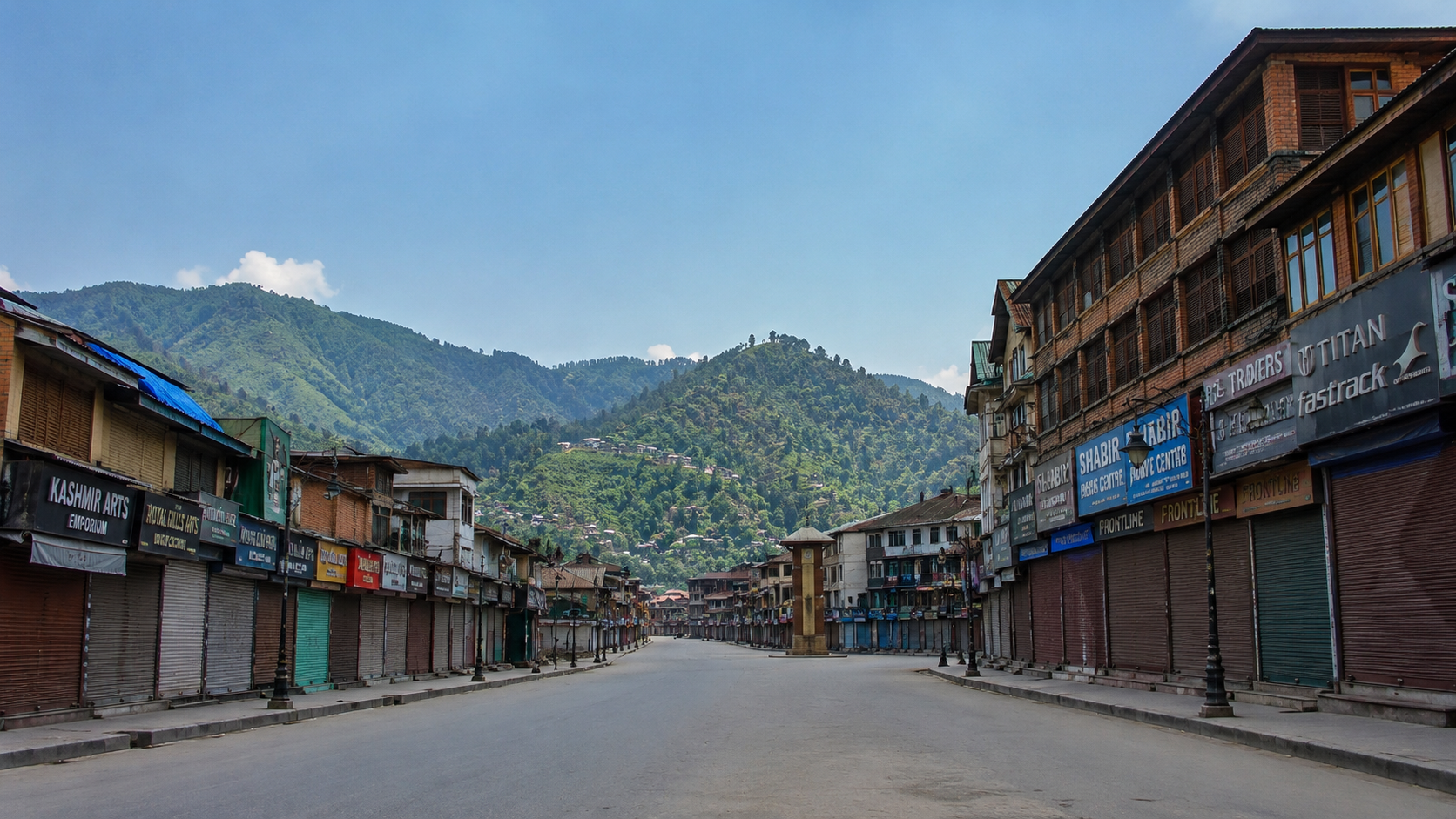
A territory-wide shutdown has brought daily life to a standstill across Pakistan-administered Kashmir, as the region grapples with its deadliest unrest in years. The latest Pakistani Kashmir protests, which began nearly two weeks ago, have left more than 20 people dead, hundreds wounded, and hundreds more detained, according to Reuters reporting citing government officials and local police.
Thank you for reading this post, don't forget to subscribe!The scale of the unrest has placed Islamabad in an uncomfortable position. Pakistan has long criticised India’s handling of dissent in Indian-administered Kashmir, but is now confronting comparable anger within the territory under its own administration — a contrast that has not gone unnoticed by regional observers.
How the Pakistani Kashmir Protests Began
The unrest traces back to a strike called on June 9 by the Joint Awami Action Committee (JAAC), an alliance of civil society groups that has since been banned by local authorities under anti-terrorism laws. The JAAC organised the shutdown in protest against the reservation of 12 seats for refugees in the upcoming July 27 elections to the region’s 45-seat legislative assembly. These refugees are individuals who fled to Pakistan after being displaced from Indian-administered Kashmir, and the decision to set aside dedicated assembly seats for them sparked significant local opposition.
Pakistani Kashmir protests, In the days leading up to the formal shutdown, protests had already begun to intensify across parts of the region. According to government officials speaking to Reuters on condition of anonymity, at least 20 civilians were killed between June 6 and June 14 alone, with dozens more wounded in clashes between protesters and security forces.
Casualties on Both Sides
The Pakistani Kashmir protests have not been one-sided in terms of casualties. Regional police chief Liaqat Ali Malik told Reuters that four police officers had been killed and 97 others wounded during confrontations with demonstrators. Authorities said 515 people had been detained in connection with the unrest as of the latest count.
Thousands of JAAC supporters remain camped on the outskirts of Rawalakot, a town roughly 100 kilometres south of Muzaffarabad, the regional capital, underscoring that the protest movement retains substantial grassroots backing despite the government’s ban on the organisation.
Government Response: Roads Closed, Internet Blocked on Pakistani Kashmir protests
In response to the escalating unrest, authorities have shut down main roads connecting key towns, restricted internet access across much of the territory, and limited media access to affected areas. These measures have compounded the economic disruption caused by the shutdown itself, with commercial activity in towns such as Muzaffarabad’s Upper Adda district grinding to a near halt.
Eyewitness accounts and photographs from the region have shown deserted streets and shuttered marketplaces, with daily wage labourers among those most affected by the prolonged closures. Medical stores and grocers have reportedly been permitted to open for limited hours to allow residents access to essential goods.
Why the Refugee Seat Issue Is So Sensitive Pakistani Kashmir protests
At the heart of the dispute is the question of political representation for refugees displaced from Indian-administered Kashmir who now live in Pakistan. Critics of the seat-reservation measure argue that allocating 12 of the assembly’s 45 seats to this group dilutes the representation available to residents native to Pakistan-administered Kashmir, raising concerns about long-term political balance in the territory’s legislature.
Supporters of the measure, meanwhile, view dedicated representation for displaced refugees as a matter of basic political inclusion, given their unique status and history of displacement. The clash between these two positions has proven difficult to resolve through dialogue alone, fuelling the protest movement that has now drawn in much of the territory.
Political and Diplomatic Sensitivity for Islamabad
For Pakistan’s federal government, the unrest in its own administered Kashmir carries particular diplomatic weight. Islamabad has consistently positioned itself as a vocal critic of India’s approach to managing dissent in Indian-administered Kashmir, often highlighting restrictions on civil liberties there. The current situation — marked by road closures, internet restrictions, and a heavy security response within Pakistan-administered territory — invites direct comparisons that complicate that messaging.
Pakistani Kashmir protests Observers note that how Islamabad manages the coming weeks, particularly in the run-up to the July 27 assembly elections, could shape both domestic political dynamics within the region and the broader narrative Pakistan presents internationally on questions of civil rights and political representation in Kashmir more broadly.
Possible Impact and Analysis of Pakistani Kashmir protests
Several potential consequences are likely to follow from the continuing Pakistani Kashmir protests:
- Election timeline pressure: With the JAAC-led unrest tied directly to seat allocations for the July 27 elections, authorities may face pressure to revisit the contested provisions or offer concessions to de-escalate tensions before polling day.
- Continued economic disruption: A prolonged shutdown risks deepening hardship for daily wage workers and small traders across the territory, particularly if road closures and internet restrictions remain in place for an extended period.
- Scrutiny of security response: The reported casualty figures on both the protester and police sides are likely to draw continued attention from human rights observers and regional media, increasing pressure for an independent accounting of events between June 6 and June 14.
- Broader political resonance: The unrest may influence public discourse around governance and representation in Pakistan-administered Kashmir more broadly, beyond the immediate refugee-seat dispute.
What Happens Next
With JAAC supporters continuing to camp near Rawalakot and the territory-wide shutdown still in effect, the situation in Pakistani Kashmir remains fluid. Authorities have not signalled a clear timeline for lifting road closures or restoring full internet access, and the banned status of the JAAC raises questions about how negotiations, if any, might proceed given the group no longer has formal legal standing to engage with the government.
The coming weeks leading up to the July 27 legislative assembly elections are likely to be closely watched, both for signs of de-escalation and for any further developments in the dispute over refugee representation.
Conclusion (Pakistani Kashmir protests)
The unrest gripping Pakistan-administered Kashmir represents the territory’s most serious bout of instability in years, driven by a dispute over political representation that has escalated into a deadly and economically disruptive standoff. With more than 20 civilian deaths, several police fatalities, and hundreds detained, the Pakistani Kashmir protests have exposed deep divisions over how displaced refugees should be represented in the region’s political institutions. How Islamabad and local authorities choose to respond in the coming weeks will likely determine whether the territory can move toward a peaceful resolution ahead of the July elections, or whether tensions continue to simmer unresolved.
Read Also: Gwadar Saudi Refinery: Pakistan Renews Its Boldest Ever Energy Power Move
Government of Azad Jammu & Kashmir — https://ajk.gov.pk