

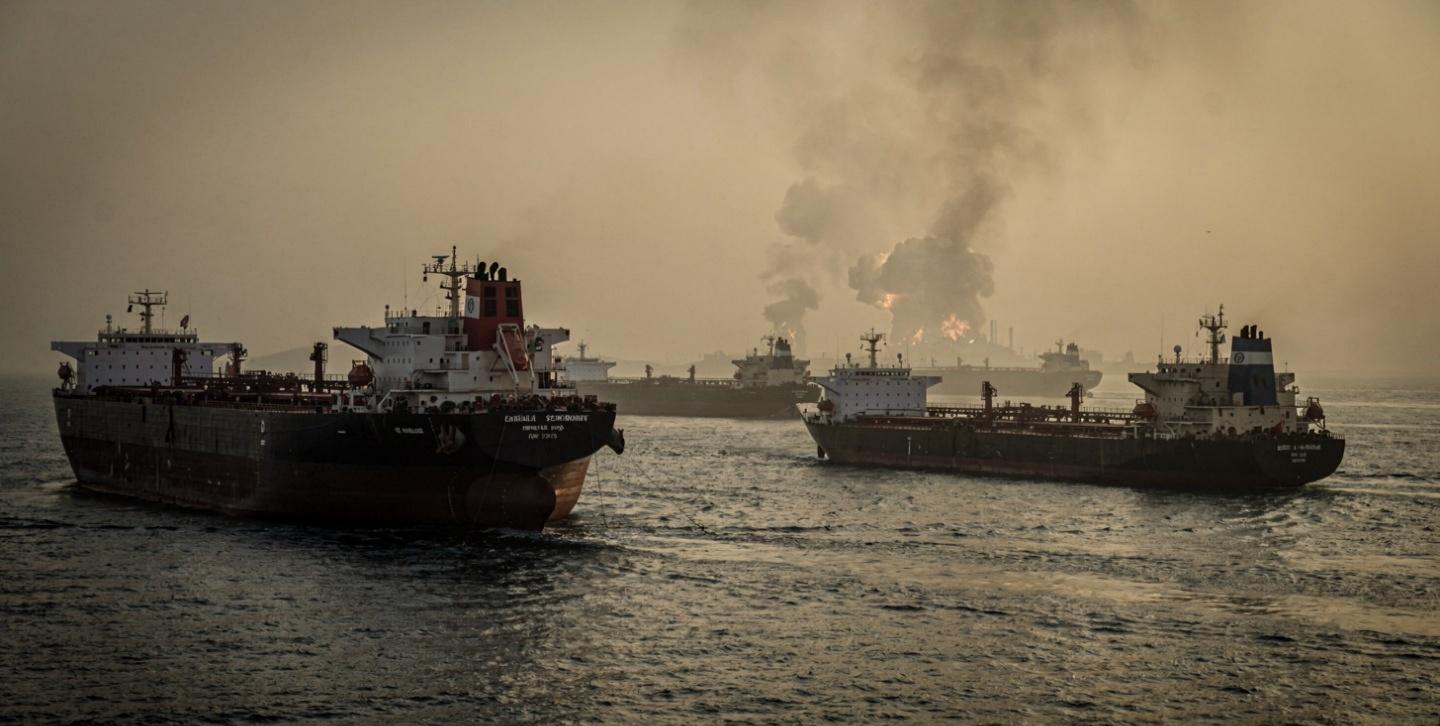
The fragile calm in the Gulf has been shaken once again. A fresh round of military strikes between the United States and Iran has reignited fears of a wider conflict, after a commercial tanker was attacked near the Strait of Hormuz — one of the world’s most important oil shipping routes. The latest exchange has placed the ongoing Strait of Hormuz crisis back at the center of global attention, raising concerns over regional stability, energy markets, and the durability of a ceasefire both sides had previously agreed to.
Thank you for reading this post, don't forget to subscribe!Strait of Hormuz crisis, according to US Central Command, the trouble began when a Panama-flagged tanker carrying more than two million barrels of crude oil was struck by what officials described as a one-way attack drone while transiting near the strait. In response, US forces said they carried out strikes on several Iranian military-linked sites. Hours later, Iran’s Islamic Revolutionary Guard Corps said its navy and aerospace units had launched retaliatory strikes on US-linked positions in Bahrain and Kuwait.
What Happened in the Latest Escalation and Strait of Hormuz crisis
Officials from US Central Command stated that the retaliatory strikes targeted Iranian military surveillance infrastructure, communication systems, air defense sites, drone storage facilities, and minelaying capabilities. The statement framed the action as a direct response to what it called continued Iranian aggression against commercial shipping in the region.
Iran’s Revolutionary Guard, in a statement carried by state media, said its forces struck positions linked to what it described as the “US military presence” in the region, naming Bahrain and Kuwait specifically. Bahraini state media condemned the Iranian action, describing it as a violation of the country’s sovereignty, while both Kuwait and Egypt issued statements condemning the broader escalation.
Britain’s maritime security agency, UKMTO, also reported damage to a separate commercial vessel near the coast of Oman around the same period, adding to concerns that the wider waterway is becoming increasingly unsafe for shipping traffic.
A Fragile Ceasefire Under Pressure
Strait of Hormuz crisis, the renewed hostilities come despite a ceasefire framework that both Washington and Tehran had previously committed to following months of conflict earlier in the year. Each side has accused the other of breaching the terms of that agreement. US officials have characterized recent Iranian actions as a clear violation, while Iranian officials have pushed back, arguing that continued American military activity in the Gulf — including a reported blockade affecting Iranian shipping — itself undermines the spirit of the truce.
A senior Iranian parliamentary figure, who chairs the country’s national security commission, said publicly that Iran considers the Strait of Hormuz crisis to fall under its jurisdiction and cautioned against what he called escalation by US forces in the area. Iranian officials have also pointed to a broader memorandum of understanding reached earlier in the conflict, arguing that recent strikes by Washington fall outside its terms.
Impact on Global Shipping and Oil Markets Strait of Hormuz crisis
The Strait of Hormuz remains one of the most strategically important chokepoints for global energy trade, historically carrying roughly a fifth of the world’s oil and liquefied natural gas shipments. Even temporary disruptions to traffic through the strait tend to ripple quickly through global oil prices and shipping insurance costs.
A United Nations maritime agency had recently begun assisting with the relocation of stranded vessels through an alternative coastal route near Oman, in what was seen as a cautious step toward normalizing traffic through the region. However, those efforts were paused following the latest attack, with officials saying operations would not resume without firmer guarantees of safe passage for commercial vessels.
Strait of Hormuz crisis, Maritime risk analysts have noted that while the strait has technically remained open, with vessels still transiting in the aftermath of the latest incident, the broader pace of recovery in shipping activity has slowed considerably. War-risk insurance premiums for vessels passing through the strait have also risen sharply since the conflict first began earlier in the year, adding significant costs for shipping companies and, by extension, global supply chains.
Regional and International Reactions
The latest escalation has drawn swift condemnation from several Gulf states. Bahraini officials described the Iranian strikes as an act that undermines regional stability, while Kuwaiti and Egyptian officials issued similar statements distancing themselves from the broader conflict and calling for restraint.
International observers continue to watch closely Strait of Hormuz crisis for any signs that the conflict could widen further, particularly given the strait’s central role in global energy security. Diplomatic channels between Washington and Tehran remain active, with both sides reportedly continuing indirect talks aimed at stabilizing the ceasefire, even as military exchanges continue on the ground.
Background: How the Conflict Reached This Point and Strait of Hormuz crisis
The current standoff is rooted in a broader conflict between Iran and the United States that intensified earlier this year, following failed nuclear negotiations and a prior period of heightened tension between Iran and Israel. Over the following months, both sides exchanged strikes across multiple fronts, including attacks on shipping vessels, military installations, and energy infrastructure throughout the Gulf region.
A ceasefire arrangement and in the light o Strait of Hormuz crisis, mediated with international involvement, had brought a temporary reduction in hostilities, allowing for a cautious resumption of commercial shipping activity through the strait. However, as seen in the latest incidents, that calm has proven fragile, with both sides continuing to accuse each other of violations.
Read Also: PA Speaker: Pakistan’s Diplomacy Key to Regional Peace, US-Iran Ceasefire
What Comes Next
With both Washington and Tehran continuing to trade accusations, the durability of the ceasefire remains uncertain. Analysts following the situation suggest that the coming days will be critical in determining whether diplomatic efforts can contain the latest escalation or whether the Strait of Hormuz crisis will continue to deepen.
For now, global shipping operators, energy markets, and regional governments remain on alert, watching closely for further developments in one of the world’s most consequential and closely monitored conflict zones.
For continued, verified updates on this developing situation, readers can follow coverage from international wire services such as Reuters, Al Jazeera, and BBC News, which are actively tracking statements from all parties involved.