

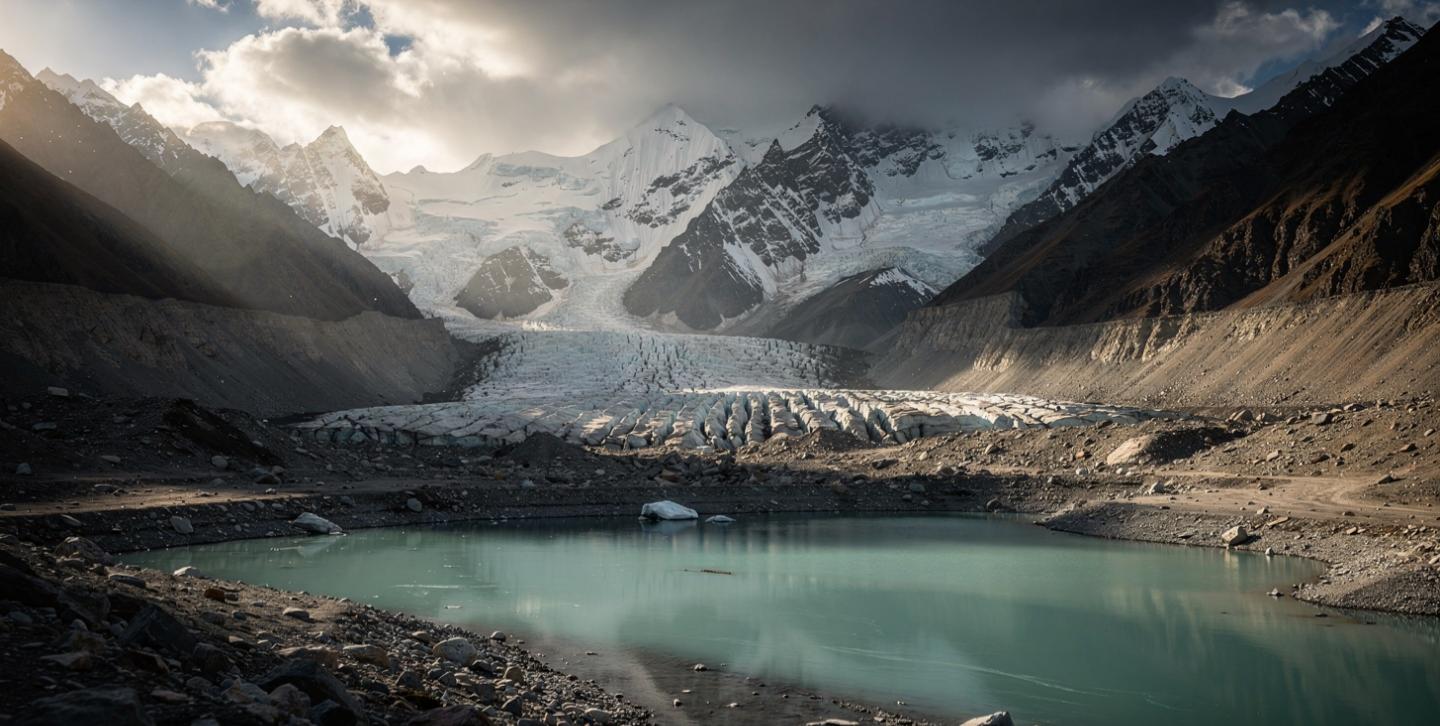
Pakistan’s northern mountain regions are once again on high alert. The National Disaster Management Authority (NDMA) has issued a fresh NDMA GLOF alert, warning that an intense and prolonged heatwave is accelerating the melting of glaciers across Gilgit-Baltistan, Khyber Pakhtunkhwa, and Azad Jammu and Kashmir, sharply raising the risk of Glacial Lake Outburst Floods (GLOFs), flash floods, and landslides in the days ahead.
Thank you for reading this post, don't forget to subscribe!The advisory, issued through NDMA’s National Emergencies Operation Centre (NEOC), comes as soaring temperatures combine with forecast rainfall to put unusual pressure on glacial lakes throughout the Karakoram and Hindu Kush ranges — a combination officials say could prove dangerous for downstream communities.
What the NDMA GLOF Alert Says
According to the NDMA, rising temperatures and expected rainfall are likely to accelerate glacier melt, leading to increased water flow in rivers and streams across the northern mountainous belt. The authority has warned that this surge in meltwater could destabilize natural ice and moraine dams that normally hold back glacial lakes, potentially triggering sudden and powerful flood events downstream.
This marks the second major GLOF-related alert issued by Pakistani authorities this month alone, NDMA GLOF alert reflecting a worrying pattern of escalating glacier-related risk as the region experiences unusually high temperatures. Officials have indicated that the elevated threat is expected to persist until at least the first week of July, meaning communities in vulnerable districts will need to remain on guard for an extended period.
The Pakistan Meteorological Department (PMD) has separately echoed these concerns, NDMA GLOF alert cautioning that the heatwave gripping northern Pakistan is accelerating the melting of glaciers and snowfields, with existing glacial lakes expected to expand and new ones potentially forming in vulnerable valleys.
Which Areas Are Most at Risk and NDMA GLOF alert:
The advisory has identified a long list of districts considered particularly vulnerable to glacier-related flooding. In Gilgit-Baltistan, these include Hunza, Nagar, Ghizer, Skardu, Shigar, Ghanche, Kharmang, Astore, and Diamer. In Khyber Pakhtunkhwa, the at-risk areas include Upper and Lower Chitral, Swat, Kalam, Bahrain, Arkari, Upper and Lower Dir, Upper and Lower Kohistan, and Mansehra.
NDMA GLOF alert, Authorities have also flagged the possibility of localized flooding in parts of Azad Jammu and Kashmir, including Muzaffarabad, the Neelum Valley, Bagh, and Haveli. Beyond glacial lake bursts specifically, officials warn that the broader hazard picture includes flash floods, debris flows, mudslides, and rockfalls — all of which carry the potential to damage roads, bridges, and other critical infrastructure across the mountainous terrain.
A Region Already Feeling the Impact and NDMA GLOF alert
NDMA GLOF alert, the warning is not merely theoretical. In recent days, a powerful cloudburst triggered devastating flash floods in Gilgit-Baltistan’s Thor Valley, located in Diamer district, sweeping away homes, orchards, standing crops, bridges, and vehicles. The flooding severed road links and left affected communities stranded, with damaged roads complicating ongoing rescue and relief efforts. Residents in the area have appealed for urgent compensation and a full assessment of their losses.
This incident illustrates exactly the kind of compounding disaster risk that the NDMA GLOF alert is intended to warn against — where intense rainfall, glacier melt, and unstable mountain terrain combine to produce fast-moving, destructive flooding with very little advance warning for residents living downstream.
Why Pakistan’s Glaciers Are Under Such Pressure
Pakistan is home to more glaciers than almost any country outside the polar regions, with thousands scattered across the Hindu Kush, Karakoram, and Himalayan mountain ranges. According to estimates from the United Nations Development Programme (UNDP), melting glaciers in this region have formed more than 3,000 glacial lakes across Gilgit-Baltistan and Khyber Pakhtunkhwa alone. Of these, dozens have been assessed as particularly vulnerable to hazardous outbursts, with several million people living in communities downstream from these lakes.
NDMA GLOF alert and Experts have repeatedly noted that Pakistan is among the countries most exposed to climate-driven natural disasters, despite contributing a very small share of global greenhouse gas emissions. Rising regional temperatures, linked to broader global climate trends, have accelerated glacier retreat in recent years, increasing both the frequency and intensity of GLOF events compared to previous decades.
In response, Pakistan has worked with international partners, including the UNDP, on long-running risk-reduction initiatives such as the GLOF-II project, which focuses on early warning systems, flood protection infrastructure, and community-based disaster preparedness across vulnerable valleys in Gilgit-Baltistan and Khyber Pakhtunkhwa.
Government Response and Precautionary Measures
Following the latest advisory, the NDMA GLOF alert has directed all relevant federal and provincial departments to maintain continuous monitoring of glaciers, glacial lakes, rivers, and weather conditions in the coming days. The Khyber Pakhtunkhwa Provincial Disaster Management Authority has likewise instructed deputy commissioners in vulnerable districts to step up proactive monitoring, conduct evacuation drills, prepare emergency shelters, and launch public awareness campaigns warning residents in low-lying areas about potential dangers.
Local authorities have also been told to coordinate with agencies such as the National Highways Authority and the Frontier Works Organisation to ensure that any roads or bridges damaged by flooding can be restored as quickly as possible.
For the general public, the advice from both the NDMA and PMD is consistent: avoid unnecessary travel near rivers, streams, and glacial lakes; avoid camping or trekking close to vulnerable water channels; and immediately report any sudden rise in water levels, unusual changes in water color, or abnormal sounds coming from glaciers to the relevant authorities.
Read Also: NDMA Flood Alert Pakistan: Nationwide Rain and Landslide Warning Issued Until June 20
What This Means Going Forward
The recurring nature of these NDMA GLOF alert highlights a broader and increasingly urgent challenge for Pakistan’s disaster management institutions. As regional temperatures continue trending upward, the window between routine seasonal warnings and actual destructive flooding events appears to be narrowing in some areas, as seen in the recent Thor Valley disaster.
For residents of Gilgit-Baltistan and Khyber Pakhtunkhwa, the message from authorities is clear: heightened vigilance, early evacuation where necessary, and strict adherence to official advisories remain the most effective tools available while the heatwave persists. With the danger period expected to extend through early July, officials are likely to continue monitoring glacial activity closely and may issue further updates if conditions worsen.
As Pakistan continues to grapple with the compounding effects of climate change on its northern mountain ecosystems, this latest NDMA GLOF alert serves as another reminder of the delicate balance between glacier-fed water resources and the very real risks they pose to communities living in their shadow.
For continued updates on this situation, readers can follow advisories from the National Disaster Management Authority and the Pakistan Meteorological Department.