

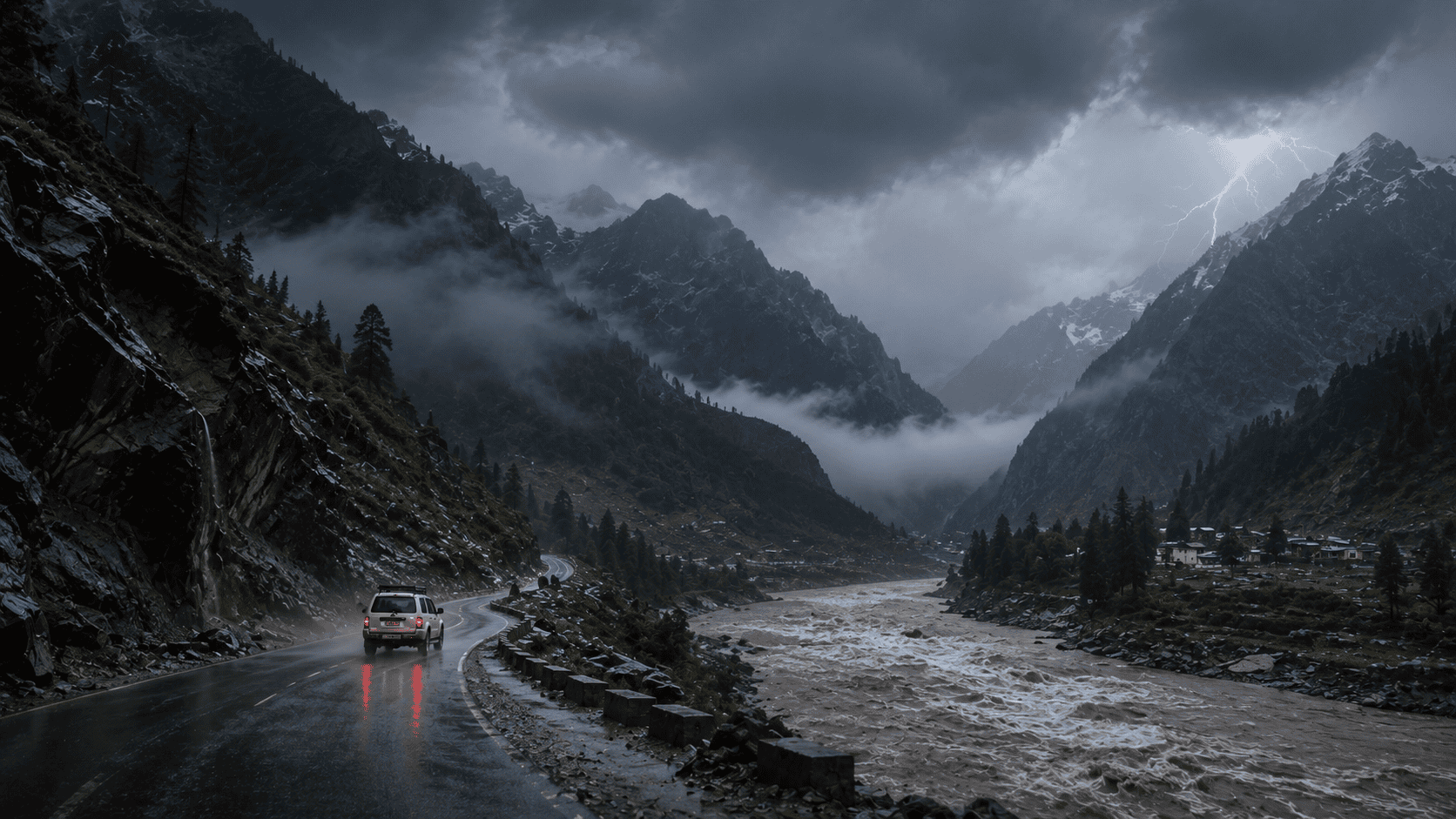
Pakistan’s disaster management authorities have issued an urgent NDMA travel advisory, calling on tourists and non-essential travellers to steer clear of the country’s northern regions as intensifying monsoon rains raise the risk of flash floods, landslides, and glacial lake outburst floods. The warning comes as the Pakistan Meteorological Department (PMD) forecasts fresh rain and thunderstorms across the country’s upper regions heading into the weekend.
Thank you for reading this post, don't forget to subscribe!What the NDMA Travel Advisory Says
The National Disaster Management Authority’s National Emergency Operations Centre (NEOC) issued the NDMA travel advisory after assessing rising temperatures combined with ongoing heavy rainfall, both of which significantly increase the likelihood of sudden natural hazards in mountainous terrain. The advisory instructs tourists and non-essential travellers to avoid mountain routes in northern Pakistan from July 10 through July 14.
According to officials, landslide alerts remain in effect from July 11 to July 13, while broader flood and river surge warnings apply across Gilgit-Baltistan, Khyber Pakhtunkhwa, and Azad Jammu and Kashmir through July 14. The NDMA travel advisory specifically warns that rising heat combined with persistent rain could trigger glacial lake outburst floods (GLOFs), hill torrents, debris flows, sudden river surges, and rockfalls in vulnerable glacial valleys.
High-Risk Zones Identified
As part of the NDMA travel advisory, authorities have named several high-risk areas requiring heightened caution. These include Badswat, Ashkoman, Hinarchi, Yasin Valley, Khaplu, and the Hisper and Hopper glacier regions. Vulnerable roads flagged in the advisory include the Jaglot-Skardu route, Hunza-Gojal road, and the Gilgit-Ghizer corridor, along with the Naltar Valley, Bagrot Valley, and Hermosh areas.
The NEOC has directed citizens to take immediate precautions, including staying away from glacial lakes, river channels, and known flood paths, while avoiding travel on landslide-prone roads altogether. The NDMA travel advisory further instructs the public to follow all directions issued by local district administrations, who are expected to conduct rapid hazard assessments and relay real-time warnings as conditions evolve.
PMD Forecast Driving the Warning
The NDMA travel advisory follows closely on the heels of a fresh weather forecast from the Pakistan Meteorological Department, which predicts rain, windstorms, and thundershowers across the country’s upper regions over the weekend. In Khyber Pakhtunkhwa, the PMD has forecast rain with isolated heavy falls in districts including Dir, Chitral, Swat, Kohistan, Malakand, Shangla, Battagram, Buner, Kohat, Mansehra, Abbottabad, Haripur, Peshawar, and Mardan.
Similar conditions are expected across Azad Jammu and Kashmir, with rain, windstorms, and thundershowers forecast for Muzaffarabad, Rawalakot, Poonch, Neelum Valley, Hattian, Bagh, and Haveli. Officials say moisture-laden currents from both the Arabian Sea and the Bay of Bengal are feeding this active monsoon system, keeping much of the country’s upper belt under sustained rainfall through the coming days.
Why This Advisory Matters
Northern Pakistan, including Gilgit-Baltistan and parts of Khyber Pakhtunkhwa, remains one of the country’s most popular tourist destinations, particularly during the summer season when domestic travel to the mountains peaks. The NDMA travel advisory arrives at a critical time, as thousands of tourists typically flock to valleys like Hunza, Skardu, and Naltar during July.
This makes the timing of the advisory especially significant. Officials are hoping that clear, timely communication will reduce the number of travellers exposed to hazardous conditions, particularly on roads already identified as high-risk for landslides and sudden flooding. The NDMA travel advisory also reflects lessons learned from previous monsoon seasons, when sudden weather changes in glacial valleys caught travellers off guard, sometimes with tragic consequences.
Broader Monsoon Context
This latest warning is part of a broader pattern of weather alerts issued throughout the current monsoon season. Earlier in July, the National Highways and Motorway Police also urged commuters and tourists to avoid unnecessary travel after torrential rains disrupted traffic on major routes, including the GT Road and sections of the motorway network in the Hazara region.
The NDMA has separately noted that while no major river flooding is currently expected on the Indus, Jhelum, Chenab, Ravi, or Sutlej rivers, intermittent heavy rainfall could still lead to flash flooding in hill torrents and seasonal streams, along with urban flooding in low-lying areas. This wider context underscores why the NDMA travel advisory extends beyond just the northern mountains to include broader precautionary guidance for the public.
What Travellers Should Do
Authorities have urged anyone considering travel to northern Pakistan during this period to closely monitor official updates before setting out. The NDMA has recommended that the public download its official “Pak NDMA Disaster Alert” mobile application for real-time safety updates and hazard notifications.
For those who must travel, officials advise avoiding routes near riverbanks, streams, and known landslide zones, reducing speed on wet or damaged roads, and staying alert to signage and instructions from local administration. Following the NDMA travel advisory closely during this window could be the difference between a safe trip and being caught in a sudden, hazardous weather event.
Read Also:Pakistan Russia Counterterrorism Alliance Takes Shape at UN Summit
Conclusion
As monsoon rains continue to sweep across Pakistan’s northern belt, the NDMA travel advisory serves as a timely reminder of the risks that come with the region’s dramatic but unpredictable terrain. With landslide and flood warnings in effect through July 14, officials are urging patience from tourists eager to explore the north, emphasizing that a delayed trip is far preferable to one cut short by a natural disaster.
For the latest updates, readers can follow official guidance from the National Disaster Management Authority, the Pakistan Meteorological Department.