

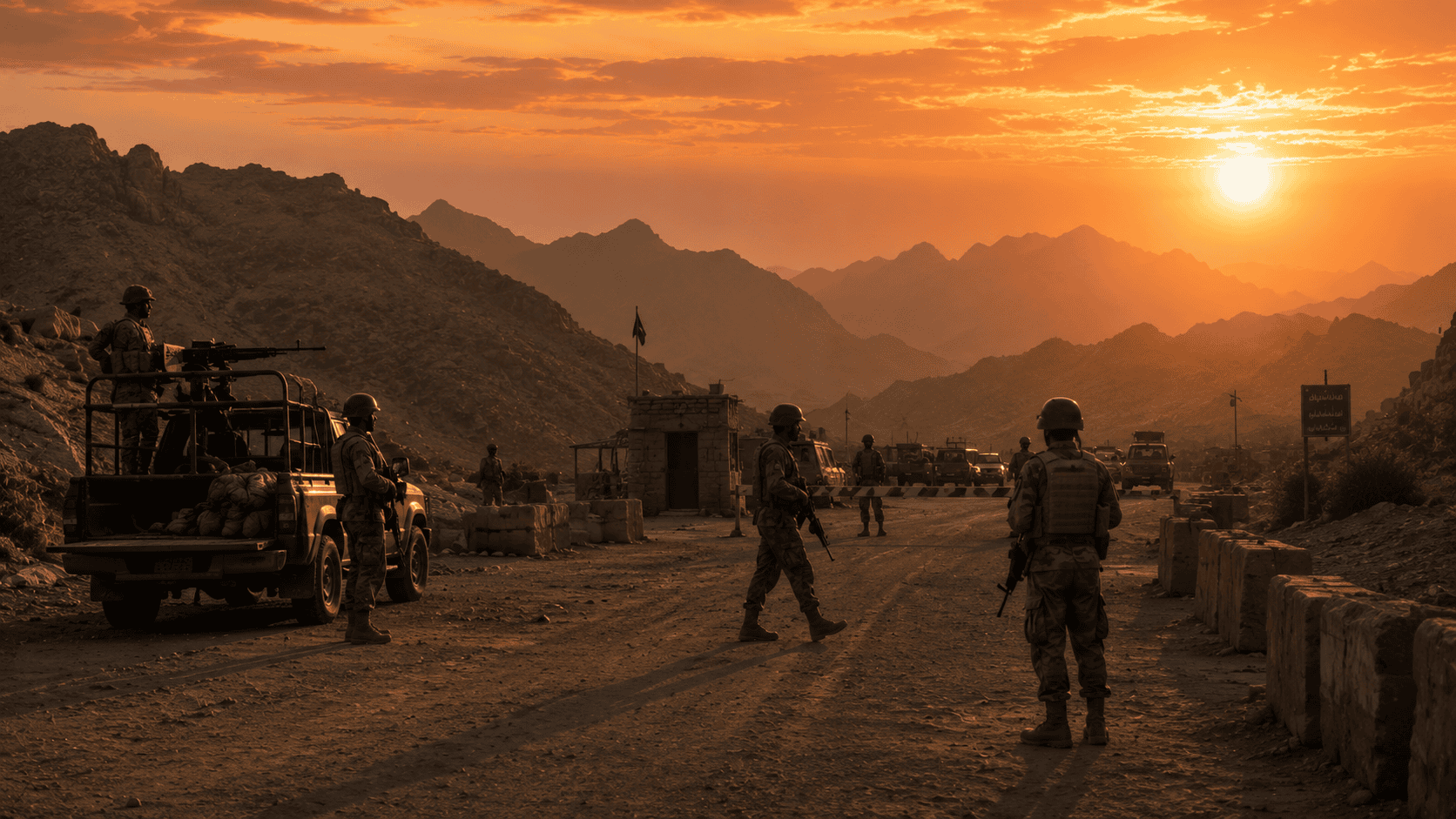
Operation Shaban Balochistan has entered its second week with security forces reporting fresh gains against militant networks operating across the province. According to state media, nine more terrorists were killed in the latest round of operations, pushing the overall tally of militants eliminated since July 5 to 88 — a figure that underscores the scale and intensity of Pakistan’s ongoing counterterrorism campaign in the region.
Thank you for reading this post, don't forget to subscribe!What Triggered Operation Shaban Balochistan
The roots of Operation Shaban Balochistan trace back to a deadly assault on a police post in the Kach Mangi area of Ziarat district, where armed militants killed nine police personnel, including two station house officers, and abducted several others. The attack was one of three major terrorist incidents to strike the province within a span of four days, alongside an armed assault on the outskirts of Quetta and an ambush on an army convoy near Bela.
In response, the Pakistan Army, Frontier Corps, and Balochistan Police launched a coordinated joint operation, combining ground assaults with aerial strikes to target militant hideouts across the province’s mountainous terrain. Officials say the campaign, formally named Operation Shaban, has since expanded into a broader, sustained counterterrorism push involving multiple intelligence-based operations across several districts.
Mounting Death Toll on Both Sides
According to Pakistan’s military spokesperson, Inter-Services Public Relations (ISPR) Director General Lieutenant General Ahmed Sharif Chaudhry, the violence linked to Operation Shaban Balochistan has come at a heavy cost. Briefing reporters in Rawalpindi, he confirmed that four civilians, 27 police personnel, and 11 security personnel — a total of 42 individuals — had been martyred in the initial wave of attacks since July 5.
On the other side, security officials say the death toll among militants has climbed steadily as the operation has progressed. What began with roughly two dozen militants eliminated in the first 48 hours grew rapidly through subsequent strikes, with security sources confirming that the number under Operation Shaban Balochistan specifically had reached 52, while the wider tally across all related intelligence-based operations since July 5 stands at 88.
Who Is Behind the Attacks
Pakistani officials have attributed the recent violence to militant networks referred to as Fitna al-Khawarij and Fitna al-Hindustan, which the government describes as proxy groups receiving support from across the border. Prime Minister Shehbaz Sharif, addressing a meeting of the Provincial Apex Committee on the National Action Plan in Quetta, stated that Pakistan’s “eastern neighbour” was linked to the recent surge in attacks, while also asserting that Afghan territory was being used to stage cross-border strikes.
During the same briefing, PM Sharif emphasized that the country’s civil and military leadership had reached what he called a “mutual and singular decision” to eliminate terrorism collectively, vowing that the campaign would continue “until the last terrorist in Pakistan is eliminated.” Chief of Defence Forces and Chief of Army Staff Field Marshal Asim Munir was also present at the meeting, reflecting the high-level attention being placed on the developments surrounding Operation Shaban Balochistan.
Provincial Government Response on Operation Shaban Balochistan
Balochistan Chief Minister Sarfraz Bugti has been an outspoken voice throughout the operation, describing recent attacks as part of a “planned and malicious conspiracy” aimed at destabilizing the province’s peace and development. He praised the professionalism of the Pakistan Army, Frontier Corps, Balochistan Police, and other law enforcement agencies involved in Operation Shaban Balochistan, calling their response a testament to their dedication.
Bugti also confirmed that a separate attempted attack on a police station in the Zedi area of Khuzdar district was successfully repelled by security personnel, indicating that militant activity remains active across multiple fronts even as the broader operation continues to make gains. He reaffirmed the provincial government’s determination to maintain “the writ of the state,” declaring that those behind the violence “cannot escape their fate.”
Regional and Strategic Context
Balochistan, Pakistan’s largest province by area, has faced a persistent rise in militant violence in recent years, a trend that Pakistani officials link to instability following the Afghan Taliban’s return to power in 2021. In response, Pakistan previously launched Operation Ghazab lil-Haq, targeting alleged terrorist hideouts across the border, and has continued to report significant militant casualties in that campaign as well.
Analysts note that Balochistan’s strategic importance — home to major infrastructure projects, including sections of the China-Pakistan Economic Corridor (CPEC) and the Gwadar port — makes stability in the province a priority for Islamabad. Officials argue that continued militant attacks on highways, security checkpoints, and government infrastructure are attempts to derail development projects seen as central to the province’s long-term economic prospects.
International Attention
The violence in Balochistan has also drawn coverage from international outlets. Reports have noted that Pakistan’s leadership has vowed to press ahead with the crackdown following the deaths of dozens in the initial wave of attacks, with Prime Minister Sharif personally visiting the province to reaffirm the government’s commitment to continued operations.
What Comes Next
Security officials say Operation Shaban Balochistan remains active, with ground and aerial operations continuing in the province’s rugged terrain as forces work to tighten the cordon around remaining militant hideouts. Officials have indicated that the campaign will persist until security forces assess that terrorist networks in the region have been substantially dismantled.
For residents of Balochistan, the coming weeks are likely to bring continued uncertainty, as the province balances an active security operation with the broader goal of restoring normalcy and supporting ongoing development initiatives.
Read More:Balochistan Attacks: PM Shehbaz Vows Crackdown After 42 Deaths
Conclusion oF Operation Shaban Balochistan
Operation Shaban Balochistan represents one of the most intensive counterterrorism campaigns Pakistan has undertaken in recent years, reflecting both the scale of the security challenge in the province and the government’s determination to respond decisively. As the operation continues, the coming days will be critical in determining whether the current momentum translates into lasting stability for one of Pakistan’s most strategically vital regions.
Inter-Services Public Relations (ISPR) — https://www.ispr.gov.pk