
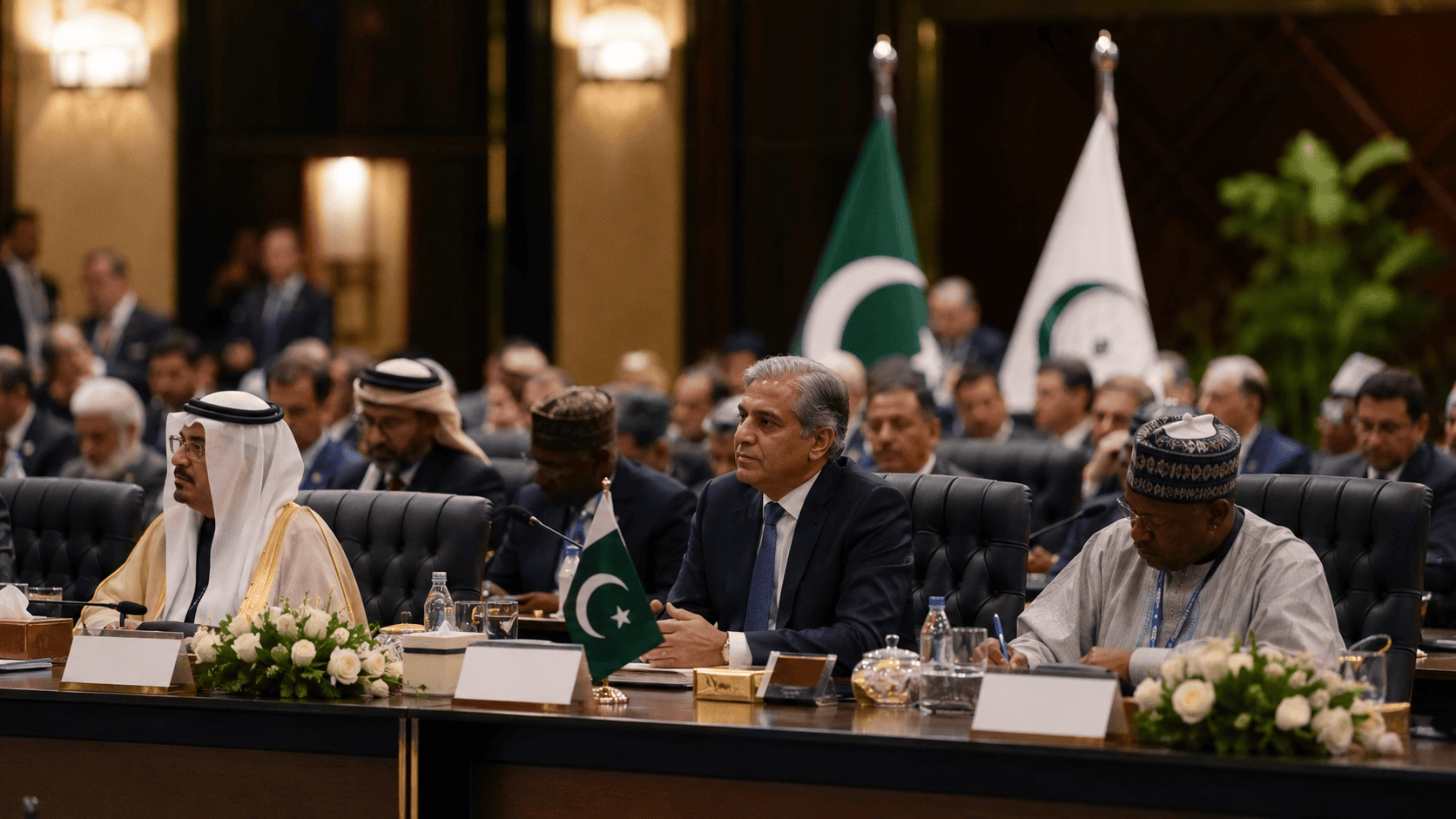
Islamabad became the diplomatic centre of the Muslim world this week as Pakistan formally hosted the OIC Ministerial Conference on Women, drawing ministers, senior officials and women’s rights advocates from across 57 member states of the Organisation of Islamic Cooperation. The two-day gathering, held at the Jinnah Convention Centre on July 12–13, 2026, marked a significant diplomatic milestone for Pakistan and placed the country at the centre of a region-wide conversation on gender equity, economic inclusion and political participation.
Thank you for reading this post, don't forget to subscribe!What Is the OIC Ministerial Conference on Women?
The OIC Ministerial Conference on Women is a periodic gathering of the Organisation of Islamic Cooperation, the world’s second-largest intergovernmental body after the United Nations. Held roughly every three to four years, the conference brings together ministers responsible for women and family affairs to review progress on gender policy, exchange national experiences and adopt collective frameworks. This year’s edition, themed “Socio-Economic and Political Empowerment of Women in the OIC Countries: Challenges and Way Forward,” followed the 8th conference held in Cairo, Egypt, in 2021.
Islamabad Welcomes Delegates From Across the Muslim World
Ahead of the OIC Ministerial Conference on Women, delegations began arriving in the federal capital, where they were received at Islamabad International Airport by senior Pakistani officials, including Minister of State for Law and Justice Barrister Aqeel Malik and Parliamentary Secretary for Human Rights Saba Sadiq. Notable attendees included Saudi Arabia’s Family Affairs Council Secretary General Dr. Maimoonah Khalil Alkhalil, Egypt’s National Council for Women President Amal Ammar, Bangladesh’s Women and Children Affairs Minister Abu Zafar Md. Zahid Hossain, and Iraq’s Vice President for Women and Family Affairs Dr. Zainab Al-Mulla Al-Sultani.
According to organisers, roughly 190 delegates attended the OIC Ministerial Conference on Women, representing the full spread of the OIC’s 57 member states along with observer states and international development partners.
Technical Sessions Set the Stage
The first day of the OIC Ministerial Conference on Women was dedicated to technical-level discussions, during which participants approved the conference agenda and reviewed progress made under the OIC Plan of Action for the Advancement of Women. Delegates examined persistent challenges facing women across member states, including gaps in education, healthcare access, financial inclusion, political representation and participation in the technology and digital sectors. The outgoing chair from Egypt briefed participants on developments since the Cairo conference in 2021.
Ministerial Session and the Islamabad Declaration
The high-level ministerial session of the OIC Ministerial Conference on Women was inaugurated by Prime Minister Muhammad Shehbaz Sharif, with Federal Minister for Law and Human Rights Azam Nazeer Tarar chairing proceedings on Pakistan’s behalf. During this session, the OIC chairmanship for women’s affairs formally transferred from Egypt to Pakistan for the next two years — a role officials described as both an honour and a responsibility.
Speaking ahead of the session, Tarar said Pakistan intended to use the platform to highlight national initiatives on women’s empowerment and inclusive social development. Punjab Chief Minister Maryam Nawaz Sharif and Federal Minister for Information Technology Shaza Fatima Khawaja were also confirmed participants, reflecting the domestic political weight Pakistan attached to the event.
The OIC Ministerial Conference on Women concluded with the adoption of the Islamabad Declaration, a consensus document intended to serve as a shared roadmap for advancing women’s rights, socio-economic participation and inclusive development across OIC member states over the coming years.
Why This Matters: The Bigger Picture
Women make up close to half the combined population of OIC member states, yet their participation in decision-making, formal employment and digital economies remains uneven across the bloc. Global gender-parity trackers have repeatedly noted that, at current rates of progress, full parity in politics and economic participation remains generations away. Against that backdrop, the OIC Ministerial Conference on Women carries weight beyond ceremony — it is one of the few multilateral forums where Muslim-majority nations coordinate specifically on gender policy, financial inclusion for women, and closing the digital divide.
For Pakistan, chairing the OIC Ministerial Conference on Women for the next two years places the country in a position to shape the bloc’s gender agenda, coordinate follow-up on the Islamabad Declaration, and showcase domestic reforms on women’s economic participation to a wider international audience.
What Happens Next
With the chairmanship now in Pakistani hands, attention will turn to how effectively the commitments made under the Islamabad Declaration are implemented across the 57 member states before the next ministerial gathering. Analysts note that past OIC declarations have sometimes struggled with follow-through, meaning the real test of this conference’s success will be measured not in Islamabad, but in the policy changes — or lack thereof — that follow in individual member countries over the next two years.
Read Also:Petrol Price Hike Pakistan 2026: Govt Revises Rates for Next Week
Conclusion
The OIC Ministerial Conference on Women in Islamabad represented more than a diplomatic formality — it placed Pakistan at the helm of a collective effort to advance women’s rights across the Muslim world for the next two years. As the Islamabad Declaration moves from paper to practice, the conference’s true legacy will depend on sustained cooperation among member states long after the delegates have returned home.
Organisation of Islamic Cooperation — Official Website
Ministry of Human Rights, Government of Pakistan
World Economic Forum — Global Gender Gap Report
Get updates like this on WhatsApp before anywhere else — join our Channel👉[https://whatsapp.com/channel/0029Vb8fffCKrWQzEVBQ6v00]