

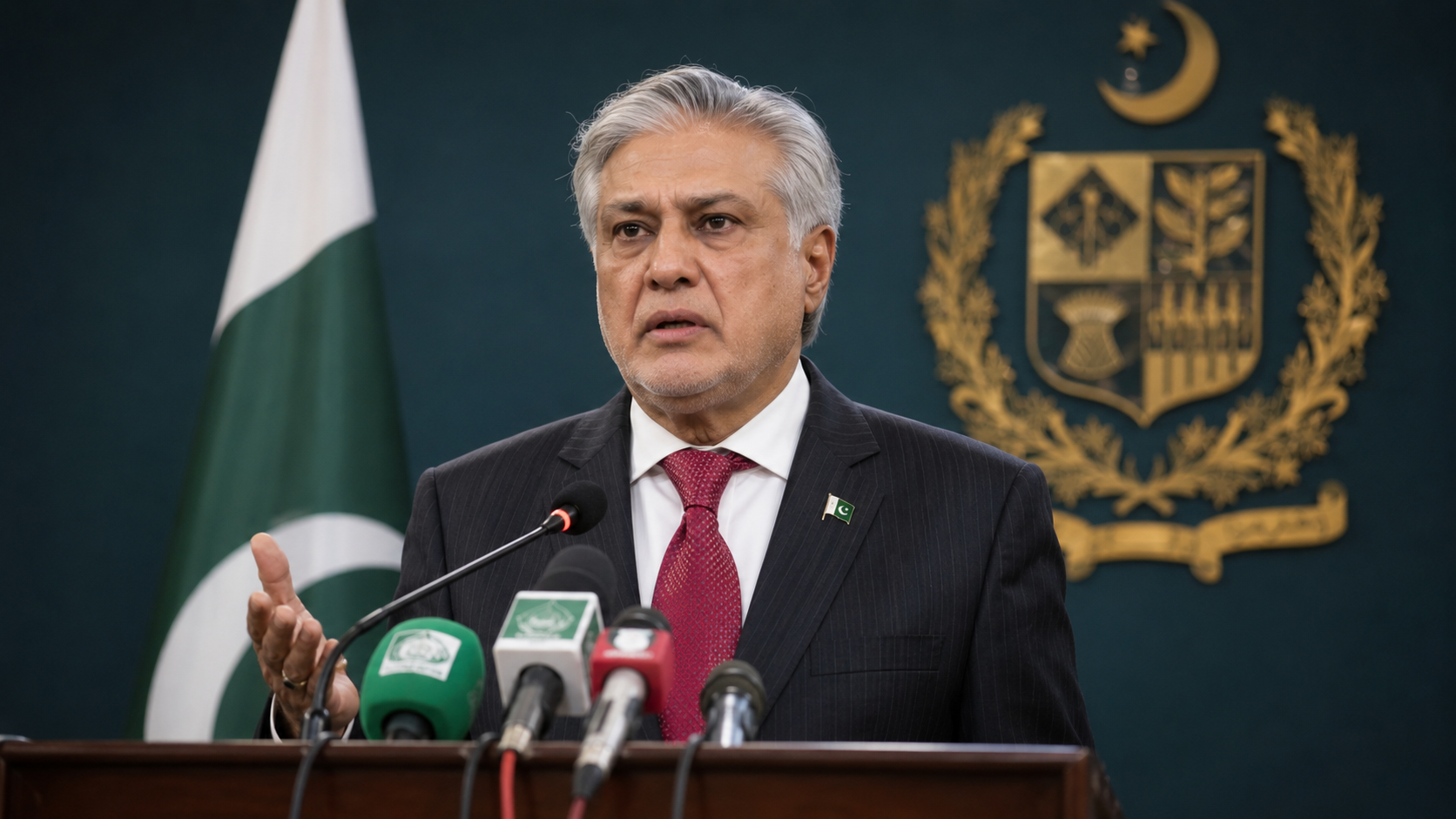
ISLAMABAD — In a significant announcement that will bring direct financial relief to millions of Pakistani households, Federal Minister for Power Awais Leghari has confirmed that the government’s electricity subsidy Pakistan programme for protected consumers will remain in place — a decision that signals the government’s commitment to shielding its most vulnerable citizens from the full brunt of rising energy costs.
Thank you for reading this post, don't forget to subscribe!Speaking at an official press conference in Islamabad, Minister Leghari made it clear that the electricity subsidy Pakistan policy for the protected category is not being discontinued, directly addressing widespread public anxiety that had been building over recent weeks amid reports of potential reforms to the country’s electricity pricing structure.
The announcement has been welcomed by consumer groups, social welfare organisations, and ordinary Pakistanis for whom the monthly electricity bill represents one of the most significant household expenses.
What Is the Protected Consumer Category?
To understand the significance of this announcement, it is important to first understand what “protected consumers” means within Pakistan’s electricity framework.
Under the electricity subsidy Pakistan system administered through the National Electric Power Regulatory Authority (NEPRA), protected consumers are those households that consume up to 200 units of electricity per month. This category was specifically designed to insulate low-income families — the majority of Pakistan’s residential electricity users — from market-rate electricity pricing.
Protected consumers pay a significantly lower per-unit rate compared to unprotected or commercial consumers. The difference between what they pay and the actual cost of electricity generation and distribution is covered by the government in the form of a direct subsidy. This electricity subsidy Pakistan mechanism has been a cornerstone of the country’s social protection approach to energy policy for years.
According to data from NEPRA’s annual reports, the overwhelming majority of Pakistan’s residential electricity connections fall within or near the protected consumer threshold — meaning this subsidy directly impacts the daily lives of a very large proportion of the population.
Why This Announcement Matters Now
The timing of Minister Leghari’s confirmation of the electricity subsidy Pakistan programme is not accidental. It comes against the backdrop of a series of pressures that have been converging on Pakistan’s power sector simultaneously.
Pakistan has been engaged in ongoing negotiations with the International Monetary Fund (IMF) as part of its economic stabilisation programme. One of the IMF’s longstanding concerns about Pakistan’s power sector has been the accumulation of circular debt — a structural problem caused in part by the gap between the actual cost of electricity and the subsidised rates paid by consumers. The IMF has historically pushed for a rationalisation of energy subsidies as part of broader fiscal reform.
At the same time, electricity tariffs in Pakistan have risen sharply over the past two years, driven by fuel price increases, currency depreciation making imported energy more expensive, and the cost of capacity payments to independent power producers. For ordinary households already under pressure from inflation, these tariff increases have been deeply felt.
It is in this environment that public concern over the potential removal or reduction of the electricity subsidy Pakistan for protected consumers had been growing. Minister Leghari’s announcement is therefore a direct political and policy response to that anxiety — a clear signal that the government is not prepared to remove this protection from its most economically vulnerable citizens.
Leghari’s Position: Relief Must Reach the People
Minister Awais Leghari has been one of the more active and publicly communicative members of the current federal cabinet on energy issues. Since taking on the power portfolio, he has consistently emphasised the importance of making the electricity subsidy Pakistan system more targeted and efficient — ensuring that relief genuinely reaches those who need it rather than being diluted across the system.
His confirmation that the protected consumer subsidy will continue aligns with a broader government narrative that economic adjustment and social protection must go hand in hand. The government has argued that reforms to Pakistan’s power sector — including efforts to reduce circular debt, renegotiate capacity payment agreements, and improve distribution efficiency — are being pursued alongside, not instead of, measures to protect ordinary consumers.
This position is important because it attempts to reconcile two potentially competing imperatives: meeting the fiscal discipline requirements expected by international lenders and protecting the living standards of low-income Pakistanis. The continuation of the electricity subsidy Pakistan for protected consumers is the government’s answer to that tension — at least for now.
Impact on Pakistani Households
For the average protected consumer household in Pakistan, the continuation of the electricity subsidy Pakistan programme has very real and immediate implications.
A household consuming 150 to 200 units per month would face a dramatically higher monthly bill without the subsidy in place. For families living on limited or fixed incomes — daily wage workers, small shopkeepers, pensioners — this difference can represent a substantial portion of their monthly income. The subsidy, in this context, is not a luxury but a lifeline.
Consumer advocacy groups had been vocal in their concern that any rollback of the electricity subsidy Pakistan would push many low-income households into energy poverty — a situation where families must choose between paying their electricity bill and meeting other basic needs such as food, medicine, or school fees.
Minister Leghari’s announcement removes — at least for the immediate future — that particular source of anxiety.
The Broader Energy Reform Context
While the continuation of the electricity subsidy Pakistan for protected consumers is welcome news for millions, it does not resolve the deeper structural challenges facing Pakistan’s power sector. The issue of circular debt — which has grown to trillions of rupees — remains a serious long-term concern that successive governments have struggled to address.
The government has been pursuing a multi-pronged strategy that includes renegotiating capacity payment agreements with independent power producers, expanding renewable energy capacity to reduce fuel import costs, improving the recovery rate of electricity bills, and reducing transmission and distribution losses.
According to Radio Pakistan, the official state broadcaster that first reported Minister Leghari’s announcement, the government views the continuation of the electricity subsidy Pakistan programme as consistent with its broader social welfare agenda while broader structural reforms continue in parallel.
The World Bank, which has been closely monitoring Pakistan’s energy sector reform programme, has noted that targeted subsidies — those that genuinely reach low-income consumers rather than being broadly applied — are a more fiscally sustainable approach to social protection in the energy sector. Pakistan’s protected consumer category, while broad, represents a step in this direction.
What Consumers Should Know
For Pakistani households currently benefiting from the electricity subsidy Pakistan protected consumer rate, the immediate practical implication of Leghari’s announcement is straightforward: your current subsidised tariff structure will continue without interruption.
Consumers who fall within the 0-200 unit monthly consumption bracket should continue to receive their bills at the protected rate. There is no action required on the part of consumers at this stage.
However, energy experts advise that households should continue to monitor official announcements from the Ministry of Power and NEPRA, as the policy landscape around electricity pricing in Pakistan remains dynamic and subject to change as broader economic conditions evolve.
Read Also: Hesson Defends Ruthless Pakistan World Cup Selection Calls
Read Also: Rubio Warns Iran Deal Could Take Days — Even as US Launches Fresh Strikes
Read Also: Strategic Push: PM China Digital Economy Cooperation 2026 Talks
Conclusion
Federal Power Minister Awais Leghari’s confirmation that the electricity subsidy Pakistan for protected consumers will continue is a meaningful and welcome announcement for the millions of Pakistani households who depend on this support to manage their monthly energy costs. In a period of economic uncertainty and rising costs of living, this commitment provides a measure of stability and reassurance.
The announcement also reflects a broader government philosophy: that economic reform and social protection are not mutually exclusive, and that the burden of fiscal adjustment must not fall disproportionately on those least able to bear it. How the government balances these twin imperatives as Pakistan’s energy sector reform continues will remain one of the defining policy stories of 2026.
Pakkhabar.com will continue to monitor developments in Pakistan’s electricity sector and bring you the latest updates on tariff changes, subsidy policies, and consumer relief measures.