

LAHORE / KARACHI — As the pressure of a World Cup build-up mounts and public debate over squad composition reaches fever pitch, Pakistan’s director of cricket Mike Hesson has come out firmly in defence of the team’s Pakistan World Cup selection decisions — insisting that every call made by the selection panel is grounded in strategy, performance data, and the best interests of the national team.
Thank you for reading this post, don't forget to subscribe!The statement from Hesson, a respected figure in world cricket who previously guided New Zealand and has since brought his analytical approach to Pakistan cricket, comes at a time when the Pakistan World Cup selection process is under intense scrutiny. Fans, former players, and commentators have raised pointed questions about certain inclusions and omissions in the squad, making Hesson’s public defence both necessary and significant.
Why Hesson’s Defence Matters
In Pakistani cricket, selection decisions are rarely made in a vacuum. They are debated passionately in living rooms, dissected on television panels, and argued over on social media with an intensity that few other cricketing nations can match. When a big name is dropped or an unexpected face is included, the backlash can be fierce and immediate.
It is precisely in this environment that Hesson’s willingness to step forward and publicly own the Pakistan World Cup selection process is notable. Rather than deflecting criticism or hiding behind committee anonymity, he has chosen to engage — a sign that the current team management values transparency and is willing to be held accountable for its decisions.
Hesson has emphasised that Pakistan World Cup selection is no longer based purely on reputation or seniority. Instead, the panel is using a performance-based framework that weighs recent form, fitness levels, adaptability to specific match conditions expected at the World Cup, and the overall balance requirements of the squad.
The Selection Debate: Who’s In, Who’s Out
While the full squad details continue to evolve as the World Cup build-up progresses, the selection conversations in Pakistan have centred on a number of familiar themes: the balance between experienced campaigners and emerging talent, the role of specialist players versus flexible all-rounders, and the eternal question of how much faith to place in raw potential versus proven performance.
Pakistan cricket has historically produced extraordinary talent — batters, bowlers, and all-rounders of the highest calibre — but has also been prone to inconsistency, internal politics, and selection controversies that have sometimes undermined team cohesion. Hesson’s appointment was partly intended to bring a more clinical, data-driven approach to Pakistan World Cup selection, removing some of the subjectivity that has plagued previous selection panels.
According to the Pakistan Cricket Board (PCB), the selection committee works in close coordination with the head coach and team management to ensure alignment between squad composition and tactical planning. This integrated approach is meant to ensure that the Pakistan World Cup selection reflects not just individual talent but collective team requirements.
Pakistan’s World Cup Preparations: The Bigger Picture
The Pakistan World Cup selection debate is taking place against the backdrop of an increasingly professional and structured preparation programme. The team has been engaged in a series of high-intensity training camps, warm-up fixtures, and bilateral series designed specifically to stress-test players under conditions that simulate World Cup match environments.
Hesson has been central to designing this preparation architecture. His background — which includes guiding New Zealand to consistent top-tier performances in ICC tournaments — gives him credibility when he argues that a well-prepared, cohesive squad will outperform a star-studded but poorly prepared one.
For Pakistan, the World Cup represents an opportunity to reclaim the kind of global cricketing prestige that the nation enjoyed during its golden eras. The team has the talent to challenge any side on its day, but the Pakistan World Cup selection process must ensure that the XI that takes the field is not just individually gifted but collectively prepared, tactically unified, and mentally resilient.
The International Cricket Council (ICC) has outlined the tournament schedule and conditions, and Pakistan’s selectors are known to have studied pitch reports, weather patterns, and opposition tendencies in crafting their Pakistan World Cup selection strategy.
The Batting Lineup: Confidence in the Nets
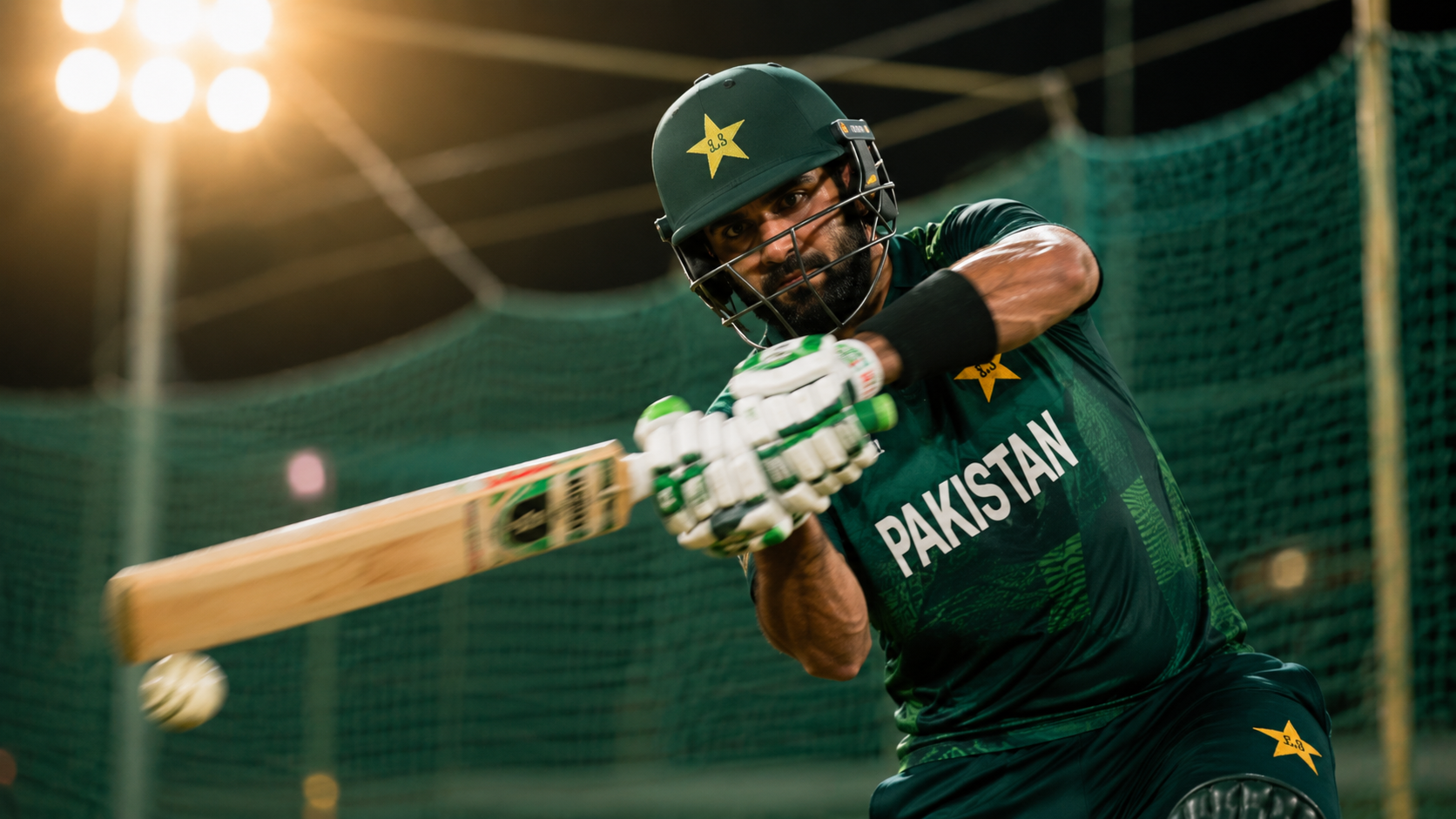
Images from Pakistan’s training sessions show batters working intensively in the nets — driving, pulling, cutting — with a focus and physicality that reflects the high stakes of the approaching tournament. The batsman visible in training appears to be in strong touch, displaying the kind of decisive strokeplay that Pakistan fans expect from their top-order players.
Hesson and his team are particularly focused on ensuring that Pakistan’s batting lineup is equipped to perform across different formats and match situations — whether chasing a steep total under pressure or setting a competitive score on a two-paced pitch. The Pakistan World Cup selection for batting roles has therefore prioritised players who can adapt, not just those who look good in ideal conditions.
The middle-order, historically Pakistan’s most vulnerable zone in global tournaments, has received particular attention. Selectors are reportedly keen to back players who have demonstrated mental toughness and the ability to rescue innings when early wickets fall — a scenario Pakistan have faced frequently in high-pressure knockout cricket.
Hesson’s Coaching Philosophy: Trust the Process
Those who have worked with Mike Hesson — in New Zealand and now in Pakistan — consistently describe him as a coach and administrator who values process over panic. He is not swayed by social media outrage or short-term form fluctuations, preferring instead to back players through difficult patches when the data suggests their underlying quality remains high.
This philosophy is directly reflected in the Pakistan World Cup selection approach. Rather than making reactive changes after every poor performance, Hesson and the selection panel appear committed to building a settled squad over a defined preparation window — trusting that consistency of selection produces consistency of performance.
ESPNcricinfo, the world’s leading cricket data and analysis platform, has noted that Pakistan’s recent selection patterns reflect a move toward greater long-term planning — a shift that Hesson has championed since taking on his role with the PCB.
Fan Expectations vs. Selector Realities
Perhaps the most enduring tension in Pakistani cricket is the gap between what fans want — their favourite stars, the familiar faces, the tried-and-trusted names — and what selectors believe the team actually needs. Hesson has navigated this tension carefully, acknowledging the passion of Pakistan’s supporters while gently insisting that Pakistan World Cup selection must be guided by professional judgement, not popularity.
This is not always an easy message to deliver in a country where cricket is not merely a sport but a national passion. Former Pakistan captain Wasim Akram, widely regarded as one of the greatest cricketers of all time, has previously noted that Pakistan selectors must have the courage to make unpopular decisions when the team’s best interests demand it.
Hesson appears to have internalised this wisdom. His public defence of the Pakistan World Cup selection process is, at its core, a message to Pakistan’s cricket community: trust us, back the team, and judge the process by its outcomes on the biggest stage.
Read Also: Rubio Warns Iran Deal Could Take Days — Even as US Launches Fresh Strikes
Read Also: PM Shehbaz Hails Pak-China Friendship at Its ‘Finest Hour’
Read Also: Pakistan Makes Fresh Bid to Revive US-Iran Talks Amid Regional Tensions
Conclusion
Mike Hesson’s robust defence of the Pakistan World Cup selection decisions reflects a selection philosophy built on data, strategy, and long-term thinking rather than sentiment or short-term pressure. As Pakistan intensifies its World Cup preparations, the decisions made in the coming weeks will define the team’s potential in the tournament. Whether the selectors have called it right will ultimately be answered on the field — but what is clear is that the Pakistan World Cup selection process is being conducted with more structure, transparency, and professional rigour than Pakistan cricket has seen in years.
Pakkhabar.com will bring you full coverage of Pakistan’s World Cup squad announcements, player updates, and match-by-match analysis throughout the tournament.