

WASHINGTON / TEHRAN — The United States finds itself sending two dramatically different messages to the world simultaneously: one of diplomacy, one of destruction. US Secretary of State Marco Rubio has stated that a US-Iran ceasefire deal could be within reach — potentially just days away — while American military forces have simultaneously launched a new wave of strikes, deepening the contradictions at the heart of Washington’s Iran policy and raising urgent questions about whether peace or escalation will ultimately prevail.
Thank you for reading this post, don't forget to subscribe!The development marks one of the most turbulent and confusing phases of US-Iran relations in recent memory, with the fate of a potential US-Iran ceasefire deal hanging by a thread even as bombs continue to fall.
Rubio’s Diplomatic Signal: Days, Not Weeks
Speaking to reporters, Secretary of State Marco Rubio suggested that negotiations toward a US-Iran ceasefire deal had reached an advanced stage, indicating that a formal agreement could be announced within days if both sides maintained momentum. The statement was remarkable in its optimism — particularly given the military activity happening in parallel.
Rubio, a long-time Iran hawk who has historically taken an exceptionally tough line on Tehran, framing a potential deal as near-complete represents a significant rhetorical shift. Diplomatic analysts noted that his language was carefully chosen — he said a deal “could” take days, stopping short of guaranteeing one, leaving Washington significant room to manoeuvre.
For many observers, this is classic coercive diplomacy: keep military pressure at maximum while dangling the offer of a negotiated exit. The message to Tehran appears to be: agree now, or face more strikes.
Fresh US Strikes: Pressure Tactic or Contradiction?
Even as Rubio spoke of a possible US-Iran ceasefire deal, the Pentagon confirmed that US forces had carried out fresh military operations targeting Iranian-linked positions. The strikes — described by US officials as defensive and targeted — represent a continuation of a military campaign that has been escalating over recent weeks.
The simultaneity of diplomacy and military action is deliberate, according to former US officials familiar with the administration’s strategy. The thinking, broadly, is that Iran will only agree to meaningful concessions if it believes the military cost of refusing is real and ongoing.
However, critics of this approach — including several European governments and international organisations — have warned that continued strikes risk derailing the very US-Iran ceasefire deal that Rubio is promoting. Each new round of military action gives hardliners in Tehran political ammunition to reject negotiations and rally domestic support against compromise.
According to Al Jazeera, Iranian state media has condemned the latest US strikes as “acts of aggression,” while simultaneously indicating that negotiations through intermediaries are continuing — a sign that Tehran has not yet walked away from the table.
Inside Tehran: A City Watching and Waiting
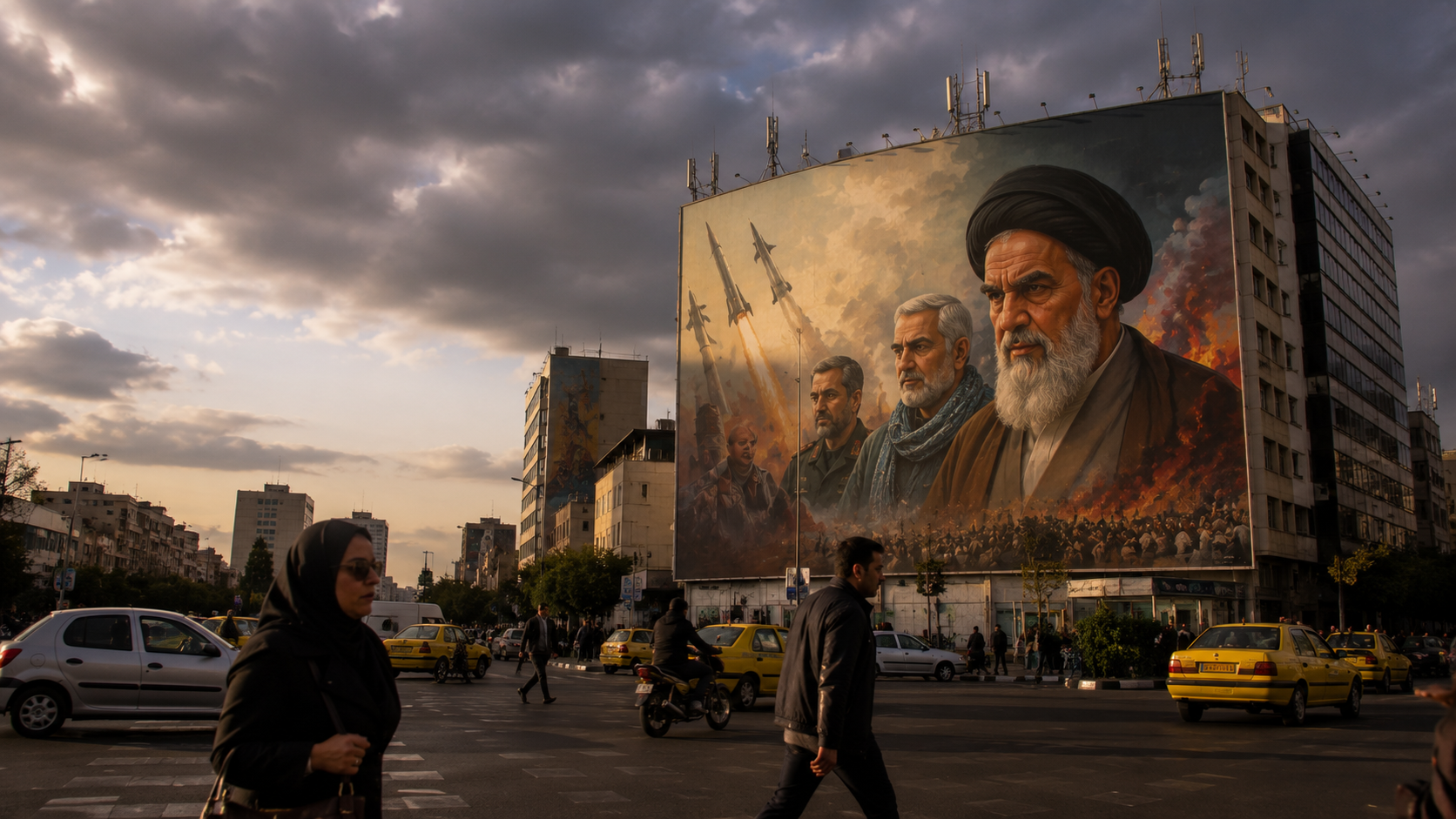
Images emerging from Tehran tell a story of a city living under the shadow of uncertainty. Large political murals dominate the walls of major intersections — a long-standing feature of Iranian political culture — while ordinary life continues on the streets below, with yellow taxis, pedestrians, and the rhythms of daily existence carrying on against a backdrop of geopolitical tension.
Iranian society is not monolithic in its response to the prospect of a US-Iran ceasefire deal. Reformist and moderate voices within Iran have long argued that a negotiated settlement offers the best path to economic relief and international reintegration. Hardliners, by contrast, view any agreement with Washington as a strategic capitulation and a threat to the Islamic Republic’s foundational principles.
The Iranian government’s position — publicly defiant, privately engaged — reflects this internal tension. Supreme Leader Ali Khamenei has historically set firm red lines on any negotiations, particularly around Iran’s nuclear programme and the presence of foreign forces in the region. Whether those red lines have shifted enough to accommodate a US-Iran ceasefire deal remains the central unknown.
Reuters has reported that indirect talks between US and Iranian officials, mediated through Omani and European channels, have been ongoing for several weeks, with both sides exchanging draft frameworks for a potential agreement.
What Would a Deal Actually Look Like (US-Iran ceasefire deal)?
The shape of any potential US-Iran ceasefire deal remains unclear, but analysts have outlined several possible components based on the known negotiating positions of both sides.
On the US side, core demands are likely to include a verified halt to Iranian nuclear enrichment beyond civilian levels, a cessation of Iranian support to proxy forces across the Middle East, and the release of American citizens held in Iranian custody.
Iran, for its part, is expected to demand the lifting of comprehensive economic sanctions that have crippled its economy, security guarantees against future US military action, and formal recognition of its right to a peaceful nuclear programme under international supervision.
Bridging these positions is enormously difficult. Previous agreements — most notably the 2015 Joint Comprehensive Plan of Action (JCPOA), from which the US withdrew under the Trump administration in 2018 — demonstrate both the possibility and the fragility of US-Iran diplomacy. The International Atomic Energy Agency (IAEA) continues to monitor Iran’s nuclear activities and would play a central role in any verification framework attached to a new agreement.
Global Stakes: Why This Deal Matters Beyond the Region
The implications of a US-Iran ceasefire deal — or its absence — extend far beyond the Persian Gulf. Global oil markets have been volatile throughout this period of US-Iran tension, with energy prices sensitive to any escalation or de-escalation. A credible ceasefire agreement would likely produce an immediate stabilising effect on oil prices, benefiting importing nations including Pakistan, India, and much of Europe.
For Pakistan specifically, which shares a long border with Iran and has significant economic and cultural ties with Tehran, the trajectory of the US-Iran ceasefire deal is a matter of direct national interest. Islamabad has consistently advocated for dialogue over confrontation in the region, with Pakistani officials playing a quiet but active diplomatic role in encouraging de-escalation.
The United Nations has called for an immediate halt to military activities and urged all parties to pursue a diplomatic resolution, warning that continued escalation risks drawing in additional regional actors and triggering a broader conflict.
The Clock Is Ticking
Rubio’s “days, not weeks” framing creates its own pressure. By setting an informal deadline, Washington has essentially forced a reckoning: either the US-Iran ceasefire deal materialises quickly, or the diplomatic window closes and the military track intensifies. Both sides know this, and both are calculating accordingly.
Iran’s response in the coming 48 to 72 hours will be closely watched. If Tehran signals flexibility through intermediaries, the deal may move forward. If it chooses to retaliate militarily against US positions or regional partners, the fragile diplomatic architecture could collapse entirely.
Read Also: Pakistan US Bilateral Talks Held Between Top Officials
Read Also: US-Iran Peace Deal 2026: Inside Islamabad-Tehran Diplomatic Push
Read Also: Trump Says US to Pause Operation to Guide Vessels Through Strait of Hormuz
Conclusion
The world stands at a genuinely precarious moment. Secretary Rubio’s assertion that a US-Iran ceasefire deal is days away offers a sliver of hope in an otherwise deeply alarming situation. Yet the simultaneous continuation of US military strikes makes that hope uncertain at best. What is clear is that the next few days will be decisive — not just for US-Iran relations, but for the stability of the entire Middle East and the global order that depends on it.
Pakkhabar.com will continue providing real-time updates and in-depth analysis on the US-Iran ceasefire negotiations.
Reuters — Middle East Coverage
IAEA — Iran Nuclear Monitoring
United Nations — Middle East Peace Efforts