

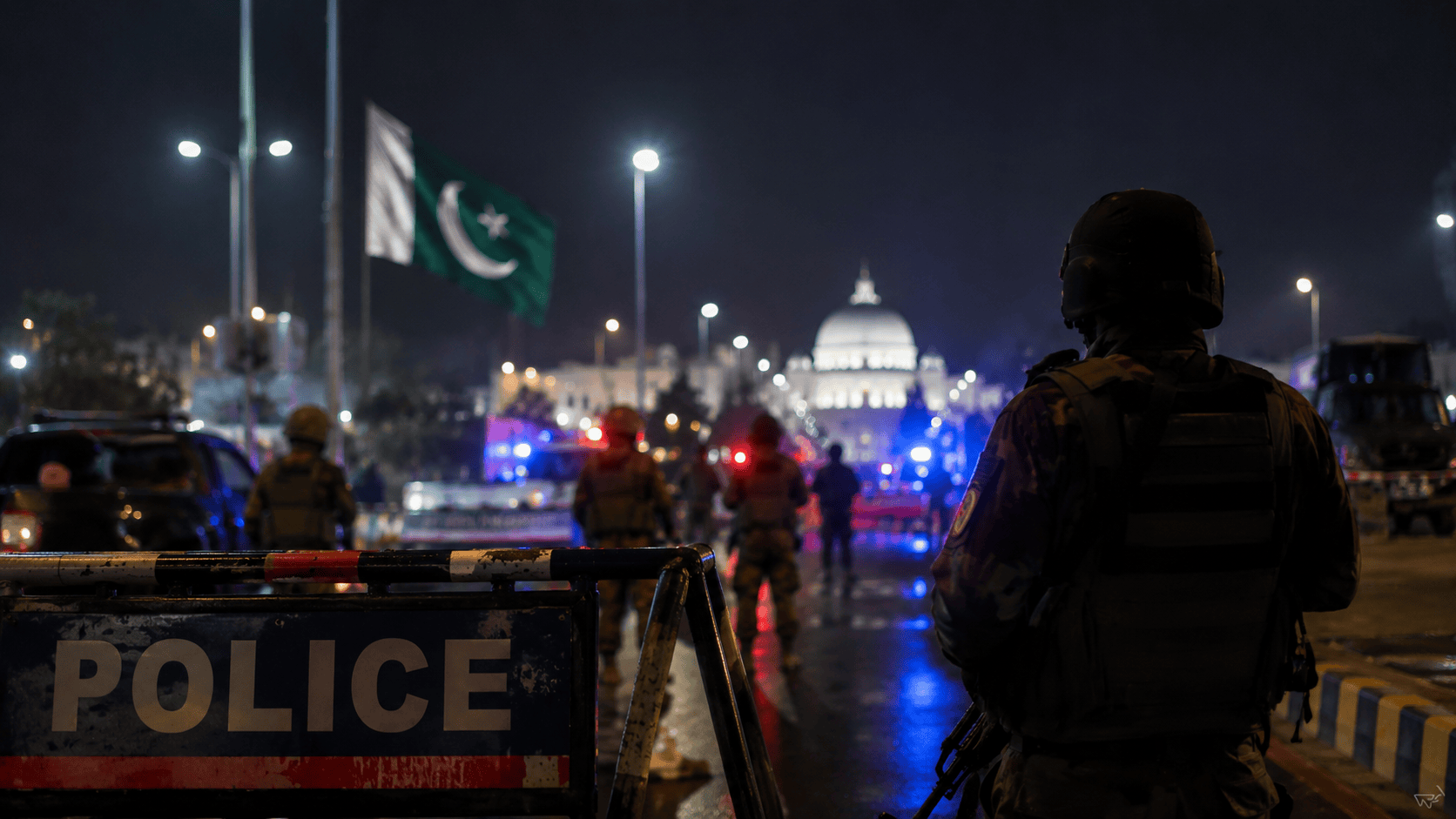
Sindh police announced a major breakthrough on Tuesday in the investigation into last month’s deadly assault on a Pakistan Rangers facility in Karachi, confirming that the Karachi Rangers attack mastermind arrested by security forces has been identified as Qari Basheer, also known as Qari Habib. The announcement, made during a joint press conference in Karachi, sheds new light on how the attack was planned, funded, and executed through a cross-border militant network.
Thank you for reading this post, don't forget to subscribe!Details of the June 27 Attack
The attack took place on the night of June 27, when armed militants targeted the local headquarters of the Pakistan Rangers (Sindh) in Karachi’s Gulistan-e-Jauhar area. According to the Inter-Services Public Relations (ISPR), three security personnel were martyred and four others injured when four attackers attempted to storm the facility after detonating explosives at the main gate. Rangers personnel responded swiftly, killing three of the assailants and capturing a fourth alive despite injuries.
Now, with news that the Karachi Rangers attack mastermind arrested has confessed to his role, investigators have been able to piece together a detailed picture of how the operation was conceived and carried out.
Who Is Qari Basheer?
Speaking at a joint press conference alongside Sindh Home Minister Ziaul Hassan Lanjar, City Senior Superintendent of Police (SSP) Irfan Bahadur named Qari Basheer as the individual responsible for coordinating the attack on the ground. Officials said the Karachi Rangers attack mastermind arrested in a Rangers-led operation had reportedly been summoned to Afghanistan before being tasked with organizing the assault and later returning to Karachi to execute it.
Authorities said Basheer, along with 13 relatives acting as facilitators, arranged accommodation, transport, and logistical support for the attackers after they entered Pakistan. He is also alleged to have taken one of the attackers on a motorcycle reconnaissance mission to study the Rangers facility ahead of the assault.
Four-Stage Planning Process Revealed of Karachi Rangers attack
SSP Bahadur told reporters that investigators had broken down the operation into four distinct phases. First, the attackers were selected and trained at militant camps inside Afghanistan. Second, the militants were moved across the border into Karachi. Third, a local facilitator network — allegedly led by the now-arrested Karachi Rangers attack mastermind — provided housing, transport, and coordination inside the city. Finally, weapons, ammunition, and suicide vests were supplied to the attackers shortly before the assault.
Officials identified the attackers as Janaan, an Afghan national from Farah province who served as the suicide bomber; Bilal, also known as Hadi, originally from Bajaur but reportedly residing in Afghanistan for nearly two decades; Umar Farooq, from Afghanistan’s Kunar province; and Usman, the sole attacker captured alive, identified as a resident of Nangarhar province.
Alleged Links to Banned Militant Group Karachi Rangers attack
Police said the attack was carried out by militants affiliated with Jamaat-ul-Ahrar (JuA), a faction linked to the banned Tehreek-i-Taliban Pakistan (TTP). Additional CTD Inspector General Zulfiqar Larak noted that the assault represented the group’s first major activity in Karachi after a long period of dormancy, suggesting an apparent effort to reassert its presence in the city.
Officials further alleged that senior militant figures — including TTP leadership figures identified as Noor Wali and Sher Wali, along with a commander named Saeed Shah — played a role in directing the operation from Afghan soil. Sindh Home Minister Lanjar stated that all handlers guiding the attackers were based in Afghanistan and had instructed them to cause maximum damage and take hostages in order to destabilize peace in Karachi.
Broader Security Context in Sindh Karachi Rangers attack
While announcing the Karachi Rangers attack mastermind arrested, Sindh Inspector General of Police Javed Alam Odho noted that the province has recorded a significant decline in terrorist incidents this year. According to the IG, Sindh has seen seven terrorism-related incidents so far in 2026, compared to 37 during the same period last year — a trend officials attribute to sustained counter-terrorism operations. Around 75 suspected militants have reportedly been arrested this year, while others were killed during security operations.
Authorities said the investigation into the Rangers camp attack is ongoing, with additional facilitators and network members still being sought. Security agencies have reportedly intensified intelligence-based operations across the province to prevent similar attacks in the future.
Regional and Diplomatic Implications
The claim that the attack was planned and directed from Afghan territory adds to ongoing tensions between Islamabad and Kabul over cross-border militancy. Pakistani officials have repeatedly raised concerns with the interim Afghan authorities about the presence of anti-Pakistan militant networks operating from Afghan soil, an issue that continues to feature prominently in bilateral discussions between the two countries. International organizations tracking regional security, including the United Nations, have also flagged the resurgence of TTP-linked networks along the Pakistan-Afghanistan border as a growing regional concern.
What Happens Next
With the Karachi Rangers attack mastermind arrested and several facilitators already in custody, Sindh’s Counter-Terrorism Department says its focus now shifts to dismantling the remaining elements of the support network believed to have enabled the attack. Investigators are also working to trace the source of weapons and suicide vests used in the assault, which officials say were smuggled in from across the border.
Read Also:K2 Airways Cargo Plane Crash: Karachi Mourns Engineer
Conclusion
The arrest of Qari Basheer marks a significant development in Pakistan’s efforts to hold accountable those responsible for the deadly June 27 assault on a Rangers facility in Karachi. As officials continue to map out the cross-border network allegedly behind the attack, the case underscores the persistent security challenges Pakistan faces along its western border. With the Karachi Rangers attack mastermind arrested, questions now turn to how authorities will address the broader network of facilitators and handlers that investigators say remain at large.
Inter-Services Public Relations (ISPR): https://www.ispr.gov.pk
Government of Sindh Home Department: https://home.sindh.gov.pk
Get updates like this on WhatsApp before anywhere else — join our Channel [https://whatsapp.com/channel/0029Vb8fffCKrWQzEVBQ6v00]