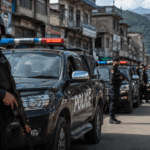

The PTI long march has entered a decisive phase. On the evening of 8 October, a convoy led by Khyber Pakhtunkhwa (KP) Chief Minister Sohail Afridi reached Peshawar, marking the fifth consecutive day of a protest aimed at securing the release of jailed party founder Imran Khan. With the route changing repeatedly and no final destination confirmed, the march has become one of the most closely watched political events in Pakistan this month.
PTI Long March: What Has Happened So Far
The march began on 4 October from Lakki Marwat in southern Khyber Pakhtunkhwa. It followed several rounds of talks between the federal government and the opposition that ended without agreement. Reports said the main sticking points were the government’s counterterrorism policy in KP and the party’s demand for a meeting with Imran Khan, along with access to a hospital where his personal doctors could examine him.
Interior Minister Mohsin Naqvi said the talks had collapsed. PTI leaders, for their part, said the federal government wanted all anti-terrorism actions in the province to be owned by the provincial government, which they rejected. Federal ministers also warned that the march would not be allowed to enter Islamabad.
From Lakki Marwat, the convoy moved through Karak and Kohat before reaching Peshawar. At the Hayatabad Toll Plaza, supporters gathered to welcome Afridi, who raised slogans demanding Imran Khan’s release. He described the campaign as a struggle for “true freedom” and told supporters that any discomfort was smaller than the hardship the PTI founder faces in jail.
The Route and the Revised Schedule
The PTI long march has not followed a fixed plan. The party originally spoke of a direct march toward Islamabad, but the schedule has been revised several times. According to the latest plan announced by party officials, the convoy is expected to reach Charsadda on 9 October, Mardan on 10 October and Swabi on 11 October. The party says it will decide its next step after reaching Swabi.
Some observers note that the extended timeline inside Khyber Pakhtunkhwa may be deliberate. By staying in the province for longer, the party avoids an immediate confrontation with the federal authorities while leaving room for fresh negotiations. The PTI long march therefore serves both as a show of strength and as a bargaining tool.
Government Position and Legal Developments
The federal government has taken a firm public line. Officials have warned against entering the capital, and there have been warnings in political circles about possible emergency or governor’s rule measures in the province. PTI chairman Barrister Gohar Khan has said that such steps would not solve the crisis. He also said the party stands with the state against terrorism, while arguing that the long-standing approach to the issue needs to change.
There are legal questions as well. The Peshawar High Court has sought a reply from the chief minister in a contempt petition related to the use of a provincial government helicopter on the first day of the march. The matter is pending, and no ruling has been announced. Reports also mentioned disruptions to mobile services in parts of Peshawar. Users can check service notices on the Pakistan Telecommunication Authority website.
Meanwhile, both sides have indicated they are not closing the door. PTI leaders say they are ready for meaningful and positive negotiations. Reports suggest the government has linked renewed talks to the end of the march, and that contacts through senior political figures are continuing.
Background: Why Long Marches Matter in Pakistan
Marches toward the capital are not new in Pakistani politics. After his removal from office in April 2022, Imran Khan launched an Azadi march in May of that year, which he ended after one day. A second “Haqeeqi Azadi” march followed in late 2022 and continued for weeks. Each of these events tested the relationship between protest leaders, provincial governments and federal authorities.
The current PTI long march differs in one important way. It is being led by a sitting provincial chief minister, which places the provincial administration and the federal government on opposite sides of a public confrontation. That raises questions about law enforcement coordination, administrative resources and constitutional boundaries. The role of provincial governments is outlined on the Government of Khyber Pakhtunkhwa website, and federal law-and-order responsibilities are handled through the Ministry of Interior.
Analysis/What This Means for Pakistan’s Politics
Pressure without a final move. The party has not yet said whether it will actually enter Islamabad. This keeps pressure on the government while keeping options open. The next announcement after Swabi will show whether the party prefers escalation or negotiation.
The counterterrorism disagreement. The dispute is not only about one leader’s release. It also involves a wider question about who controls and owns security operations in Khyber Pakhtunkhwa. Even if a deal on the political demands is reached, this policy issue will need a lasting solution through institutions such as the National Assembly.
Claims need verification. The party has described the march as potentially the largest in the country’s history. Crowd estimates in such events are often disputed, and independent verification is limited. Readers should treat numbers from any political side with caution.
Public life and the economy. Long convoys and security measures can disrupt traffic, mobile connectivity and small businesses along the route. Prolonged uncertainty can also affect investor and consumer confidence, even when protests remain peaceful.
Rights and responsibilities. Peaceful assembly is a recognised democratic right, and law enforcement has a duty to protect public safety. Both aspects matter. The most useful outcome would be a process that respects the right to protest while avoiding clashes and damage to property.
Possible Impact in the Coming Days
If the PTI long march proceeds toward Islamabad, the capital could see heavy security measures, road closures and tighter controls on movement. If talks resume, the march could slow down or pause, and the political temperature may fall. A third possibility is a prolonged stay in Khyber Pakhtunkhwa, which would keep the issue in the headlines without a decisive result. Any significant political settlement would likely involve parliament and the Election Commission of Pakistan in the longer term, particularly if disputes over the political process remain unresolved.
What to Watch Next
- The party’s announcement at or after Swabi on the next phase
- Whether formal talks between the government and PTI restart
- Any court decisions linked to the march or the chief minister’s travel
- Security arrangements in Islamabad and neighbouring districts
- Statements on public safety and access to services along the route
Read Also:Farooq Naek Resigns From Judicial Commission of Pakistan: What It Means
Pakistan Houthis Row: Shocking Test for Saudi Pact
Pakistan vs Sri Lanka T20I: Farhan’s Bold New Era
Conclusion
The PTI long march is both a protest and a negotiating strategy. It reflects deep political divisions over Imran Khan’s imprisonment, the handling of security policy in Khyber Pakhtunkhwa, and the limits of provincial and federal authority. For now, the march remains in the province, the schedule remains flexible, and the door to talks remains open. Readers should follow official statements and verified reporting, since the situation is changing quickly and the next few days could set the direction of Pakistan’s political year.
Get updates like this on WhatsApp before anywhere else — join our Channel [https://whatsapp.com/channel/0029Vb8fffCKrWQzEVBQ6v00]
Recent News
- AJK Election Results Trigger Coalition Rift as PPP Alleges Rigging, PML-N Claims Sweeping Win NEW
- AJK Police Say Banned JAAC Has Become an Armed Group Attacking Police and Security Forces NEW
- AJK Protest Spirals: Four Police Officers Martyred in Violent Clashes NEW
- AJK Security Forces Request Signals Deepening Unrest Ahead of Elections NEW
- Allama Nasir Madni Heart Attack Rumours Denied: What Really Happened NEW
- Apna Ghar Scheme 2026: Pakistan’s Biggest Housing Dream Is Finally Being Unlocked for Millions NEW
- Armed Forces Committed to Eradicating All Forms of Terrorism: Field Marshal NEW
- Asim Munir Turkey Visit Strengthens Pakistan-Turkiye Defence Partnership NEW
- Ashura 2026 Pakistan Confirmed for June 26 — Moon Not Sighted, KP Declares Holiday NEW
- Avengers Doomsday Trailer Sends Marvel Fans Into a Frenzy NEW