

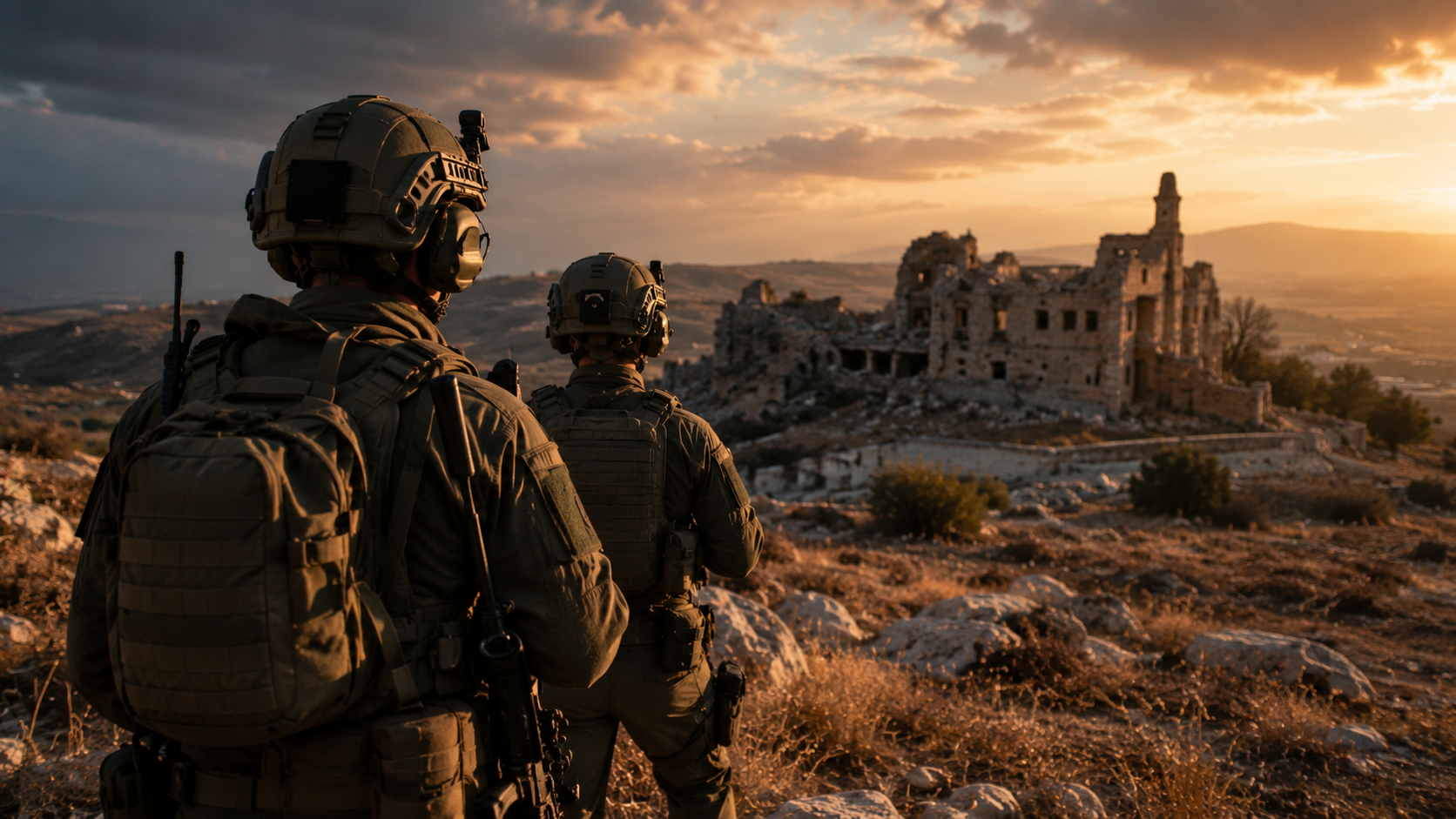
BRUSSELS / BEIRUT — In some of the strongest language directed at Israel by its traditional Western partners in recent memory, senior European leaders have united in condemning the Israel Lebanon incursion, demanding an immediate end to military operations that they say are destabilising an already fractured region and inflicting unacceptable harm on Lebanese civilians and territory.
Thank you for reading this post, don't forget to subscribe!The condemnations — issued from capitals including Paris, Berlin, London, and Brussels — represent a significant diplomatic rupture between Europe and Israel at a moment when the Israel Lebanon incursion shows no signs of slowing. Far from a polite diplomatic murmur, the statements from European governments carry a sharpness and urgency that signals genuine alarm about where this military campaign is heading and what it means for international law, regional stability, and the broader Middle East order.
The Scale of Israel’s Military Operation in Lebanon
The Israel Lebanon incursion that has drawn this wave of European condemnation is not a limited or targeted operation in the conventional sense. According to multiple international media reports, Israeli ground and air forces have extended their presence significantly into Lebanese territory, striking infrastructure, residential areas, and positions associated with Hezbollah and affiliated armed groups.
The stated Israeli military objective — dismantling Hezbollah’s operational capacity along the border and eliminating the threat of cross-border rocket fire — has been a consistent theme in Israeli government communications. Israeli officials have framed the Israel Lebanon incursion as a necessary defensive measure, arguing that Lebanon’s government has been unable or unwilling to enforce UN Security Council Resolution 1701, which called for the disarmament of non-state armed groups in southern Lebanon following the 2006 conflict.
However, the scale and reach of the current Israel Lebanon incursion has gone considerably beyond what many international observers consider proportionate or justified under international humanitarian law. Reports of civilian casualties, displacement of Lebanese communities, and the destruction of civilian infrastructure have fuelled the international outcry now coming from Europe.
Europe Speaks: Who Said What
The chorus of European condemnation of the Israel Lebanon incursion has involved leaders and foreign ministers from across the continent, reflecting a broad consensus that Israel’s military conduct has crossed a line that Europe cannot remain silent about.
French President Emmanuel Macron, who has historically maintained a more balanced position on Israel-Palestine and Lebanon issues than some of his European counterparts, has been among the most vocal critics. France has deep historical, cultural, and diplomatic ties with Lebanon — a legacy of the French Mandate period — and Paris views itself as having a particular responsibility toward Lebanese sovereignty and stability.
The United Kingdom’s Foreign Secretary has similarly called for restraint and an immediate halt to operations that threaten civilian lives and Lebanese state institutions. Germany, despite its historically cautious approach to criticising Israel given the weight of history, has also added its voice to the condemnation of the Israel Lebanon incursion, a development that carries particular symbolic significance.
The European Union as a collective body has issued statements calling for full respect of Lebanese sovereignty, an immediate ceasefire, and the protection of civilians — language that directly challenges the justifications offered by the Israeli government for the ongoing Israel Lebanon incursion.
Why This Diplomatic Break Matters
European condemnation of Israeli military operations is not in itself unprecedented. What makes the current situation around the Israel Lebanon incursion distinctive is the breadth, tone, and timing of the European response.
Traditionally, European governments have been reluctant to get too far ahead of the United States in criticising Israeli military conduct, knowing that Washington’s position as Israel’s primary strategic partner and arms supplier gives it leverage that Europe lacks. However, as US policy toward the region has itself become more complex and contested, European governments appear to have concluded that they must speak more independently.
The condemnation of the Israel Lebanon incursion also reflects genuine European strategic interests beyond humanitarian concern. Lebanon sits at the intersection of several European priorities: migration flows from the region have direct implications for European domestic politics, the stability of the eastern Mediterranean affects European energy security, and the protection of the United Nations Interim Force in Lebanon (UNIFIL) — which includes thousands of European troops, particularly from France, Italy, and Spain — is a direct European security concern.
Any escalation of the Israel Lebanon incursion that puts UNIFIL personnel at risk, or that triggers a broader collapse of Lebanese state institutions, is therefore not merely a humanitarian problem for Europe — it is a direct threat to European strategic interests on the ground.
Lebanon’s Impossible Position
The Lebanese state finds itself in an extraordinarily difficult position as the Israel Lebanon incursion continues. The Lebanese Armed Forces, underfunded and under-equipped, are not in a position to confront Israeli military power directly. The Lebanese government, meanwhile, has long operated in the shadow of Hezbollah’s parallel state structures and military capabilities — a reality that has made Beirut’s ability to assert full sovereignty over its southern territory deeply constrained.
For ordinary Lebanese citizens, the Israel Lebanon incursion adds yet another layer of crisis to a country that has been experiencing compounding disasters for years. Lebanon went through a catastrophic economic collapse beginning in 2019, the devastating Beirut port explosion of 2020, chronic political paralysis, and repeated cycles of conflict. The latest Israeli military campaign is falling on a population and a state already stretched to the absolute limit of their capacity to absorb shocks.
UNHCR, the UN refugee agency, has been monitoring displacement caused by the Israel Lebanon incursion closely, with reports indicating significant movement of civilians away from areas of active military operations in southern Lebanon.
Israel’s Response to European Criticism
The Israeli government’s response to European condemnation of the Israel Lebanon incursion has been characteristically firm. Israeli officials have rejected what they describe as interference in Israel’s legitimate right to self-defence, arguing that no state would tolerate the kind of sustained cross-border threat that Hezbollah has posed to northern Israeli communities.
Prime Minister Benjamin Netanyahu’s government has also pointed to what it describes as the failure of international diplomacy — including UN resolutions and European-backed diplomatic initiatives — to address Hezbollah’s military buildup in southern Lebanon over the past two decades. From Israel’s perspective, the Israel Lebanon incursion is the consequence of that diplomatic failure, not its cause.
This framing puts Israel and its European critics on a fundamental collision course. Europe insists that military means cannot resolve what is ultimately a political problem requiring a negotiated solution. Israel insists that without military pressure, no political solution will emerge. The gap between these positions shows no sign of closing.
International Law and the Debate Over Proportionality
At the heart of European criticism of the Israel Lebanon incursion lies a fundamental question of international law: does Israel’s military response meet the test of proportionality required under the laws of armed conflict?
The International Committee of the Red Cross (ICRC), the authoritative body on international humanitarian law, has called on all parties to the conflict to protect civilian lives and infrastructure. The principle of proportionality requires that anticipated civilian harm from a military operation must not be excessive relative to the concrete military advantage expected — a standard that critics of the Israel Lebanon incursion argue has been repeatedly violated.
Legal experts and human rights organizations including Human Rights Watch and Amnesty International have been documenting incidents during the Israel Lebanon incursion that they argue may constitute violations of international humanitarian law, adding further pressure to the already strained international consensus around Israel’s military conduct.
Read also: Good News for Millions: Pakistan’s Electricity Subsidy for Protected Consumers to Continue
Read also: Hesson Defends Ruthless Pakistan World Cup Selection Calls
Read Also: ISPR Responds to Indian Army Chief Remarks at New Delhi Forum
Conclusion
The European condemnation of the Israel Lebanon incursion marks a genuine and significant moment in the diplomatic landscape of the Middle East conflict. When Israel’s traditional Western partners — including France, Germany, and the United Kingdom — speak in unison about the unacceptability of an Israeli military operation, it is a signal that cannot be easily dismissed.
Whether this diplomatic pressure translates into any change in Israeli military strategy remains to be seen. History suggests that Israel has proven willing to absorb international criticism when it believes its core security interests are at stake. But the weight of European voices joining the chorus against the Israel Lebanon incursion adds to an accumulating international burden that even the most determined government cannot entirely ignore.
Pakkhabar.com will continue to provide comprehensive coverage of the Israel-Lebanon conflict and the international diplomatic response as the situation develops.