

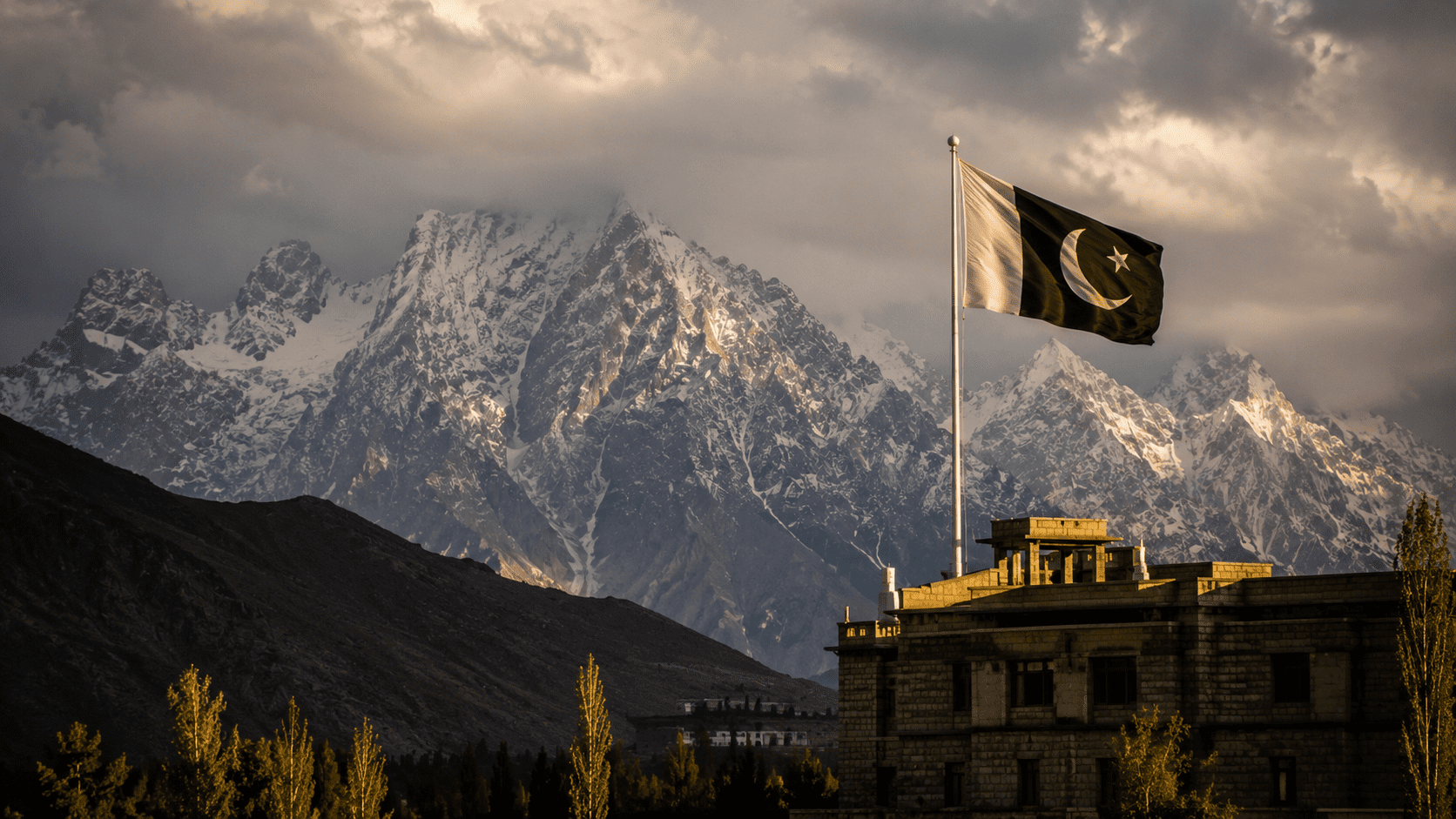
ISLAMABAD / NEW DELHI — Pakistan rejects India’s remarks on GB elections — and it has done so in the sharpest and most unambiguous terms available in diplomatic language. Pakistan’s Foreign Office has categorically dismissed New Delhi’s objections to the Gilgit-Baltistan elections as baseless, rejecting what it characterised as unacceptable Indian interference in Pakistan’s internal democratic process. The exchange marks the latest and most pointed episode in the long-running and deeply consequential dispute between the two nuclear-armed neighbours over the status and sovereignty of Gilgit-Baltistan — a dispute that sits at the intersection of the unresolved Kashmir conflict, competing territorial claims, and the broader arc of one of the world’s most dangerous bilateral relationships.
Thank you for reading this post, don't forget to subscribe!The fact that Pakistan rejects India’s remarks on GB elections has been confirmed simultaneously by Radio Pakistan, Dawn, and The Express Tribune — three of Pakistan’s most credible news outlets — underscores the seriousness with which Islamabad is treating India’s intervention and the importance it attaches to firmly establishing its position on the record before international audiences.
What India Said — And Why Pakistan Responded So Sharply
To understand why Pakistan rejects India’s remarks on GB elections with such force, it is essential to understand the precise nature of India’s objection and what it represents within the broader territorial dispute.
India’s position — articulated by Indian government spokespersons and amplified by The Times of India — is that Gilgit-Baltistan is part of what New Delhi calls “Pakistan-occupied Kashmir” (PoK), a territory that India claims as an integral part of Jammu and Kashmir and therefore of India itself. From this perspective, Pakistan holding elections in Gilgit-Baltistan is not a domestic democratic exercise but an illegal act of consolidation of control over disputed Indian territory — which is why India issued the demand that “Pakistan must vacate” the region.
Pakistan’s categorical rejection of this framing — the reason Pakistan rejects India’s remarks on GB elections so forcefully — is grounded in Islamabad’s diametrically opposed territorial position. Pakistan does not accept India’s claim to Gilgit-Baltistan under any legal, historical, or political framework. For Pakistan, GB is an integral part of Pakistani-administered territory, and conducting elections there is as legitimate a domestic democratic exercise as holding elections in Punjab, Sindh, Khyber Pakhtunkhwa, or Balochistan.
The Pakistan rejects India’s remarks on GB elections position was articulated as “categorical” rejection — diplomatic language that signals zero ambiguity, zero negotiating room, and zero acceptance of India’s framing. Pakistan is not merely disagreeing with India’s characterisation — it is refusing to acknowledge that India has any standing whatsoever to comment on GB’s electoral process.
The Gilgit-Baltistan Elections: What Is Actually Happening on the Ground
While the Pakistan rejects India’s remarks on GB elections diplomatic exchange dominates the international headlines, it is important to understand what is actually happening on the ground in Gilgit-Baltistan ahead of polling day.
The GB elections are proceeding as scheduled, with Pakistan’s Election Commission overseeing the process across one of the most geographically challenging electoral constituencies in the world. Gilgit-Baltistan’s mountainous terrain, remote valleys, and scattered communities make the logistics of election administration genuinely demanding — but Pakistani authorities have consistently maintained that the democratic process will be conducted fully and on schedule.
Security arrangements have been significantly tightened across the territory ahead of the polls. The Express Tribune reported that Section 144 — a legal provision that prohibits public gatherings of more than a specified number of people — has been imposed in Diamer district, one of GB’s most sensitive constituencies. The imposition of Section 144 in Diamer reflects both the general security sensitivities of conducting elections in a border territory and the specific dynamics of a district that has historically presented administrative and security challenges during electoral periods.
The tightening of security across GB in the context of Pakistan rejects India’s remarks on GB elections carries a dual significance: it is simultaneously a routine pre-election security measure and a signal of the heightened political and diplomatic environment in which these particular elections are being conducted. Pakistan is not merely holding elections — it is asserting its sovereignty over GB in the most practical and democratic way possible, against a backdrop of Indian objection that makes that assertion even more symbolically charged.
The Historical and Legal Context: Why This Dispute Is So Deep
The Pakistan rejects India’s remarks on GB elections diplomatic clash cannot be fully understood without tracing the historical and legal roots of the GB territorial dispute — roots that go back to the tumultuous and violent partition of the subcontinent in 1947.
When British India was partitioned into India and Pakistan in August 1947, the princely states that dotted the subcontinent were given the option to accede to either new nation. The Maharaja of Jammu and Kashmir — a Hindu ruler over a predominantly Muslim population — initially sought independence before signing an instrument of accession to India in October 1947 under disputed circumstances, triggering the first India-Pakistan war and establishing the conflict over Kashmir that has defined South Asian geopolitics ever since.
Gilgit-Baltistan’s own accession history is distinct from and more complicated than the broader Kashmir story. The Gilgit Agency — as it was known under British administration — had its own political revolt in November 1947, with local forces overthrowing the Maharaja’s representative and acceding to Pakistan. Pakistan has administered Gilgit-Baltistan since 1947, making it one of the longest continuous administrative arrangements in the post-partition subcontinent.
India’s claim that Pakistan rejects India’s remarks on GB elections are justified interference in disputed territory is therefore built on a legal foundation that Pakistan contests entirely — and that the international community has never definitively resolved. The United Nations Military Observer Group in India and Pakistan (UNMOGIP), which has been monitoring the Kashmir ceasefire line since 1949, represents the international community’s acknowledgement that the Kashmir dispute remains unresolved — but UNMOGIP’s presence does not resolve the underlying territorial questions that make Pakistan rejects India’s remarks on GB elections such a charged diplomatic exchange.
Constitutional Status: GB’s Evolving Position Within Pakistan
One of the dimensions that makes the Pakistan rejects India’s remarks on GB elections situation particularly significant is the ongoing evolution of Gilgit-Baltistan’s constitutional status within Pakistan’s legal framework.
For decades, GB existed in a constitutional limbo within Pakistan — administered by the federal government but without the full constitutional rights and representation enjoyed by Pakistan’s four provinces. GB residents could not vote in National Assembly elections, were not represented in the Senate, and operated under a separate legal framework that gave them fewer constitutional protections than other Pakistani citizens.
This situation has been changing. The GB Order 2018 and subsequent constitutional discussions have moved toward giving GB residents greater democratic rights and clearer constitutional status. Each round of GB elections represents a deepening of the democratic and institutional framework through which Pakistan administers and governs the territory — which is precisely why India objects to them and why Pakistan rejects India’s remarks on GB elections so strongly.
From Islamabad’s perspective, deepening democratic governance in GB is not a provocation to India — it is a fulfilment of Pakistan’s obligation to its citizens in the territory. The demand that Pakistan “vacate” GB — as India’s government puts it — is not a legal or diplomatic position that Pakistan can acknowledge, and the Pakistan rejects India’s remarks on GB elections response reflects that assessment.
India’s Domestic Politics and the GB Elections
The timing and sharpness of India’s objection to the GB elections — and therefore the context in which Pakistan rejects India’s remarks on GB elections — cannot be separated from India’s own domestic political environment.
The ruling Bharatiya Janata Party (BJP) government in New Delhi has consistently taken a maximalist position on Kashmir and the territories India claims as part of its jurisdiction, including Gilgit-Baltistan. For the BJP’s domestic political base, expressing firm opposition to Pakistani elections in GB and demanding that Pakistan vacate the territory plays well as a demonstration of nationalist resolve on territorial integrity.
The Pakistan rejects India’s remarks on GB elections exchange is therefore not purely a bilateral diplomatic dispute — it is also shaped by the domestic political incentives on both sides. Pakistan’s government benefits domestically from being seen to firmly reject Indian “interference” in Pakistani affairs, just as India’s government benefits from being seen to firmly assert Indian territorial claims.
This does not mean the dispute is not real or serious — it is both. But understanding the domestic political dimensions of the Pakistan rejects India’s remarks on GB elections clash helps explain why the language from both sides is so sharp and why neither government shows any inclination toward the kind of quiet diplomatic accommodation that might reduce tension.
Security Measures: Section 144 in Diamer and Beyond
The imposition of Section 144 in Diamer district — reported by The Express Tribune — is one of the most concrete and operationally significant developments alongside the Pakistan rejects India’s remarks on GB elections diplomatic exchange.
Diamer is one of GB’s most strategically sensitive districts, bordering the Khyber Pakhtunkhwa province and sharing a complex social and tribal fabric that has historically required careful security management during electoral periods. Section 144 prohibitions on public gatherings are a standard pre-election security tool in Pakistan’s administrative toolkit, used to prevent campaign-related clashes and ensure polling day proceeds without incident.
The Pakistan Election Commission of Pakistan (ECP) coordinates closely with provincial and federal security agencies for all elections in sensitive regions, and the GB elections are receiving the highest level of security attention given both the territory’s strategic location and the heightened diplomatic environment created by the Pakistan rejects India remarks on GB elections exchange.
Pakistan’s Message to the International Community
Beyond the bilateral exchange with India, the Pakistan rejects India’s remarks on GB elections response is also calibrated for an international audience. Pakistan is making several arguments simultaneously through this diplomatic communication.
First, that GB elections are a legitimate democratic exercise — consistent with international norms of democratic governance — and that India’s objection to them is itself an infringement on Pakistan’s sovereign right to organise its internal democratic processes. Second, that India’s framing of GB as “PoK” is not accepted by Pakistan or recognised as legally valid, and that international audiences should not adopt Indian terminology when discussing the territory. Third, that Pakistan is committed to delivering democratic rights to GB’s citizens regardless of external pressure — a commitment that simultaneously strengthens Pakistan’s domestic democratic credentials and asserts its sovereignty over the territory.
According to Pakistan’s Ministry of Foreign Affairs, Pakistan’s position on all disputed territorial matters is grounded in international law and United Nations resolutions — a framing that places Islamabad within established multilateral frameworks rather than purely bilateral confrontation with India.
Read Also: Punjab Green Tractor Scheme: CM Maryam Announces Brilliant Rs1m Subsidy for 20,000 Farmers
Read Also: Hesson Defends Ruthless Pakistan World Cup Selection Calls
Read Also: US Iran Strikes Escalate Dangerously as Ceasefire Negotiations Remain Completely Stalled
Conclusion
Pakistan rejects India’s remarks on GB elections — and in doing so, Islamabad is making a statement that goes well beyond the specific diplomatic exchange of this particular week. It is asserting sovereignty, defending democratic legitimacy, and refusing to allow Indian objections to alter Pakistan’s constitutional trajectory in Gilgit-Baltistan.
The GB elections will proceed. The security measures are in place. The diplomatic response to India has been delivered clearly and on the record. What will follow — in terms of election results, constitutional evolution, and the ongoing India-Pakistan relationship — will unfold over coming months and years. But the position Pakistan has staked out through Pakistan rejects India’s remarks on GB elections is clear, firm, and unlikely to shift regardless of the pressure applied.
Pakkhabar.com will provide complete live results coverage, security updates, and in-depth analysis of the Gilgit-Baltistan elections and the India-Pakistan diplomatic exchange as events develop.