

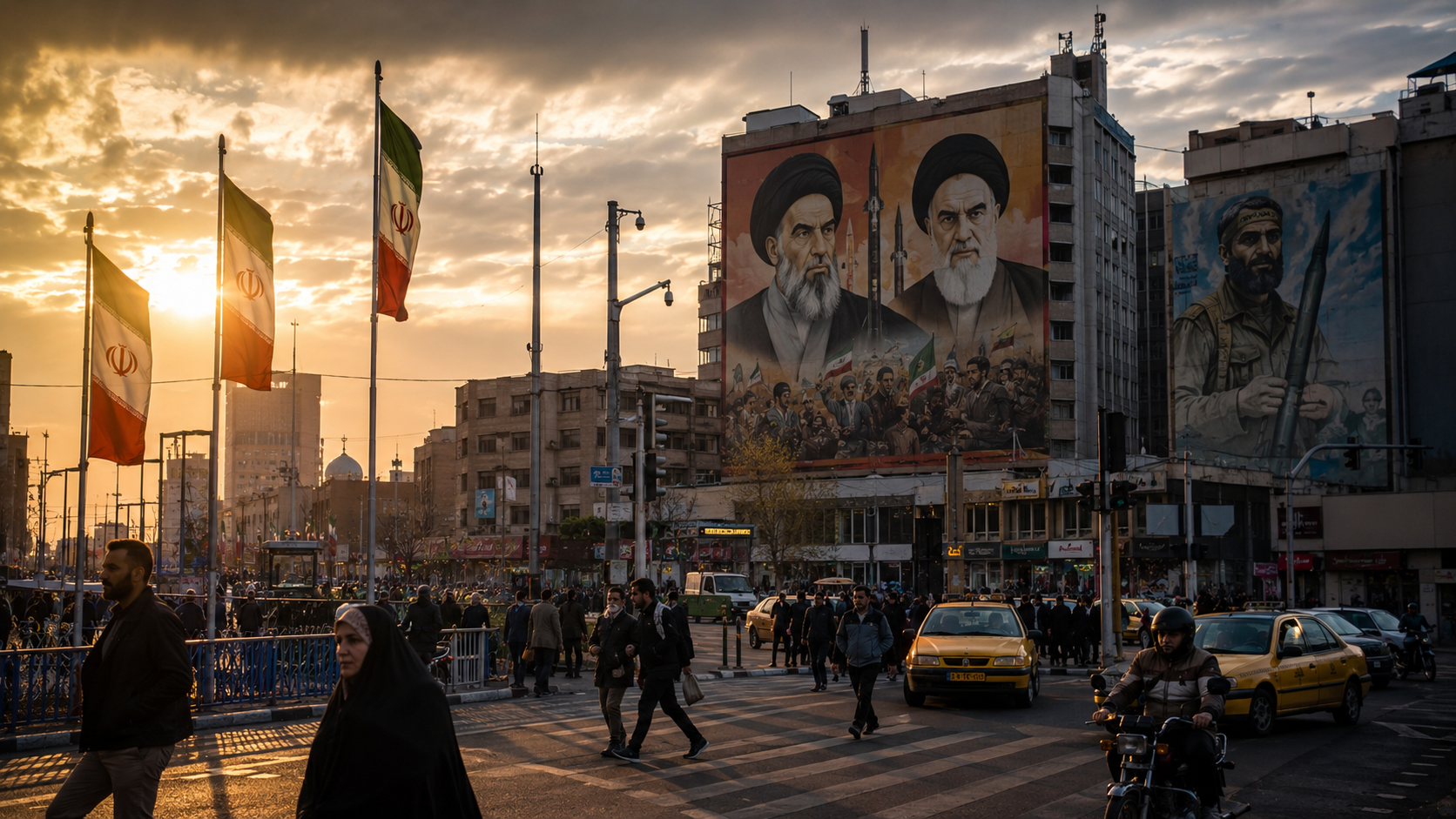
WASHINGTON / TEHRAN / KUWAIT CITY — Hormuz tensions US Iran have crossed the threshold that the world has been dreading. In the most dangerous and consequential escalation of the Gulf conflict since hostilities began, the United States and Iran have directly exchanged fire across the waters and territories of the Persian Gulf — with Iranian ballistic missiles reported to have struck targets in Kuwait and Bahrain, and US military forces responding with attacks on Iranian military sites after Iran launched waves of drones at American positions. The Hormuz tensions US Iran crisis has now pulled multiple Gulf states directly into a conflict that had previously, for all its danger, remained primarily bilateral.
Thank you for reading this post, don't forget to subscribe!The Hormuz tensions US Iran escalation was confirmed within the same hour by four of the world’s most authoritative news organisations: Al Jazeera, BBC, Reuters, and the Wall Street Journal — a convergence of simultaneous reporting from outlets with independent correspondents on the ground and in official briefing rooms that leaves no room for doubt about the fundamental facts of what has occurred. The world is not watching a proxy conflict or a war by other means. It is watching two of the world’s most heavily armed states exchange direct fire across one of the planet’s most strategically consequential waterways.
What Happened: The Gulf Exchange of Fire
The sequence of events that produced the current Hormuz tensions US Iran crisis unfolded with the kind of rapid escalatory momentum that conflict analysts have long warned about as the most dangerous feature of the US-Iran military standoff.
According to Reuters correspondents Ahmed Elimam, Jana Choukeir, and Phil Stewart — whose reporting represents some of the most detailed and credible available — US forces attacked Iranian military sites after Iran launched drone strikes at American positions in the Gulf region. This exchange of drone and missile fire represents the direct, unmediated military confrontation between US and Iranian forces that previous rounds of escalation had approached but not fully crossed.
Iran’s response to the US counter-strikes then escalated the Hormuz tensions US Iran crisis to a genuinely new and alarming level: the launch of ballistic missiles that Al Jazeera reported struck targets in Kuwait and Bahrain. This is the development that transforms the Hormuz tensions US Iran conflict from a bilateral military exchange into a regional war — because Kuwait and Bahrain are sovereign Gulf states, members of the Gulf Cooperation Council (GCC), and hosts to significant American military infrastructure including the US Fifth Fleet headquarters in Bahrain.
Iran’s targeting of Kuwait and Bahrain in the context of Hormuz tensions US Iran carries an unmistakable message: Tehran is willing and able to extend the conflict beyond its direct bilateral confrontation with the United States and to bring Gulf Arab states — which Iran views as American proxies and platforms — into the firing line. This is a fundamental and terrifying escalation that changes the strategic calculus for every government in the region.
The Strait of Hormuz: Why This Chokepoint Changes Everything
The Hormuz tensions US Iran crisis is taking place at and around the most consequential maritime chokepoint on earth. The Strait of Hormuz — the narrow channel between Iran and the Arabian Peninsula through which the Persian Gulf connects to the Gulf of Oman and the broader Indian Ocean — carries approximately 20 to 21 million barrels of oil per day, representing roughly one fifth of global oil consumption and an even higher proportion of the oil consumed by major Asian economies including China, Japan, South Korea, and India.
For Pakistan, the Hormuz tensions US Iran crisis and its impact on Hormuz shipping is a matter of direct and acute national interest. Pakistan’s energy imports — including crude oil and liquefied natural gas — transit through or are priced against Gulf markets. Any serious disruption to Hormuz shipping would immediately and severely worsen Pakistan’s already-challenged current account position, drive domestic fuel prices sharply higher, and accelerate inflation at a time when Pakistan’s economy is only beginning to stabilise.
The broader global implications of the Hormuz tensions US Iran military exchange for the Strait are potentially catastrophic. Iran has previously threatened — in multiple crises — to close the Strait of Hormuz entirely if it feels its survival as a state is threatened. Whether the current level of Hormuz tensions US Iran has brought Iran to the point where such a drastic step is being seriously contemplated is one of the most urgent questions now facing intelligence agencies and economic planners around the world.
According to the US Energy Information Administration (EIA), the Strait of Hormuz is the world’s most important oil transit chokepoint — a designation that makes the current Hormuz tensions US Iran military exchange not just a regional security crisis but a global economic emergency.
Kuwait and Bahrain: Gulf States Enter the Firing Line
The targeting of Kuwait and Bahrain in the Hormuz tensions US Iran escalation represents a strategic decision by Iran that will have profound and lasting consequences for the region’s political architecture.
Both Kuwait and Bahrain are members of the Gulf Cooperation Council — the six-nation grouping that includes Saudi Arabia, the UAE, Qatar, and Oman alongside them. Both have hosted US military infrastructure that Iran has long viewed as threatening. Bahrain is the home of the US Fifth Fleet, one of the most powerful American naval forces in any regional theatre. Kuwait hosts thousands of US military personnel and serves as a critical logistics hub for American operations in the broader Middle East.
By striking Kuwait and Bahrain in the context of Hormuz tensions US Iran, Iran is directly attacking American military infrastructure and signalling that it will not allow Gulf Arab states to serve as safe American platforms from which the US can conduct operations against Iran without consequence. This is a message that Riyadh, Abu Dhabi, Doha, and Muscat will have received with extreme alarm — and it fundamentally changes the political dynamics within the GCC as each government now must assess its own vulnerability to Iranian strikes.
The Gulf Cooperation Council is expected to hold emergency consultations following the strikes on Kuwait and Bahrain, with the fundamental question being whether individual GCC states begin to distance themselves from US military basing arrangements to reduce their own exposure to Iranian retaliation — a development that would have profound consequences for American power projection in the region and for the Hormuz tensions US Iran conflict’s strategic environment.
The Ceasefire: Now Completely Shattered
The Hormuz tensions US Iran military exchange must be understood in the context of the ceasefire process that has now been completely overwhelmed by events. As Pakkhabar.com has been tracking closely, a US-brokered Israel-Lebanon ceasefire was announced with cautious optimism just days ago — an agreement that had already hit severe turbulence when Hezbollah rejected it. The Hormuz tensions US Iran Gulf exchange of fire represents a far more serious blow to any hope of regional de-escalation.
BBC correspondent Jaroslav Lukiv framed the Hormuz tensions US Iran exchange as “the latest test of ceasefire” — language that captures the increasingly surreal diplomatic situation in which ceasefire agreements are announced while military operations continue, creating a paradox where the formal diplomatic framework and the operational military reality have become completely disconnected.
Trump’s much-publicised diplomatic scramble to end the Iran war now faces its most severe test. The Hormuz tensions US Iran escalation — including Iranian missiles hitting US-allied Gulf states — makes it politically and strategically nearly impossible for Washington to de-escalate unilaterally without appearing to reward Iranian aggression. Yet further escalation risks exactly the kind of conflict spiral that turns a serious regional crisis into a catastrophic regional war.
Global Energy Markets: Immediate and Severe Impact
The Hormuz tensions US Iran Gulf exchange of fire has sent immediate and severe shockwaves through global energy markets. Oil prices — which had fallen following the initial ceasefire announcement — have now surged sharply as traders price in the risk of Hormuz disruption, Iranian attacks on Gulf energy infrastructure, and the potential for a broader conflict that could take millions of barrels of Gulf oil production offline.
For major oil-importing economies — including Pakistan, India, China, Japan, South Korea, and the European Union — the Hormuz tensions US Iran price surge represents an immediate and painful economic shock. Central banks and finance ministries around the world are urgently assessing the implications for inflation, current accounts, and economic growth of a sustained period of elevated oil prices driven by Gulf conflict.
The International Energy Agency (IEA) is monitoring the Hormuz tensions US Iran situation and its energy market implications through its emergency response mechanisms, which include the potential release of strategic petroleum reserves from member countries to cushion the market impact of supply disruptions.
International Reaction: Alarm at the Highest Levels
The Hormuz tensions US Iran Gulf exchange of fire has triggered alarm at the highest levels of international diplomatic and security institutions.
The United Nations Secretary-General has called for an immediate halt to military operations and an emergency meeting of the Security Council — a body that will struggle to produce a unified response given Russian and Chinese vetoes on any resolution that would directly constrain Iran, and American opposition to any resolution that constrains US military operations.
European governments — which have been actively engaged in trying to revive ceasefire negotiations — have issued emergency statements expressing deep alarm at the Hormuz tensions US Iran escalation and calling for immediate de-escalation. The European Union’s foreign policy chief has convened an emergency consultation of EU foreign ministers to coordinate a European response.
For Pakistan, the Hormuz tensions US Iran crisis carries direct strategic implications beyond energy economics. Pakistan shares a long border with Iran, has significant Pakistani communities in Gulf states including Kuwait and Bahrain, and has substantial economic remittance flows from Pakistani workers in the Gulf. Any further escalation of the Hormuz tensions US Iran conflict — particularly any broadening of Iranian strikes on Gulf states — would threaten the safety and livelihoods of hundreds of thousands of Pakistani expatriates and the remittance flows on which Pakistan’s economy critically depends.
According to the State Bank of Pakistan, Gulf remittances represent one of Pakistan’s single most important sources of foreign exchange earnings — making the Hormuz tensions US Iran crisis a direct threat to Pakistan’s economic stability, not merely a distant geopolitical event.
What Comes Next: Three Scenarios
Military analysts and diplomatic observers watching the Hormuz tensions US Iran Gulf exchange are now gaming out three broad scenarios for how the situation develops.
In the most optimistic scenario, the shock of Iranian missiles striking Kuwait and Bahrain creates sufficient alarm within the Iranian leadership — and sufficient pressure from China, Russia, and regional intermediaries — to trigger an urgent and genuine ceasefire across all fronts simultaneously. The Hormuz tensions US Iran exchange would then be remembered as the moment the conflict peaked before reversing toward negotiation.
In the intermediate scenario, the Hormuz tensions US Iran conflict continues at its current intensity — a sustained exchange of strikes, drone attacks, and missile launches that inflicts significant damage on all sides but stops short of the kind of catastrophic escalation that would trigger a full-scale war. This scenario carries enormous economic costs and human suffering but avoids the worst outcomes.
In the most alarming scenario, Iran’s targeting of Kuwait and Bahrain triggers a broader Gulf Arab military response, potentially including Saudi or UAE air strikes on Iranian territory, that transforms the Hormuz tensions US Iran bilateral conflict into a pan-regional war involving multiple states. This scenario — which would almost certainly result in Hormuz closure, catastrophic oil price spikes, and a global economic recession — is what every responsible government is desperately trying to prevent.
Read Also: Pakistan Rejects India’s Remarks on GB Elections as Completely Baseless — Diplomatic Clash Erupts
Read Also: Punjab Green Tractor Scheme: CM Maryam Announces Brilliant Rs1m Subsidy for 20,000 Farmers
Conclusion
The Hormuz tensions US Iran Gulf exchange of fire marks one of the most dangerous moments in the post-Cold War international order. With Iranian missiles striking sovereign Gulf Arab states, US forces attacking Iranian territory, the world’s most critical energy chokepoint under active military threat, and every ceasefire mechanism in tatters, the Middle East is navigating without safety nets in territory where miscalculation could produce consequences that reshape the global order for generations.
The decisions made in Washington, Tehran, Kuwait City, Manama, Riyadh, Beijing, and Moscow in the next 24 to 48 hours will determine whether the Hormuz tensions US Iran crisis becomes a turning point toward negotiation — or the opening chapter of a catastrophic regional war.
Pakkhabar.com will continue to provide real-time updates on Hormuz tensions, the US-Iran Gulf crisis, and the regional and global implications as this rapidly evolving situation develops.