

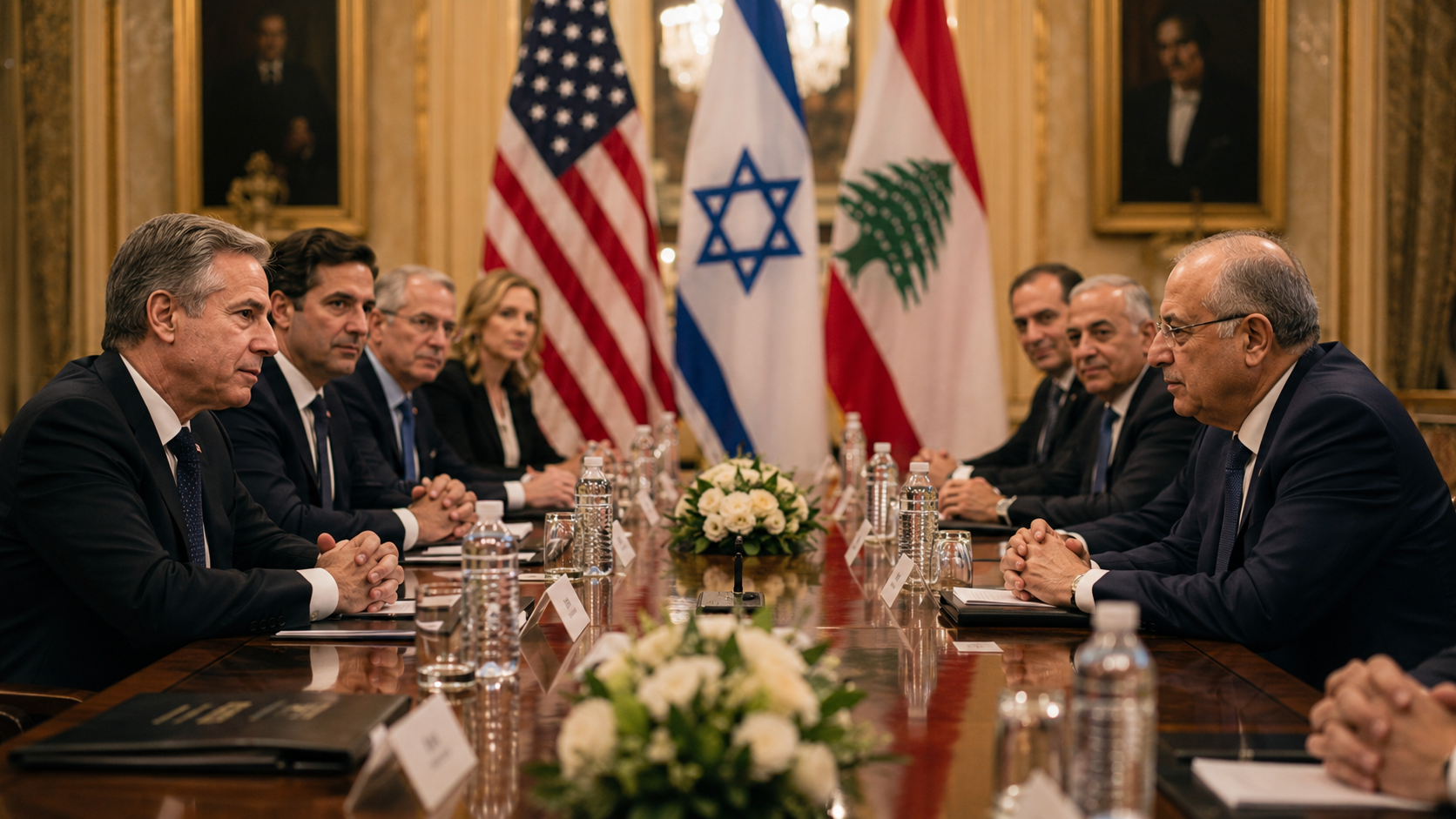
WASHINGTON / BEIRUT / JERUSALEM — Israel Lebanon ceasefire agreement — three words that the Middle East has been desperately waiting to hear have finally arrived. In a significant diplomatic development that has sent immediate ripples across global markets, military command rooms, and the living rooms of millions of Lebanese and Israeli families, Israel and Lebanon have agreed to a new ceasefire, brokered through direct and intensive United States mediation as President Donald Trump simultaneously works to bring a broader end to the Iran war that has been destabilising the entire region.
Thank you for reading this post, don't forget to subscribe!The Israel Lebanon ceasefire agreement was confirmed by multiple major international outlets including The Guardian, BBC, Al Jazeera, and Reuters — with sources indicating that the deal was reached after an intensive diplomatic push by US mediators who have been working around the clock to prevent the Lebanon front from further escalating while the broader US-Iran conflict continues. The convergence of reporting from these credible outlets leaves little doubt about the substance of the breakthrough, even as its durability faces immediate tests.
The Ceasefire Agreement: What Has Been Agreed
The Israel Lebanon ceasefire agreement as currently understood involves a mutual halt to offensive military operations between Israeli forces and Hezbollah-aligned fighters in Lebanon, contingent on Hezbollah ceasing its attacks — a condition reported explicitly by BBC correspondent David Gritten as central to the agreement’s terms.
This conditionality is significant. Unlike a simple blanket ceasefire, the Israel Lebanon ceasefire agreement appears to be structured as a reciprocal arrangement: Israel agrees to halt its military operations in Lebanon in exchange for Hezbollah stopping its cross-border attacks on northern Israel. The arrangement reflects the fundamental security logic that has driven the conflict — Israel’s stated justification for its Lebanon operations has consistently been Hezbollah’s ongoing threat to Israeli border communities — and provides each side with a face-saving framework that can be presented to their respective domestic audiences as a security achievement.
The US role in brokering the Israel Lebanon ceasefire agreement appears to have been direct and substantial. Reports indicate that senior American officials, potentially including Trump administration envoys with direct access to both parties, were instrumental in bridging the gaps between Israeli and Lebanese positions that had prevented earlier ceasefire efforts from materialising.
Oil Prices Fall: Markets Respond Immediately
One of the most telling immediate signals of the significance of the Israel Lebanon ceasefire agreement came not from diplomatic communiqués but from global oil markets. As Reuters correspondent Ahmad Ghaddar reported within an hour of the announcement, oil prices fell following news of the Lebanon ceasefire — a direct market acknowledgement that the deal reduces the near-term risk of a wider conflict that could disrupt Persian Gulf energy supplies.
The oil market reaction to the Israel Lebanon ceasefire agreement reflects the deep interconnection between Middle East stability and global energy economics. The Persian Gulf carries approximately one fifth of the world’s crude oil supply, and any conflict that risks spreading to Iran’s oil infrastructure, Gulf shipping lanes, or the Strait of Hormuz translates directly into energy price pressure felt from Tokyo to Berlin to Karachi.
For Pakistan specifically, falling oil prices following the Israel Lebanon ceasefire agreement represent a potential economic benefit at a moment when the country has been grappling with the energy import cost pressures that the regional conflict had been generating. The State Bank of Pakistan and Ministry of Finance will be monitoring the oil price trajectory carefully, knowing that sustained lower prices would ease pressure on Pakistan’s current account and inflation outlook.
Trump’s Diplomatic Gamble: Ending the Iran War
The Israel Lebanon ceasefire agreement does not exist in isolation — it is part of a broader and more ambitious American diplomatic effort to bring an end to the wider US-Iran conflict that has been running in parallel with the Lebanon crisis.
President Trump, according to multiple reports, has been personally involved in the diplomatic push that produced the Israel Lebanon ceasefire agreement, viewing it as a stepping stone toward a broader regional de-escalation that would include a resolution of the US-Iran military confrontation. The Lebanon ceasefire is, from Washington’s perspective, an attempt to remove one of the key obstacles that Iran cited when it broke off ceasefire negotiations — namely, the continued Israeli military operations in Lebanon that Tehran said made negotiations politically impossible.
The strategic logic is clear: if the Israel Lebanon ceasefire agreement holds and Israeli operations in Lebanon genuinely cease, Iran loses its stated justification for walking away from talks and faces renewed pressure from intermediaries, particularly Oman and Europe, to return to the negotiating table. Whether Tehran accepts this framing — or uses it as an opportunity to extract further concessions before re-engaging — will be one of the defining diplomatic questions of the coming days.
Trump’s approach to the Israel Lebanon ceasefire agreement reflects a broader pattern in his foreign policy style: high-pressure, personally engaged diplomacy that prioritises visible outcomes over process, and that is willing to make direct demands of all parties including traditional US allies like Israel. The willingness to push Israel toward a ceasefire — even a conditional one — signals that the Trump administration calculates the costs of continued Lebanon escalation as exceeding the benefits.
The Hezbollah Variable: Will the Deal Hold?
The most immediate and serious threat to the Israel Lebanon ceasefire agreement is the behaviour of Hezbollah — the Lebanese political and military organisation that sits at the centre of the conflict but which is not a formal state party to any agreement.
Hezbollah is a complex organisation with political, social welfare, and military dimensions that operate simultaneously. Its military wing takes direction from Iranian strategic guidance while also responding to Lebanese domestic political considerations and its own assessment of what serves Hezbollah’s long-term interests. Whether the organisation’s leadership calculates that honouring the Israel Lebanon ceasefire agreement serves those interests — or whether hardline elements within Hezbollah’s military structure decide to continue operations regardless of any agreement — is the central uncertainty hanging over the deal.
Al Jazeera reported, just 21 minutes after the ceasefire announcement, that an Israeli attack had injured several people in Lebanon — a deeply concerning early signal that the Israel Lebanon ceasefire agreement is already facing implementation challenges before it has had time to consolidate. Whether this represents a final Israeli operation before the ceasefire took effect, a deliberate Israeli test of the deal’s boundaries, or a sign that the agreement is already under strain, remains to be clarified.
The United Nations Interim Force in Lebanon (UNIFIL), which has thousands of peacekeeping troops from European and other nations deployed in southern Lebanon, will play a critical role in monitoring compliance with the Israel Lebanon ceasefire agreement and providing the international verification mechanism that both sides need to trust that the other is honouring its commitments.
Lebanon’s Desperate Need for Peace
For Lebanon itself, the Israel Lebanon ceasefire agreement arrives after a period of suffering that has been almost incomprehensible in its intensity. A country that entered 2024 already in the grip of one of the worst economic collapses in modern history — its banking system destroyed, its currency worthless, its population impoverished — has been simultaneously subjected to a military conflict that has killed civilians, destroyed infrastructure, and displaced communities across the south of the country.
Lebanese civil society, political leaders across the spectrum, and ordinary families have been united in their desperate desire for an end to the military conflict, even as they disagree profoundly about its causes and about Lebanon’s long-term political direction. The Israel Lebanon ceasefire agreement offers this exhausted country a moment to breathe — to stop the immediate bleeding and begin the conversation about what reconstruction and political stabilisation might look like.
According to the UNHCR, hundreds of thousands of Lebanese civilians had been displaced by the conflict, with entire communities in southern Lebanon evacuated. The Israel Lebanon ceasefire agreement would, if it holds, allow the beginning of a return process for these displaced families — a humanitarian imperative that has been building for weeks.
Regional and Global Implications
The Israel Lebanon ceasefire agreement sends signals that will be felt far beyond Lebanon’s borders.
For Iran, the deal removes one of its key diplomatic arguments but also creates new pressure. Tehran will be expected — by Oman, Europe, China, and others — to respond to the changed situation by returning to ceasefire negotiations with the United States. Refusing to do so in the wake of the Israel Lebanon ceasefire agreement would expose Iran to the argument that its Lebanon concerns were never genuine but merely a pretext for avoiding negotiations it was unwilling to conduct on their merits.
For Gulf states navigating between their US security relationships and their economic and cultural ties to Iran, the Israel Lebanon ceasefire agreement offers a moment of reduced tension that all parties in the Gulf would welcome. Energy market stability, shipping security, and the overall regional investment climate all improve when the Lebanon front is quiet.
For Pakistan, the Israel Lebanon ceasefire agreement carries both direct economic benefits — through lower oil prices and improved regional stability — and a diplomatic opening. Islamabad has consistently advocated for negotiated solutions across all dimensions of the Middle East conflict, and the Lebanon ceasefire validates that diplomatic preference. Pakistan can point to the Israel Lebanon ceasefire agreement as evidence that the dialogue-over-confrontation approach it has championed in international forums is the right path forward.
What Needs to Happen for the Deal to Survive
The Israel Lebanon ceasefire agreement faces several critical tests in the hours and days ahead that will determine whether it becomes a genuine turning point or another failed attempt at peace.
First, both Israel and Hezbollah must demonstrate through their actions — not just their statements — that they are genuinely committed to the ceasefire terms. The report of Israeli strikes shortly after the agreement was announced must be clarified and resolved without triggering retaliatory action from Hezbollah that unravels the deal before it has taken hold.
Second, the US must maintain active diplomatic engagement to prevent spoilers on either side from undermining the Israel Lebanon ceasefire agreement. A ceasefire that Washington announces and then walks away from monitoring is a ceasefire that will not survive its first serious challenge.
Third, the broader US-Iran diplomatic process must resume. The Israel Lebanon ceasefire agreement is only sustainable as part of a broader regional de-escalation. If the wider US-Iran military conflict continues while Lebanon is nominally at ceasefire, the pressure on Hezbollah to re-engage on the Lebanon front will be intense.
Read Also: OICCI Survey: Pakistan Business Confidence Plunges Sharply Amid Dangerous Regional War Tensions
Read Also: Pakistan Abraham Accords Position Unwavering: Foreign Office Firmly Rejects Any Policy Shift
Read Also: Infinix Note 30 Review: Surprisingly Powerful and an Unbeatable Budget Pick in 2026
Conclusion
The Israel Lebanon ceasefire agreement is one of the most significant diplomatic developments in the Middle East in 2026. After weeks of relentless military escalation, civilian suffering, diplomatic collapse, and market volatility, a deal has been struck that offers a genuine — if fragile — pathway toward reduced conflict and eventual stabilisation.
Whether the Israel Lebanon ceasefire agreement fulfils its promise will depend on decisions made by governments, military commanders, and political leaders in the coming hours and days. The world is watching — and hoping — that this time, the ceasefire holds.
Pakkhabar.com will provide live updates on the Israel Lebanon ceasefire agreement implementation, regional diplomatic developments, and the broader US-Iran peace process as events unfold.