

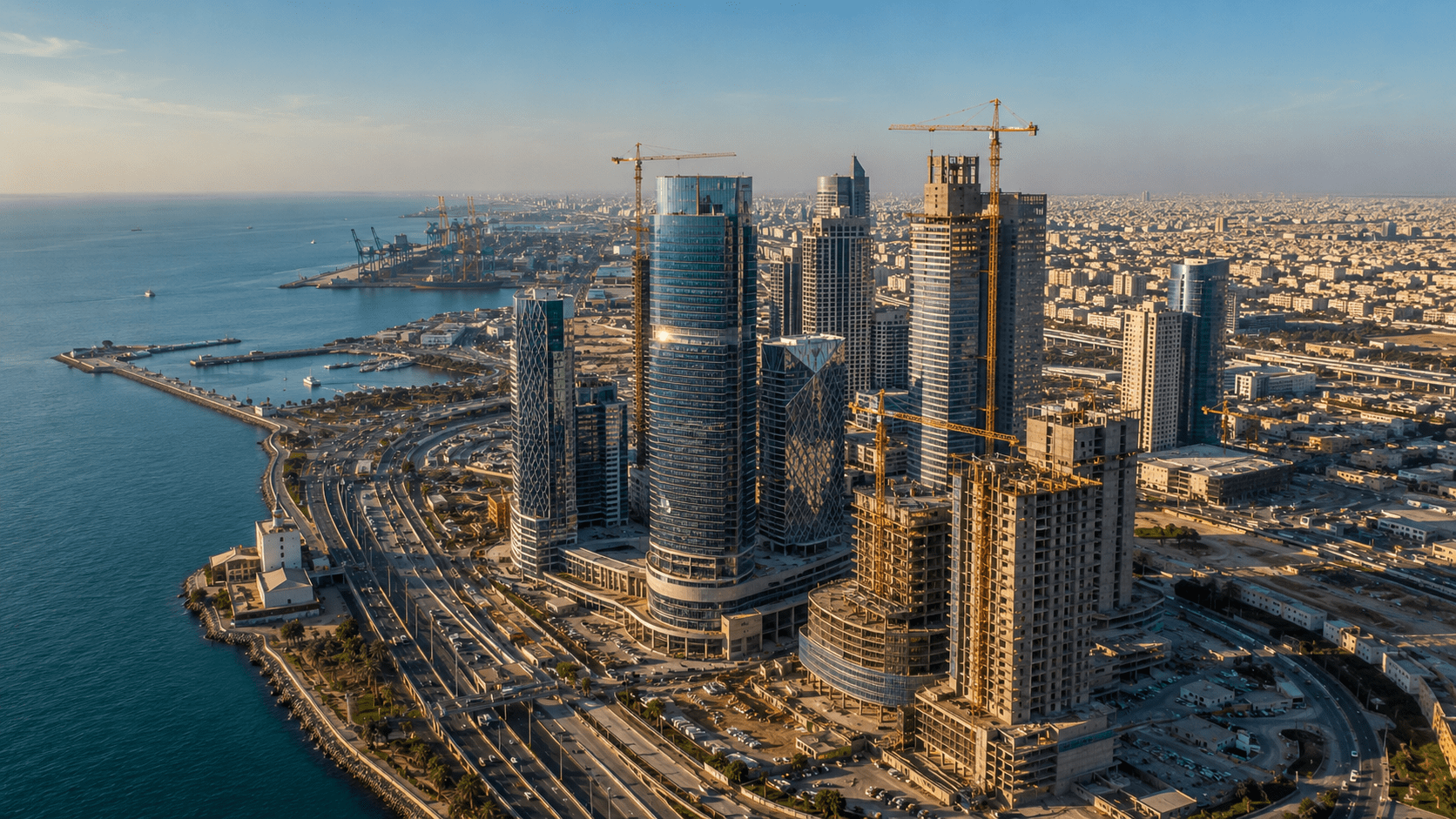
KARACHI / ISLAMABAD — Karachi maritime business district — these four words represent a vision of Pakistan’s most important city that is now backed by a formal, legally binding commitment. Pakistan has signed a landmark Memorandum of Understanding with Saudi Arabian and local Pakistani firms to develop a dedicated Karachi maritime business district — a transformative coastal development that would create a world-class commercial, logistics, financial, and maritime services hub directly on Karachi’s Arabian Sea waterfront. The MoU, reported by Arab News correspondent Ismail Dilawar, marks the moment the Karachi maritime business district project moved from ambition to action — from conversations in bilateral meetings to signatures on formal agreements that commit the parties to a defined development framework.
Thank you for reading this post, don't forget to subscribe!The Karachi maritime business district MoU is significant on multiple levels simultaneously. It is the most concrete and advanced formal investment commitment to Karachi’s long-discussed waterfront development potential that has yet been achieved. It directly links the broader Saudi-Pakistan economic engagement — encompassing port deals, the Gwadar refinery push, motorway investments, and the crypto zone proposal — to a specific, actionable, signed framework. And it signals to domestic and international investors that the Karachi maritime business district concept has moved beyond the aspirational stage into the realm of bankable, structured project development.
What Is the Karachi Maritime Business District?
The Karachi maritime business district concept envisions a dedicated development zone along Karachi’s coastline that integrates multiple complementary economic functions into a single, planned, world-class business destination. Unlike a simple port expansion or a standalone commercial development, the Karachi maritime business district is designed as a holistic ecosystem — combining shipping and logistics facilities, financial services offices, legal and insurance services, maritime technology companies, hospitality infrastructure, and public waterfront amenities in a single, coherently planned district.
The model for the Karachi maritime business district draws inspiration from successful maritime business districts in other major coastal cities — Dubai’s DIFC and Port precinct, Singapore’s Marina Bay, Hamburg’s HafenCity, and Rotterdam’s Wilhelminapier — all of which demonstrate how intelligent, planned development of waterfront real estate can generate enormous economic value, attract international business, and transform a city’s global reputation and economic competitiveness.
Karachi has the foundational assets to support a world-class Karachi maritime business district: the busiest port in Pakistan handling the majority of the country’s import and export cargo, a large and talented financial services and business services workforce, direct access to the Arabian Sea and Indian Ocean trade routes, and a metropolitan economy of over 20 million people that generates significant demand for the kinds of services a maritime business district provides.
What Karachi has lacked — until now — is the structured investment framework, the committed private sector partners, and the formal government backing needed to translate that potential into a built reality. The MoU for the Karachi maritime business district addresses precisely this gap.
The MoU: Who Signed and What Was Agreed
The Karachi maritime business district MoU was signed between Pakistani government authorities, Saudi Arabian investors, and local Pakistani private sector firms — a tripartite structure that reflects the project’s vision of combining Gulf capital, Pakistani private sector expertise, and government facilitation into a coherent development partnership.
The involvement of Saudi firms in the Karachi maritime business district MoU is directly consistent with the broader pattern of Saudi-Pakistani economic engagement that has been accelerating through 2026. Saudi Vision 2030 capital is actively seeking international investment opportunities in infrastructure, real estate, and commercial development — and the Karachi maritime business district, with its combination of strategic location, large domestic market, and ambitious development vision, represents exactly the kind of opportunity that Saudi institutional and private investors are pursuing.
The local Pakistani firms involved in the Karachi maritime business district MoU bring essential market knowledge, existing relationships with government and regulatory bodies, and a long-term commitment to the project’s success that gives the development partnership the local rootedness that pure foreign investment alone cannot provide. This public-private, Saudi-Pakistani partnership structure is deliberately designed to maximise the project’s chances of moving smoothly from MoU to groundbreaking to completion.
The MoU itself — as is standard for projects of this scale and complexity — establishes the framework for the Karachi maritime business district development without finalising every detail of the investment structure, financing arrangements, or governance framework. It commits the parties to working together within defined parameters to develop a bankable project proposal, conduct necessary feasibility studies, and negotiate the definitive agreements needed to move to implementation.
Karachi’s Waterfront: An Asset Long Underutilised
The Karachi maritime business district MoU is particularly significant because it represents the most serious and structured attempt yet to unlock the enormous economic value locked in Karachi’s waterfront — an asset that has been chronically underutilised relative to its potential for decades.
Karachi’s coastline stretches for considerable kilometres along the Arabian Sea, but much of this waterfront is occupied by port operational areas, industrial zones, and informal settlements that prevent the kind of mixed-use, high-value commercial development that Karachi’s size and strategic position should support. The portions of the waterfront that are accessible to the public and the business community are underdeveloped relative to comparable cities of Karachi’s stature and strategic importance.
The Karachi maritime business district addresses this underutilisation directly by designating a specific zone for planned, high-density, high-value commercial development that makes the waterfront work for Karachi’s economy in the way that Dubai Creek, Singapore’s Marina, or Hamburg’s harbour work for theirs.
According to Karachi Port Trust — the authority that manages Karachi’s main port and has jurisdiction over significant areas of waterfront land — the development of commercial and business services facilities adjacent to port operations is a long-standing strategic objective that the Karachi maritime business district framework directly enables.
Economic Impact: Jobs, Investment and Pakistan’s Maritime Future
The economic impact of a successfully developed Karachi maritime business district would extend far beyond the immediate construction phase and the businesses that choose to locate within the district itself.
The Karachi maritime business district would generate substantial direct employment across multiple skill levels — construction workers, architects, and engineers during the development phase, followed by finance professionals, logistics specialists, technology workers, hospitality staff, and maritime services personnel once the district is operational. For a city with Karachi’s unemployment challenges and its enormous pool of young educated talent, the sustained employment generation of a major new business district is a meaningful contribution to the city’s economic welfare.
The Karachi maritime business district would also serve as a catalyst for broader urban regeneration along Karachi’s waterfront — attracting complementary investments in residential, retail, cultural, and leisure facilities that transform the surrounding areas and increase property values, tax revenues, and quality of life for Karachi’s residents.
From a national economic perspective, the Karachi maritime business district supports Pakistan’s ambition to become a regional trade and logistics hub. By creating world-class business services infrastructure directly adjacent to Pakistan’s major port, the district makes it easier and more attractive for international shipping companies, trading houses, insurance and legal firms, and logistics operators to establish their regional headquarters in Karachi rather than in Dubai, Singapore, or other competing locations.
The Karachi Chamber of Commerce and Industry (KCCI) has long identified the development of a dedicated maritime business district as one of the highest-priority steps for enhancing Karachi’s competitiveness as a regional business hub — giving the Karachi maritime business district MoU strong backing from the city’s organised business community.
Saudi Arabia’s Vision 2030 and the Karachi Connection
Saudi Arabia’s involvement in the Karachi maritime business district is not incidental — it reflects a deliberate strategic alignment between Saudi Vision 2030’s international investment objectives and Pakistan’s development needs.
Vision 2030 has tasked Saudi sovereign wealth funds and private sector champions with deploying capital internationally into projects that generate returns, deepen strategic partnerships, and support Saudi Arabia’s ambition to become a global investment and business hub in its own right. Infrastructure and real estate development in major emerging market cities — particularly in Muslim-majority countries with which Saudi Arabia has close cultural and religious ties — is a natural fit for this mandate.
The Karachi maritime business district offers Saudi investors something particularly attractive: a first-mover advantage in a major coastal city that is significantly undervalued relative to its potential. Karachi is one of the world’s largest cities and Pakistan’s economic engine — but its commercial real estate and infrastructure have historically been underdeveloped relative to comparable cities. Saudi investors who commit to the Karachi maritime business district at this early stage are positioning themselves to benefit from the upside as the district develops and Karachi’s commercial property market matures.
According to Arab News, the Saudi-Pakistani economic relationship has entered a new and more substantive phase in 2026 — with the Karachi maritime business district MoU being one of the clearest expressions yet of Saudi investors’ willingness to make concrete, structural commitments to Pakistan’s economic development rather than simply expressing interest in bilateral meetings.
Challenges Ahead: From MoU to Reality
The Karachi maritime business district MoU is an important milestone — but it is the beginning of a long and complex project development journey rather than a guarantee of success. Several challenges will need to be navigated carefully if the Karachi maritime business district is to achieve its potential.
Land acquisition and clearing — always a complex process in Karachi given the city’s history of competing claims, informal occupancy, and bureaucratic complexity — will need to be handled with both legal rigour and political sensitivity. Regulatory approvals, environmental clearances, and infrastructure connectivity will all require sustained government attention and administrative capacity.
The security environment in Karachi — which has improved enormously over the past decade but remains a consideration for international investors — will need to be maintained and further strengthened to give the Karachi maritime business district the kind of stable operating environment that major commercial real estate investment requires.
Finally, the governance framework for the Karachi maritime business district — who oversees the development, how disputes between partners are resolved, how public infrastructure is funded — will need to be clarified in the definitive agreements that follow the MoU. These are solvable problems, but they require sustained political will and professional project management.
Read Also: Gwadar Saudi Refinery: Pakistan Renews Its Boldest Ever Energy Power Move
Read Also: Gilgit-Baltistan Elections 2026: Political Heavyweights Battle Hard for Crucial Mountain Votes
Conclusion
The Karachi maritime business district MoU represents a genuine and exciting breakthrough in Pakistan’s efforts to unlock the economic potential of its most important city’s greatest natural asset. By bringing together Saudi investment capital, Pakistani private sector expertise, and government commitment in a formally signed framework, the Karachi maritime business district has taken the critical step from vision to verified commitment.
If successfully developed, the Karachi maritime business district will transform Karachi’s waterfront, strengthen Pakistan’s position as a regional trade hub, create thousands of quality jobs, and demonstrate to the world that Pakistan is serious about becoming the kind of modern, investment-friendly economy that its size and strategic position justify.
Pakkhabar.com will continue to track every development in the Karachi maritime business district project — from definitive agreement negotiations to groundbreaking and beyond.