

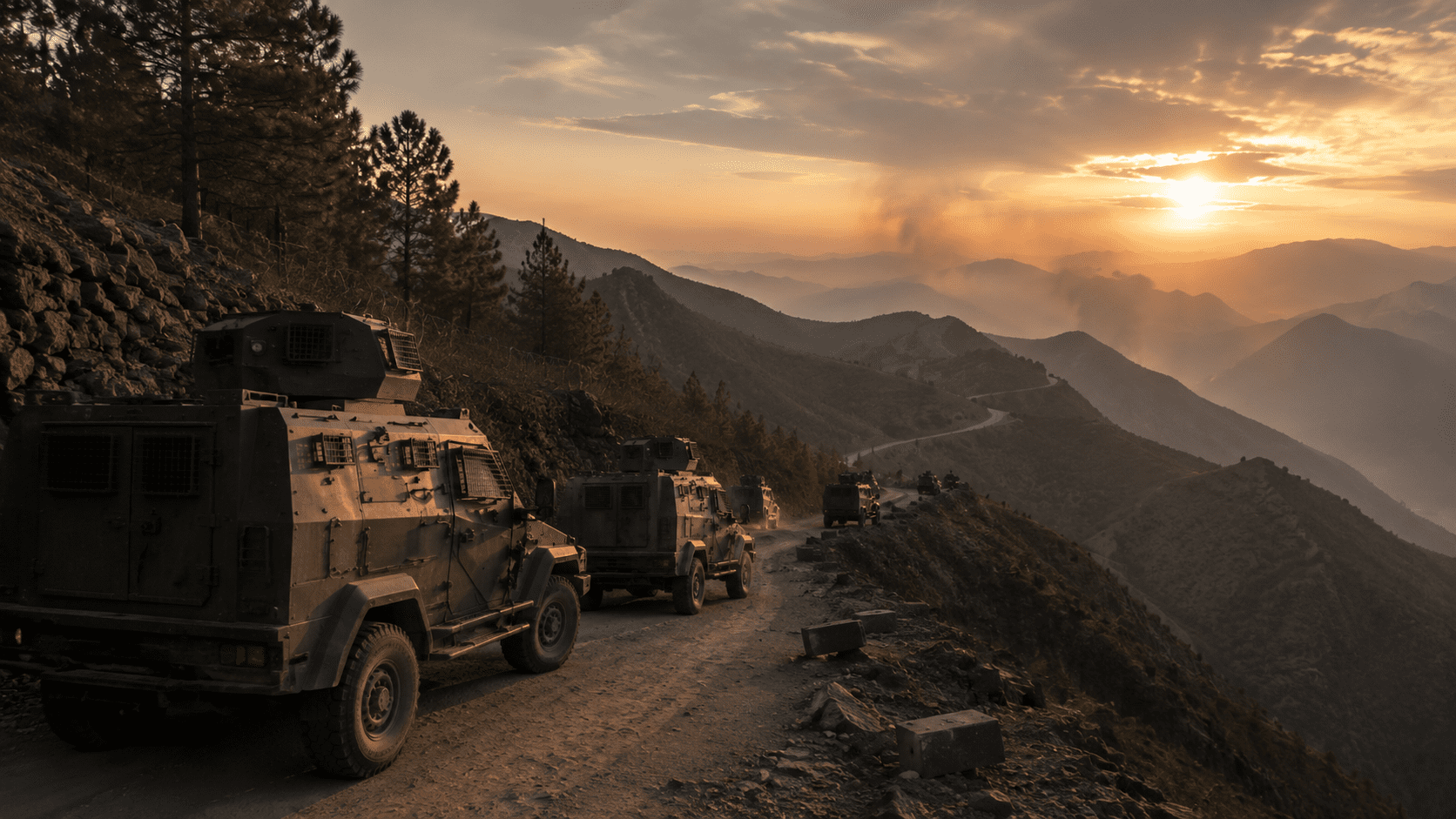
Tensions between Pakistan and Afghanistan have escalated sharply once again. Pakistani security forces carried out a ground operation followed by what officials described as “calibrated strikes” along the Pakistan-Afghanistan border on Sunday, killing 29 fighters, according to government officials. The latest round of Pakistan Afghan border strikes comes just a day after a deadly attack on a paramilitary headquarters in Karachi, deepening an already strained relationship between Islamabad and Kabul.
Thank you for reading this post, don't forget to subscribe!The operation marks one of several cross-border actions Pakistan has carried out in recent months as it continues efforts to target what it describes as militant hideouts and safe havens operating from Afghan territory.
What Happened Along Pakistan Afghan border strikes
Pakistan Afghan border strikes, According to Pakistan’s Information Minister, Attaullah Tarar, the operation was launched in direct response to a string of militant attacks across the country. In a post on social media, Tarar said that three targets in the eastern Afghan provinces of Paktia, Paktika, and Kunar were destroyed during what he called precision strikes. He stated that the operation targeted the hideouts and safe havens of armed groups, including Jamaat-ul-Ahrar and a faction Pakistani officials refer to using the term “Fitna al-Khwarij” — a label Islamabad has increasingly used to describe certain anti-state militant elements, though the term itself is specific to Pakistan’s official messaging rather than a universally recognized designation.
Pakistan Afghan border strikes, Pakistani authorities said the strikes followed a ground operation in which security forces killed three attackers and arrested a fourth individual, who was identified by the military as a wounded Afghan national. There was no immediate official response from the Afghan side at the time the initial reports emerged.
The Karachi Attack That Triggered the Response
The cross-border operation came a day after gunmen armed with weapons and explosives targeted the regional headquarters of the Pakistan Rangers, a paramilitary force, in the southern port city of Karachi. That attack killed three soldiers, according to Pakistani officials. Jamaat-ul-Ahrar, a breakaway faction of the Pakistani Taliban — formally known as Tehrik-e-Taliban Pakistan, or TTP — claimed responsibility for the Karachi attack in a statement issued Saturday night.
Pakistan Afghan border strikes, Pakistani authorities have for years blamed the TTP and allied armed groups for the bulk of militant violence inside the country, particularly attacks targeting police and security personnel. It is worth noting that the Pakistani Taliban (TTP) is a separate organization from the Afghan Taliban, which governs Afghanistan, although the two groups are widely understood to maintain close ties.
Afghanistan’s Response and Disputed Casualty Figures
Pakistan Afghan border strikes, The Afghan Taliban administration’s deputy spokesman, Hamdullah Fitrat, disputed Pakistan’s account of the operation, alleging that the strikes killed at least 36 civilians and wounded 163 others. This figure stands in sharp contrast to Pakistan’s official statement that the operation killed 29 fighters. As of this report, the two sides have not reconciled their differing accounts, and independent verification of either figure has not been confirmed through neutral sources.
Pakistan Afghan border strikes, This pattern of disputed casualty claims has become common in the ongoing cross-border conflict between the two countries, with Islamabad consistently describing its targets as militant hideouts while Kabul has, on multiple occasions, alleged civilian harm. Readers should treat both figures as claims made by interested parties rather than independently confirmed facts, pending verification from neutral international observers.
Background: A Conflict Months in the Making
The latest strikes are far from an isolated incident. Pakistan and Afghanistan have been locked in an escalating cycle of cross-border violence since February, when Afghanistan launched retaliatory strikes after Pakistan conducted air strikes inside Afghan territory. Since then, hundreds of people are reported to have been killed in the broader fighting, according to multiple international news accounts.
Pakistan Afghan border strikes, Multiple rounds of internationally mediated peace talks have failed to produce a lasting ceasefire between the two neighbors. China hosted talks between the two sides in April, after which Beijing said Pakistan and Afghanistan had agreed in principle not to escalate the conflict further and to explore a long-term solution. Despite this, sporadic strikes and retaliatory actions have continued, with Sunday’s operation coming less than three weeks after a previous round of Pakistani air strikes targeted alleged militant hideouts inside Afghanistan.
Pakistan has consistently accused Afghanistan’s Taliban-led government of harboring TTP fighters who carry out attacks inside Pakistani territory. Kabul has repeatedly denied these allegations, maintaining that it does not permit its territory to be used for cross-border militancy.
Regional and Diplomatic Implications at Pakistan Afghan border strikes
The latest escalation is likely to further strain relations between Islamabad and Kabul at a time when both countries are already navigating a fragile and uneasy relationship. Analysts following the region note that continued cross-border strikes risk undermining the diplomatic groundwork laid during China-hosted talks earlier this year, even as both governments have publicly expressed interest in avoiding further escalation.
For Pakistan, the operation reflects a continuation of its broader counter-terrorism strategy, which has increasingly relied on cross-border strikes in response to a rise in militant attacks on security forces in recent years. For Afghanistan, the disputed casualty figures and repeated allegations of harm to civilians add further strain to a relationship already burdened by mutual distrust.
Read Also: French Woman Rescued in Pakistan After Alleged 12-Year Captivity
What Comes Next
With both sides offering starkly different accounts of Sunday’s operation, the path forward remains uncertain. International mediators, including China, are likely to face renewed pressure to bring both governments back to the negotiating table in an effort to prevent further escalation along the border.
As the situation surrounding the Pakistan Afghan border strikes continues to unfold, independent verification of casualty figures and battlefield details remains limited, underscoring the importance of cautious, attribution-based reporting as both governments continue to present competing narratives.
For continued updates on this developing situation, readers can follow coverage from Al Jazeera, Dawn, and Associated Press, which have been tracking statements from both Islamabad and Kabul.