

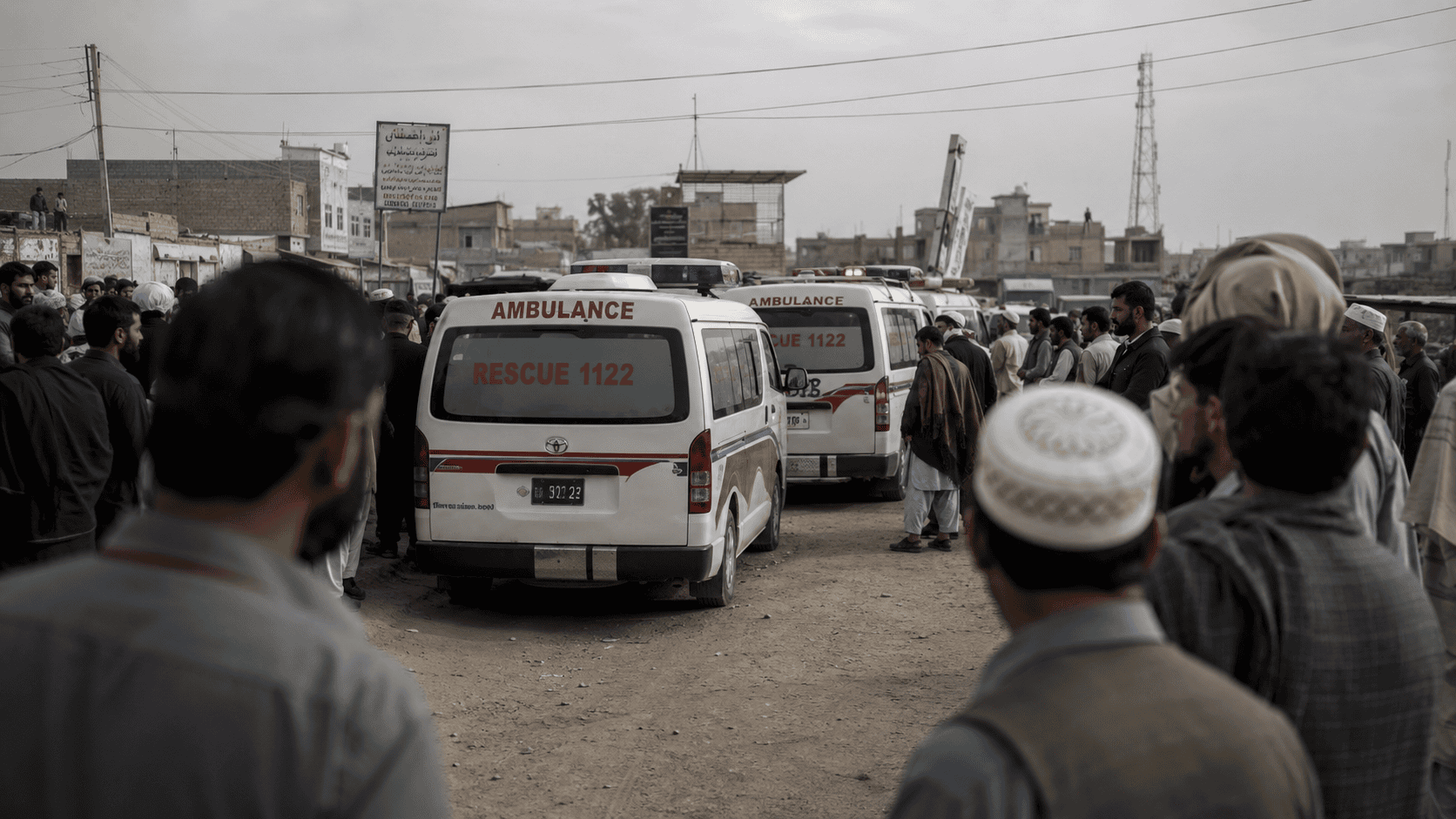
Pakistan is once again confronting a surge of violence in its largest province, as a series of coordinated Balochistan attacks this week left dozens of security personnel and civilians dead. The escalation has triggered an urgent response from Islamabad, with Prime Minister Shehbaz Sharif personally traveling to Quetta to lead a high-level security review and reassure a grieving province that the state will not back down.
Thank you for reading this post, don't forget to subscribe!The visit underscores how deeply the recent Balochistan attacks have shaken the country’s security establishment, reigniting long-standing concerns about the province’s fragile law-and-order situation.
What Happened in the Recent Balochistan Attacks
According to Pakistan’s military spokesperson, the province witnessed three major incidents within a span of a few days. Security forces and civilians were targeted in separate assaults, with the deadliest strike hitting a police post, while another ambushed an army convoy. In total, the Balochistan attacks claimed the lives of at least 38 security personnel and four civilians, based on figures shared by the military’s media wing.
In response, law enforcement and military units launched sweeping counterterrorism operations across the region, reportedly neutralizing more than 50 militants linked to the violence. The intensity of these back-to-back strikes has renewed fears that separatist and militant networks operating in Balochistan are expanding their operational reach far beyond previous years.
PM Shehbaz Sharif Arrives in Quetta
Prime Minister Shehbaz Sharif flew into Quetta to chair a Provincial Apex Committee meeting under the National Action Plan, Pakistan’s framework for coordinated counterterrorism policy. He was received at the airport by Balochistan’s governor, chief minister, and senior civil and military leadership, alongside federal ministers who accompanied him on the trip.
During the visit, the prime minister met with families of the slain personnel and expressed condolences over the losses suffered in the wave of Balochistan attacks. He stated that operations against militant networks would not stop, declaring that the fight against terrorism would continue “until the last terrorist in Pakistan is eliminated.” The remarks were made during a security session attended by the army chief and Balochistan’s chief minister.
A Province Under Strain
Balochistan, Pakistan’s largest province by land area but its least populated, has endured a prolonged separatist insurgency for years, primarily driven by groups seeking greater autonomy or independence for the resource-rich region. In recent times, banned militant outfits have also intensified their presence, compounding the security challenges facing local law enforcement.
The scale of this week’s Balochistan attacks has amplified public anger. In Quetta, relatives of slain police officers held a sit-in protest beside the coffins of the deceased, demanding accountability and justice from the state. Such public displays of grief and frustration highlight the emotional and political weight these attacks carry for communities living through repeated cycles of violence.
Regional Blame and Diplomatic Tensions
Pakistani officials have pointed to external involvement in fueling the unrest. Without direct confirmation from independent sources, Islamabad has alleged that its eastern neighbor is providing support to militant groups operating in Balochistan, while also claiming that fighters are exploiting Afghan territory to plan and launch cross-border attacks. These allegations remain unconfirmed by neutral parties and have been firmly denied by the accused sides, who maintain that no such support or sanctuary is being provided.
This ongoing diplomatic friction adds another layer of complexity to an already volatile security landscape, with regional relations likely to face further strain as investigations into the Balochistan attacks continue.
Economic and Strategic Stakes
Balochistan is not just a security flashpoint — it is also central to Pakistan’s economic ambitions. The province hosts key mineral resources and forms a crucial corridor for regional trade and connectivity projects. Repeated instability threatens to undermine investor confidence and delay development initiatives that authorities have long promoted as vital to the province’s future.
Analysts following the situation note that sustained Balochistan attacks could complicate Pakistan’s efforts to position the region as a hub for infrastructure and economic growth, making the government’s security response all the more consequential — both for local stability and for the country’s broader strategic interests.
Government’s Path Forward
Balochistan’s chief minister reaffirmed during the Apex Committee meeting that there would be no compromise on peace and stability in the province, vowing that any conspiracy against it would be met with firm resolve. The federal government is expected to announce additional security measures in the coming days, potentially including reinforced deployments, intelligence-sharing improvements, and expanded operations targeting militant hideouts.
For readers following developments, it is worth noting that details surrounding the identities of specific groups and the full scope of casualties remain part of an active and evolving investigation, and figures may be revised as authorities complete their assessments.
Read ALso:Pakistan Bus Ravine Tragedy: 40 Killed in Balochistan Highway Disaster
What This Means Going Forward
The recent Balochistan attacks mark one of the deadliest weeks for security forces in the province in recent memory, and they place immense pressure on Islamabad to demonstrate that its counterterrorism strategy can deliver lasting results. With Prime Minister Shehbaz Sharif personally engaging on the ground and top military leadership involved in the response, the coming weeks are likely to reveal whether these renewed operations bring meaningful stability — or whether Balochistan’s cycle of violence will continue.
For now, families across the province are burying their dead, protesters are demanding answers, and the government faces the difficult task of turning promises into protection.
Inter-Services Public Relations (ISPR) Official Statements