

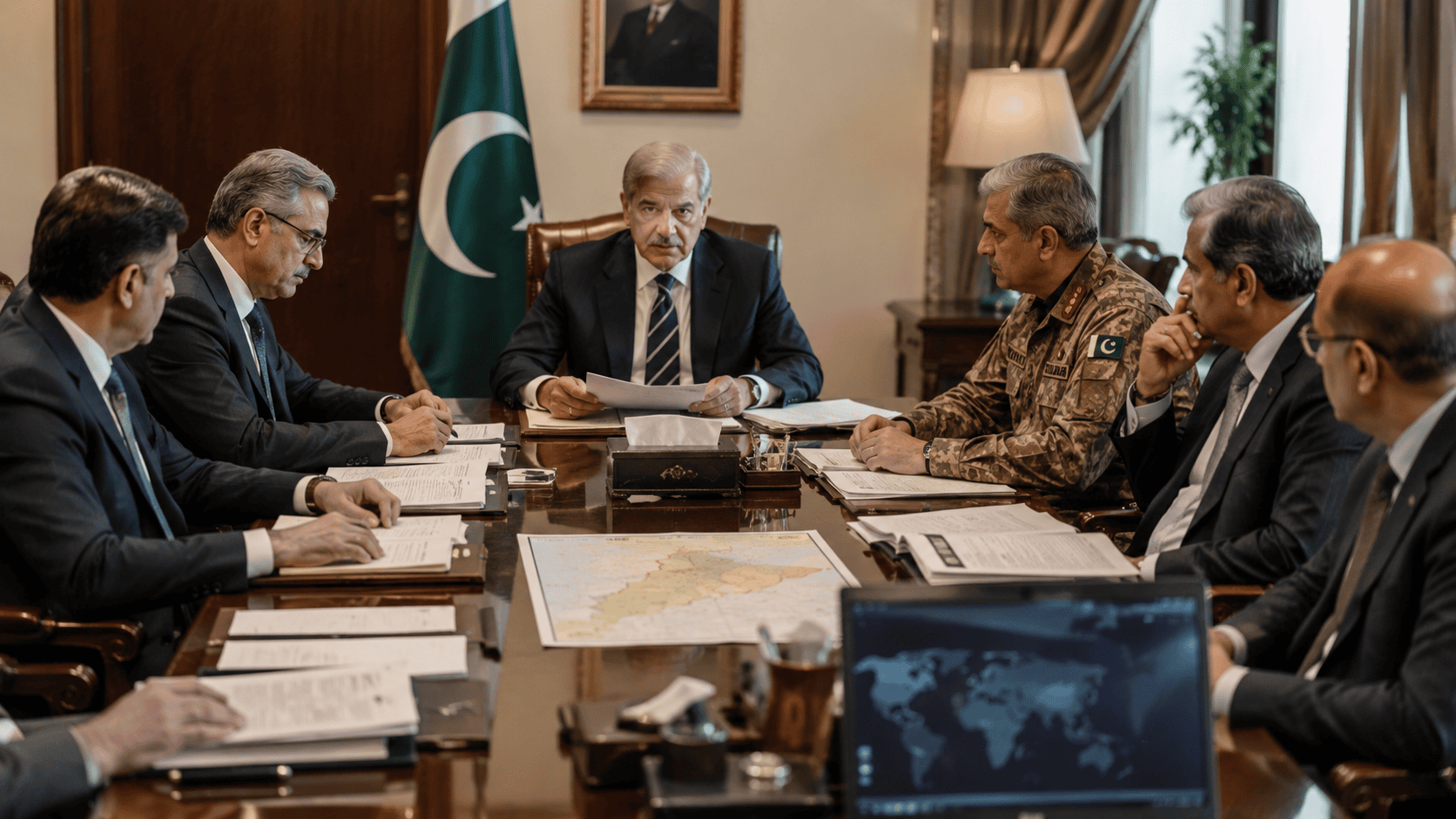
Amid rising regional tensions linked to the ongoing conflict between the United States and Iran, Pakistan Iran diplomacy has once again come into sharp focus following a high-level review meeting chaired by Deputy Prime Minister and Foreign Minister Senator Ishaq Dar. The meeting, held in Islamabad, brought together Foreign Secretary Ambassador Amna Baloch and senior officials from the Ministry of Foreign Affairs to assess the country’s diplomatic priorities and map out follow-up actions in a rapidly shifting regional landscape.
Thank you for reading this post, don't forget to subscribe!The gathering underscores how seriously Islamabad continues to treat its role in the broader Middle East crisis, a role that has placed Pakistan Iran diplomacy at the center of regional peace efforts for much of the past year.
Context Behind the Renewed Push for Pakistan Iran Diplomacy
The review meeting took place against a tense backdrop. Fighting between the United States and Iran has continued for multiple consecutive nights, with both sides exchanging attacks across the Middle East. According to statements from the US Central Command, American forces have carried out strikes on Iranian military coastal surveillance systems, air defense installations, and missile and drone storage sites. In response, Iranian officials have signaled that further escalation could follow if hostilities continue.
This latest flare-up comes despite an interim peace arrangement reached between the two sides in recent months, illustrating how fragile ceasefire arrangements in the region can be. The renewed fighting has also stoked concerns over the security of the Strait of Hormuz, one of the world’s most critical energy shipping corridors, contributing to rising global oil prices and broader economic uncertainty.
It is within this volatile environment that Pakistan Iran diplomacy has taken on added significance, with Islamabad positioning itself as a consistent voice for de-escalation and dialogue.
What Was Discussed at the Foreign Office Meeting
According to Pakistan’s Foreign Office, the meeting chaired by Dar focused on reviewing recent diplomatic engagements, discussing follow-up measures, and preparing for upcoming international commitments. Officials said the discussion also covered the importance of close inter-agency coordination and the effective implementation of ongoing diplomatic initiatives.
Dar reportedly emphasized the need for sustained coordination among relevant government departments to ensure that Pakistan’s foreign policy objectives, particularly those tied to regional peace efforts, remain consistent and well executed. This kind of structured internal review is a routine but important part of how Pakistan Iran diplomacy is managed at the institutional level, ensuring that public diplomatic statements are backed by coordinated action across ministries.
For broader background on the diplomatic architecture surrounding the conflict, readers can refer to official updates from Pakistan’s Ministry of Foreign Affairs.
Pakistan’s Broader Mediation Role in the Region
This latest review meeting is not an isolated event. Over the past several months, Pakistani officials, including Army Chief General Asim Munir and Foreign Minister Dar, have played an active role in facilitating communication between Washington and Tehran. Pakistan has hosted Iranian delegations in Islamabad, engaged directly with senior Iranian officials including Foreign Minister Abbas Araghchi, and contributed to diplomatic frameworks aimed at establishing a more durable ceasefire.
This consistent engagement has made Pakistan Iran diplomacy a subject of close attention among regional analysts, who view Islamabad’s position as a rare example of a country maintaining working relationships with multiple parties in a highly polarized conflict. Iranian officials have on several occasions publicly acknowledged what they described as Pakistan’s constructive and sincere mediation efforts, while Pakistani officials have consistently maintained that dialogue remains the only viable path to lasting regional stability.
Regional and Economic Stakes
The stakes tied to Pakistan Iran diplomacy extend well beyond bilateral relations. As a neighboring state with deep economic, cultural, and security ties to Iran, Pakistan has a direct interest in preventing further escalation. Continued instability in the Gulf region carries the risk of disrupting energy supplies that Pakistan itself depends on, while also threatening broader economic stability across South Asia through higher fuel costs and shipping disruptions.
Officials have also pointed to the risk of the conflict affecting international trade routes more broadly, given the strategic importance of the Strait of Hormuz to global energy markets. A prolonged disruption could contribute to inflationary pressures not just regionally but globally, making Pakistan’s diplomatic engagement a matter of both foreign policy and economic self-interest.
For readers seeking additional context on the economic dimensions of Gulf instability, the International Energy Agency provides regular assessments of how regional conflicts affect global energy markets.
Analysis: What Comes Next for Pakistan Iran Diplomacy
Looking ahead, the effectiveness of Pakistan Iran diplomacy will likely depend on whether renewed dialogue channels can be reopened between Washington and Tehran, and whether Islamabad can continue to maintain the trust of both sides. Pakistan’s approach so far has been characterized by a cautious, wait-and-watch posture combined with active behind-the-scenes engagement, a strategy that allows it to avoid direct entanglement in the conflict while still playing a meaningful facilitative role.
Analysts note that Pakistan’s continued willingness to host talks, relay messages, and engage both American and Iranian officials gives it a distinct diplomatic position compared to many other regional actors. However, sustaining this role will require careful balancing, particularly as the conflict shows signs of further escalation rather than resolution.
Read Also:PM Shehbaz, Saudi Crown Prince Discuss Iran-US Peace Deal, Stress Process Must Be Protected
Conclusion
As fighting between the United States and Iran continues to reshape the regional security landscape, Pakistan Iran diplomacy remains a closely watched thread in the broader story of Middle East stability. The latest review meeting chaired by Ishaq Dar reflects Islamabad’s continued commitment to structured, coordinated diplomatic engagement, even as the situation on the ground remains fluid. Whether this sustained effort translates into a durable de-escalation will depend heavily on developments in the days and weeks ahead, but Pakistan’s consistent presence at the diplomatic table underscores its determination to remain a stabilizing voice in a volatile region.
Get updates like this on WhatsApp before anywhere else — join our Channel [https://whatsapp.com/channel/0029Vb8fffCKrWQzEVBQ6v00]