
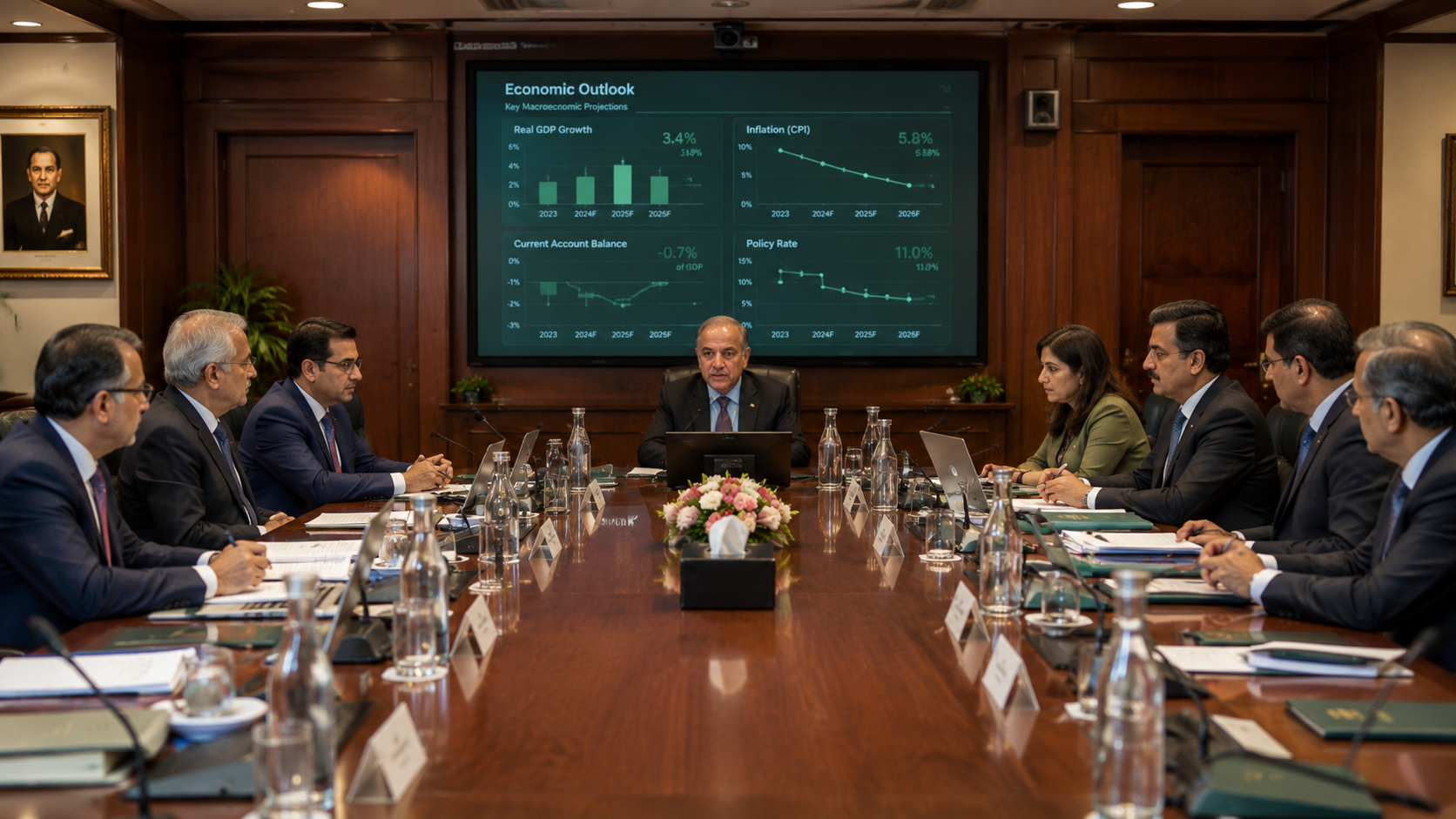
Pakistan’s federal government has taken a firm stance on financial transparency within its energy sector, rejecting a proposed gas utilities accounting exemption that two major state-run companies had been seeking to avoid technical insolvency. The decision, made during a high-level cabinet session, signals the government’s determination to enforce stricter financial reporting standards across state-owned enterprises, even as those companies grapple with enormous debt burdens.
This latest development places renewed focus on the financial health of Pakistan’s energy sector and raises important questions about how the country balances corporate transparency with the practical realities of a debt-strained utility industry.
What the Cabinet Committee Decided
The Cabinet Committee on State-Owned Enterprises, chaired by Finance Minister Muhammad Aurangzeb, met to review a proposal submitted by the Petroleum Division. The proposal had requested a gas utilities accounting exemption for Sui Northern Gas Pipelines Limited (SNGPL) and Sui Southern Gas Company (SSGC), specifically seeking relief from International Financial Reporting Standards IFRS-9 and IFRS-14.
Rather than approving the request outright, the committee instructed the Petroleum Division to hold further consultations with the Finance Division and the Ministry of Law and Justice before resubmitting a revised proposal. The decision effectively puts the gas utilities accounting exemption request on hold, pending additional review and legal clarity.
Why the Utilities Sought Relief
SNGPL and SSGC currently carry an enormous financial burden, with gas-sector circular debt estimated at approximately Rs3.44 trillion. The companies had argued that applying IFRS-9 and IFRS-14 in full would force them to recognize significant unrecoverable liabilities on their books, even though they maintain sufficient operational cash flow to continue functioning normally.
According to the Petroleum Division’s submission, compliance with these international standards could require impairment provisions running into hundreds of billions of rupees, a move that would substantially erode the companies’ equity positions. This is the core reasoning behind the push for a gas utilities accounting exemption — to shield the utilities from an accounting classification that could technically brand them as insolvent, despite continuing to deliver gas services across the country.
The Case Against the Exemption
Opposition to the proposed gas utilities accounting exemption came primarily from the Finance Ministry’s Central Monitoring Unit (CMU), the body responsible for overseeing state-owned enterprises under commitments tied to Pakistan’s arrangements with the International Monetary Fund. The CMU argued that granting such an exemption would run counter to the transparency principles enshrined in the State-Owned Enterprises Act of 2023.
Reports indicate that the finance minister directly addressed this tension during the meeting, noting that such exemptions could not be permitted while the SOE Act remains the governing framework for these companies. The CMU maintained that receivables linked to the ongoing circular debt resolution process could instead be properly disclosed through detailed footnotes in financial statements, preserving both transparency and an accurate picture of the companies’ financial standing.
Understanding IFRS-9 and IFRS-14
For readers unfamiliar with the technical background, IFRS-9 governs how companies classify and measure financial assets and liabilities, including requirements around expected credit losses and impairments. IFRS-14, meanwhile, addresses how regulated entities report deferral accounts tied to pricing mechanisms set by regulators. Both standards are designed to give investors and stakeholders a clearer, more accurate view of a company’s true financial position.
The debate over the gas utilities accounting exemption essentially boils down to a tension between short-term financial optics and long-term transparency. Applying these standards fully could make SNGPL and SSGC appear financially weaker on paper, even though their day-to-day operations remain functional. Yet skipping these standards altogether risks obscuring the true scale of the circular debt problem from regulators, investors, and international lenders.
Additional Governance Decisions on Gas utilities accounting exemption
Beyond the accounting question, the same cabinet committee session addressed several other governance matters. The panel rejected the nomination of two Petroleum Division officials to the boards of Pakistan Petroleum Limited and Saindak Metals Limited, citing concerns that the move was inconsistent with sound governance principles under the SOE framework. The committee reiterated that ministry representation on company boards should generally be limited to a single ex officio director, in line with the ownership and management policy for state enterprises.
In a separate but related move, the committee also reclassified the Small and Medium Enterprises Development Authority (SMEDA), removing it from the list of entities governed under the SOE framework — a decision reflecting the broader effort to streamline how different types of public bodies are categorized and regulated.
Broader Implications for Pakistan’s Energy Sector
The rejection of the gas utilities accounting exemption carries significant implications for how Pakistan’s energy sector debt crisis is managed going forward. With circular debt continuing to balloon, the government faces a difficult balancing act: enforcing rigorous accounting standards that satisfy international lenders and investors, while ensuring that state utilities are not driven into technical insolvency by paper losses that don’t necessarily reflect operational reality.
Analysts following Pakistan’s energy sector suggest that this decision may increase pressure on policymakers to accelerate the long-delayed Gas Sector Circular Debt Management Plan, which aims to structurally resolve the underlying debt issues rather than relying on temporary accounting workarounds. Until that broader plan takes effect, utilities like SNGPL and SSGC may continue to face financial reporting challenges tied to their mounting receivables.
What Happens Next on Gas utilities accounting exemption
The Petroleum Division has now been tasked with revising its proposal in coordination with the Finance Division and legal authorities. Any renewed request for a gas utilities accounting exemption will need to address the transparency concerns raised by the CMU while still offering some practical relief to the affected companies.
Given the scale of the circular debt problem and the sensitivity of Pakistan’s ongoing engagement with international financial institutions, this issue is likely to remain a recurring topic of debate in the coming months as the government works toward a long-term resolution.
Read Also: KP CM Orders Review of Controversial MPAs Privileges Bill Amid Public Backlash
Conclusion
The decision to withhold a gas utilities accounting exemption for now reflects a broader commitment within Pakistan’s government to strengthen financial governance across state-owned enterprises. While the move may create short-term reporting challenges for SNGPL and SSGC, it also signals a shift toward greater transparency and accountability — principles that will likely shape how Pakistan manages its energy sector debt crisis for years to come.
Securities and Exchange Commission of Pakistan
International Monetary Fund — Pakistan
Ministry of Finance, Government of Pakistan
Recent News
- AJK Election Results Trigger Coalition Rift as PPP Alleges Rigging, PML-N Claims Sweeping Win NEW
- AJK Police Say Banned JAAC Has Become an Armed Group Attacking Police and Security Forces NEW
- AJK Protest Spirals: Four Police Officers Martyred in Violent Clashes NEW
- AJK Security Forces Request Signals Deepening Unrest Ahead of Elections NEW
- Allama Nasir Madni Heart Attack Rumours Denied: What Really Happened NEW
- Apna Ghar Scheme 2026: Pakistan’s Biggest Housing Dream Is Finally Being Unlocked for Millions NEW
- Armed Forces Committed to Eradicating All Forms of Terrorism: Field Marshal NEW
- Asim Munir Turkey Visit Strengthens Pakistan-Turkiye Defence Partnership NEW
- Ashura 2026 Pakistan Confirmed for June 26 — Moon Not Sighted, KP Declares Holiday NEW
- Avengers Doomsday Trailer Sends Marvel Fans Into a Frenzy NEW