

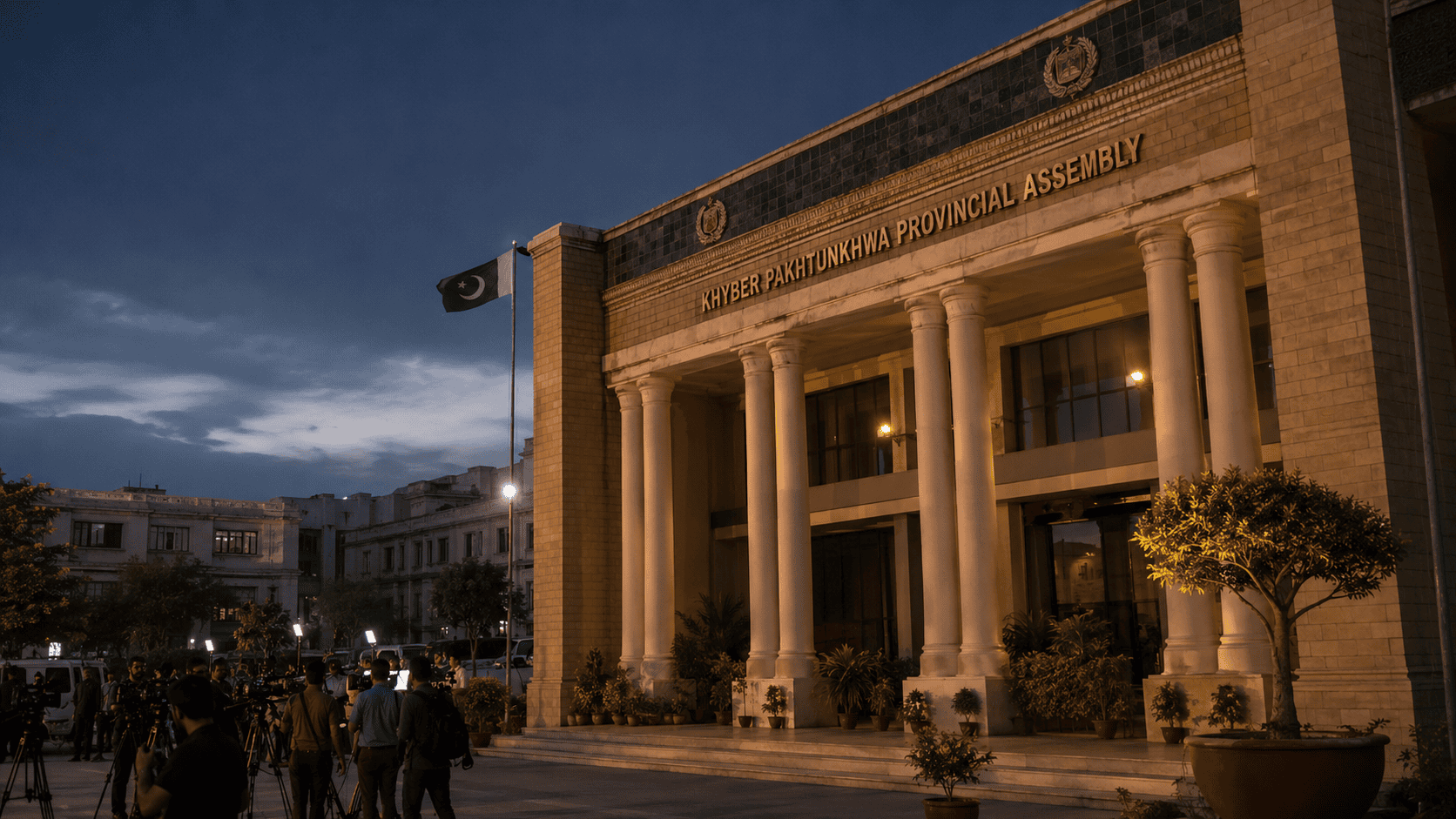
KP CM Orders Review of the province’s newly amended KP MPAs privileges bill, following days of intense public criticism and mounting pressure from journalist bodies and opposition parties. The move comes as the controversial legislation, which expands benefits for lawmakers while introducing tighter restrictions on media coverage of assembly proceedings, continues to draw sharp condemnation across Pakistan.
Thank you for reading this post, don't forget to subscribe!Background of the KP MPAs Privileges Bill Controversy
KP CM Orders Review on KP MPAs privileges bill was originally passed by the provincial cabinet earlier this year as part of a broader legislative package covering lawmakers’ salaries, allowances, and immunities. However, reports indicate the draft was altered after being forwarded to the provincial assembly, with additional clauses added that were not part of the initial cabinet-approved version. It was only in recent days, as excerpts of the enacted laws resurfaced on social media, that public attention turned sharply toward the details of the legislation.
Central to the uproar are provisions in the KP MPAs privileges bill that grant lawmakers official passports, toll tax exemptions, arms licenses, and free accommodation at government guest houses. Critics have also raised concerns over clauses extending certain lifetime benefits to the spouses of assembly members, though the CM’s spokesperson has publicly disputed some of the more sensational claims circulating online, describing them as exaggerated or inaccurate.
Chief Minister’s Response to the Privileges Bill Backlash and KP CM Orders Review
Addressing a meeting of the provincial cabinet this week, CM Afridi acknowledged that the amendments to the KP MPAs privileges bill had “come under sustained criticism in the media over the past two to three days.” He confirmed that he had met with KP Assembly Speaker Babar Saleem Swati and directed him to convene a meeting of parliamentary leaders from all represented parties to reconsider the contested provisions.
The Chief Minister expressed hope that the disputed clauses and KP CM Orders Review of the KP MPAs privileges bill would be revisited in line with public sentiment, stating that all future legislative steps would be guided by public interest. He further defended the KP Assembly as, in his words, the country’s only genuinely elected legislature, and pushed back against what he described as “false propaganda” targeting the provincial government.
Despite the CM’s conciliatory tone, not all government officials have accepted that the bill requires major revision. Provincial Minister for Information Shafi Jan, addressing a joint press conference with opposition lawmakers, argued that “unnecessary confusion” had been created around the legislation and that several claims circulating on social media had no factual basis in the actual text of the law.
Press Freedom Concerns Tied to the Legislation on KP CM Orders Review
A significant part of the backlash surrounding the KP CM Orders Review on KP MPAs privileges bill stems from provisions affecting journalists covering assembly proceedings. According to multiple reports, the amended law empowers the Assembly Speaker to restrict which journalists may cover legislative sessions and to prohibit the publication or broadcast of certain proceedings before they are formally tabled. Violations reportedly carry penalties including imprisonment of up to six months and fines running into hundreds of thousands of rupees, with even harsher penalties proposed for reports deemed “distorted” or “misleading.”
Journalist unions and opposition politicians have condemned these clauses as a direct threat to press freedom in the province. Federal Interior Minister of State Talal Chaudhry publicly criticized the ruling party over the legislation, accusing it of promoting a “VIP culture” while simultaneously curbing independent media coverage. Similarly, the Awami National Party’s KP chapter described the law as an attack on constitutional freedoms, alleging it was designed to discourage scrutiny of the provincial government’s performance. It should be noted that these specific criminal penalty provisions have not yet been formally confirmed as being reconsidered under the CM’s review order, and the situation remains developing.
Political and Public Reaction on KP CM Orders Review
The controversy has placed the ruling party under considerable political pressure, with rival parties seizing the opportunity to question the provincial government’s priorities and KP CM Orders Review. Critics argue that expanding lawmaker privileges is out of step with pressing public concerns such as healthcare, education, and infrastructure development in the province. Supporters within the government, however, maintain that many of the criticized provisions have been misrepresented and that the legislation includes standard administrative and security-related allowances comparable to those in other provinces.
For readers seeking the original legislative text, the Khyber Pakhtunkhwa Assembly maintains official records of passed bills, while national coverage of the controversy can be found through outlets such as the Human Rights Commission of Pakistan, which regularly monitors press freedom developments, and the Committee to Protect Journalists, which tracks media restriction cases globally. Readers can also refer to the Pakistan Institute of Legislative Development and Transparency (PILDAT) for independent analysis of provincial legislation and parliamentary conduct.
What Happens Next
The next steps in the KP CM Orders Review on KP MPAs privileges bill saga will depend heavily on the outcome of the parliamentary leaders’ meeting called by Speaker Swati. If cross-party consensus is reached, amendments could be introduced to soften or remove the most contested clauses, particularly those affecting media freedoms. However, if the review process stalls or produces only cosmetic changes, pressure from journalist associations and opposition parties is likely to intensify further.
Analysts suggest that how the provincial government handles KP CM Orders Review will be closely watched as a test of its responsiveness to public accountability demands, particularly given the sensitivity around press freedom issues in Pakistan more broadly.
Read Also:Pakistan Abraham Accords Position Unwavering: Foreign Office Firmly Rejects Any Policy Shift
Conclusion
KP CM Orders Review into the KP MPAs privileges bill reflects the scale of public and media pressure currently facing the Khyber Pakhtunkhwa government. While officials have offered mixed messages — some defending the legislation, others promising reconsideration — the coming days of parliamentary consultation will likely determine whether meaningful changes are made or whether the controversy continues to simmer. As this remains a developing story, further official clarifications are expected as the review process unfolds.