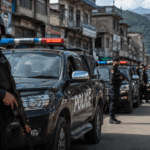

Governor’s rule in KP is now in effect. On Sunday, 11 October 2026, the federal government imposed an emergency in Khyber Pakhtunkhwa after President Asif Ali Zardari approved a recommendation from the federal cabinet. The decision follows weeks of rising tension between Islamabad and the province’s elected government, and it places one of Pakistan’s most sensitive regions under a very different system of administration.
The announcement has triggered strong reactions across the political spectrum. Supporters call it a necessary response to a deteriorating security situation. Critics call it an attack on provincial autonomy. This article explains what has been announced, the constitutional basis, the reactions so far, and what the decision could mean for ordinary people.
What Happened: Emergency and Governor’s Rule in KP Explained
Prime Minister Shehbaz Sharif chaired an emergency meeting of the federal cabinet on Sunday to review the security situation in Khyber Pakhtunkhwa. Afterwards, the Prime Minister’s Office sent advice to the President to proceed under the Constitution. The President’s House confirmed that Mr Zardari had signed the summary, and the proclamation says the measures take immediate effect.
According to official statements and press reports, the cabinet’s position was that the provincial administration had not engaged adequately in counter-terrorism efforts at a time of serious militant violence. The Prime Minister also said political differences with the provincial government would not be allowed to undermine the country’s economic stabilisation. He condemned recent attacks in Khyber Pakhtunkhwa and Balochistan and urged Afghanistan to act against militant groups.
Under the proclamation, the federal government can direct the provincial governor to exercise some or all of the functions of the provincial government. In practice, governor’s rule in KP shifts day-to-day executive authority away from the elected cabinet. The federal government has also appointed a new chief secretary for the province, Dr Muhammad Fakhr Alam Irfan, with immediate effect.
Constitutional Basis: Articles 232 and 234
The decision rests on two provisions of the Constitution of Pakistan, which is available through the National Assembly’s official website.
Article 232: Proclamation of Emergency
Article 232 allows the President to proclaim an emergency if a grave situation threatens the security of Pakistan, or any part of it, through war, external aggression, or internal disturbance beyond a provincial government’s power to control. Related provisions, such as Article 233, allow certain fundamental rights to be suspended during an emergency. Reports on this announcement have not said that such a suspension has been ordered.
Article 234: Failure of Constitutional Machinery
Article 234 deals with governor’s rule when constitutional machinery in a province is considered to have failed. This is the provision behind governor’s rule in KP. The proclamation also refers to a report submitted by the provincial governor about the functioning of the provincial government.
Both provisions are subject to constitutional oversight and procedures, including scrutiny by Parliament. The full text can be consulted through the Government of Pakistan portal and the President’s Office.
Why the Federal Government Acted
Security Concerns
The proclamation states that terrorist activity in the province has reached an extraordinary level. It cites attacks on government installations, critical infrastructure and law enforcement agencies. Khyber Pakhtunkhwa has borne the brunt of militant violence for years, and the federal government says a more coordinated approach is needed.
Political and Economic Friction
The security argument sits alongside a wider political dispute. The provincial government, led by the Pakistan Tehreek-e-Insaf (PTI), has opposed Islamabad’s approach to security policy and has argued that the province should have a meaningful say in decisions affecting it. The Prime Minister, for his part, linked the dispute to economic stability. These overlapping disagreements explain why governor’s rule in KP is being discussed as both a security measure and a political event.
Reactions to Governor’s Rule in KP
Reactions have been sharp and divided.
Provincial government: Chief Minister Sohail Afridi had said earlier that he would not accept what he called an “illegal move” such as governor’s rule or an emergency.
PTI leadership: PTI Chairman Barrister Gohar Ali Khan rejected the emergency, describing it as a “grave political mistake” and an undemocratic step that the people would not accept.
Governor: Governor Faisal Karim Kundi said the people of the province welcomed the proclamation, adding that they want peace, stability and prosperity instead of unrest and insecurity.
Federal side: Interior Minister Mohsin Naqvi and Minister of State Talal Chaudhry briefed the President on the cabinet’s decision before the proclamation was issued.
Many commentators describe the relationship between the Centre and the PTI as a widening rift. They have also warned that governor’s rule in KP could harden positions on both sides instead of easing them.
Background: A Long Rift Between Islamabad and Peshawar
Relations between the federal government and the PTI-led province have been strained for some time. Disputes over security operations, funds, and political strategy have repeatedly surfaced in public. Khyber Pakhtunkhwa also has a long record of tension over how counter-terrorism decisions are made and who should lead them.
Governor’s rule is not new in Pakistan’s history, and each time it has been controversial. Its supporters argue that it restores order when provincial governance is under severe strain. Its critics argue that it can weaken elected institutions and deepen mistrust. That history explains the intensity of the current debate.
Analysis/What This Means: Impact of Governor’s Rule in KP
This section is analysis based on publicly reported facts. It is not a statement of fact about future events.
Governance and Public Services
The immediate practical question is how administration will continue. With the governor empowered and a new chief secretary in place, decisions on policing, development spending and service delivery may follow a different chain of command. Residents will watch whether schools, hospitals and local offices keep functioning smoothly during the transition.
The Political Landscape
For the PTI, the move is a major test. The party can challenge the decision politically and legally, and early signs suggest it will. For the federal government, the risk is that governor’s rule in KP is read as a political step rather than a security measure, which could damage public trust even if its intentions are security-driven.
Security Operations
The federal government says the change will allow tougher and more coordinated action against militancy. Whether it does depends on cooperation from local police, administration and communities. Experts often note that counter-terrorism succeeds best when local institutions are on board, so the federal government will need to build that cooperation quickly.
Legal and Constitutional Questions
The scope and duration of the proclamation are likely to be examined by Parliament and potentially by the courts. Any legal challenge will focus on whether the constitutional conditions for Articles 232 and 234 were properly met. Lawyers and constitutional experts will follow these arguments closely.
What Happens Next
Several developments are worth watching in the coming days:
- Parliamentary scrutiny: how and when the proclamation is presented to Parliament.
- Court petitions: whether the PTI or others challenge the decision before the courts.
- Provincial assembly: how the assembly and its members respond.
- Security situation: whether the pace of militant attacks changes.
- Public response: whether protests or demonstrations grow in size or remain peaceful.
Official updates will be available through the Prime Minister’s Office and the Khyber Pakhtunkhwa government portal. Detailed reporting is also available from Dawn.
Read More:Bilawal Orders PPP Lahore Restructuring to Revive Party in Punjab
Bilawal PTI Warning: Change Course or Lose K-P
Conclusion: A Defining Test for Governor’s Rule in KP
The imposition of an emergency and governor’s rule in KP is one of the most consequential political and constitutional developments in Pakistan this year. The federal government says it acted to protect lives and stabilise the province. The PTI-led leadership says the step is unconstitutional and politically motivated. Both claims will be tested in Parliament, in the courts, and in the daily lives of the province’s residents.
What matters most now is that security improves, that essential services continue without disruption, and that the dispute is handled through lawful and peaceful means. Governor’s rule in KP will be judged not by the announcement, but by what it delivers in the weeks ahead.
Get updates like this on WhatsApp before anywhere else — join our Channel [https://whatsapp.com/channel/0029Vb8fffCKrWQzEVBQ6v00]
Recent News
- AJK Election Results Trigger Coalition Rift as PPP Alleges Rigging, PML-N Claims Sweeping Win NEW
- AJK Police Say Banned JAAC Has Become an Armed Group Attacking Police and Security Forces NEW
- AJK Protest Spirals: Four Police Officers Martyred in Violent Clashes NEW
- AJK Security Forces Request Signals Deepening Unrest Ahead of Elections NEW
- Allama Nasir Madni Heart Attack Rumours Denied: What Really Happened NEW
- Apna Ghar Scheme 2026: Pakistan’s Biggest Housing Dream Is Finally Being Unlocked for Millions NEW
- Armed Forces Committed to Eradicating All Forms of Terrorism: Field Marshal NEW
- Asim Munir Turkey Visit Strengthens Pakistan-Turkiye Defence Partnership NEW
- Ashura 2026 Pakistan Confirmed for June 26 — Moon Not Sighted, KP Declares Holiday NEW
- Avengers Doomsday Trailer Sends Marvel Fans Into a Frenzy NEW