
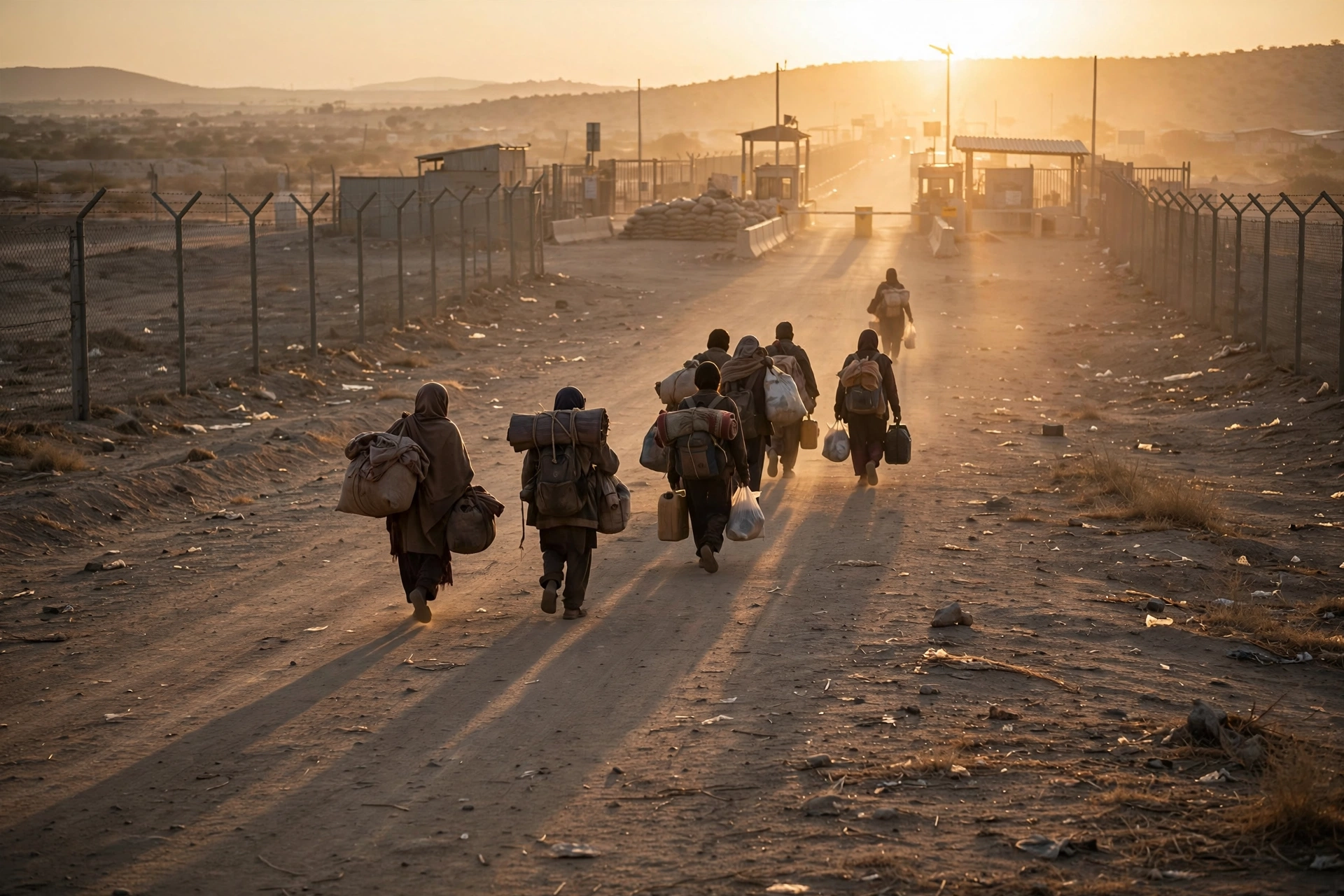
The scale of Afghan deportation from Pakistan has reached a new milestone, with authorities confirming that 2.59 million Afghan nationals have been returned to Afghanistan since the government launched its nationwide repatriation drive in October 2023. The latest figures come as police in Khyber Pakhtunkhwa detained 50 more undocumented Afghans during fresh raids in Charsadda and Mohmand districts, underscoring how the crackdown continues to intensify nearly three years after it began.
The Scale of Afghan Deportation from Pakistan
The Afghan deportation from Pakistan campaign began in October 2023, when the government announced that all foreign nationals lacking valid visas or registration documents would be required to leave the country or face forced removal. At the time, an estimated 3.8 to 4.4 million Afghans were living in Pakistan, many of whom had resided there for decades — some having never set foot in Afghanistan themselves.
Since then, the pace of Afghan deportation from Pakistan has fluctuated but never fully paused. Officials say more than 146,000 Afghans were deported in 2026 alone, adding to over a million forced returns recorded in 2025. According to United Nations figures, daily returns through crossing points such as the Hamza Baba transit point in Landi Kotal have at times exceeded 10,000 people, nearly triple the rate recorded earlier this year, after authorities set fresh deadlines for Afghan nationals to leave the country.
Latest Raids in Charsadda and Mohmand
The newest phase of Afghan deportation from Pakistan enforcement played out this week in Khyber Pakhtunkhwa, where local police detained 50 undocumented Afghan nationals during coordinated raids in Charsadda and Mohmand districts. These operations form part of a broader, ongoing nationwide sweep in which local law enforcement agencies have been tasked with identifying, detaining and processing foreign nationals without valid documentation for transfer to holding centres ahead of their return to Afghanistan.
Such raids have become a regular feature of the Afghan deportation from Pakistan policy, with authorities citing the Foreigners Act of 1946 as the legal basis for detaining and removing undocumented individuals. Officials maintain that the operations are conducted in an organised manner under government supervision.
Why Pakistan Launched the Deportation Campaign
Pakistani officials have consistently framed Afghan deportation from Pakistan as a national security necessity, pointing to a rise in terrorist attacks, including suicide bombings, which authorities have linked to Afghan nationals in some cases. The government has also accused Afghanistan’s Taliban administration of allowing militant groups, including the Tehrik-e-Taliban Pakistan, to operate from Afghan soil — a claim the Taliban has repeatedly denied.
Relations between Islamabad and Kabul have deteriorated sharply since border clashes erupted in late 2025, further accelerating the pace of Afghan deportation from Pakistan. Pakistan closed several key border crossings during the height of the conflict before reopening them this year, largely to facilitate continued deportations rather than routine trade and travel.
International Concern Over Afghan Deportation from Pakistan
The Afghan deportation from Pakistan campaign has drawn sustained criticism from international organisations. The United Nations High Commissioner for Refugees has urged Pakistan to exempt vulnerable groups from deportation, including women heading households, students, journalists, human rights defenders and religious minorities, citing serious risks they may face if returned to Afghanistan under Taliban rule.
Human Rights Watch has also documented what it describes as abusive raids and arbitrary detentions accompanying the deportation drive, noting that some individuals interviewed reported being detained while shopping or seeking work, with belongings confiscated during arrests. The organisation has said Pakistan’s forced returns may raise concerns under international obligations against returning people to situations of serious risk.
Pakistani leadership, meanwhile, has defended its record. In a statement marking World Refugee Day, Prime Minister Shehbaz Sharif noted the country’s decades-long history of hosting Afghan refugees since 1979, while calling for greater international support in managing the humanitarian burden associated with large-scale displacement.
Impact and Analysis
The continued pace of Afghan deportation from Pakistan carries significant humanitarian implications on both sides of the border. Afghanistan, already grappling with a fragile economy and constrained public services under Taliban governance, faces growing pressure to absorb hundreds of thousands of returnees. Aid agencies have repeatedly warned that reintegration capacity remains severely limited, raising concerns about the wellbeing of families being returned to conditions many had originally fled.
For Pakistan, the policy reflects an attempt to balance domestic security concerns with its historical role as one of the world’s largest refugee-hosting nations. However, rights groups argue that the manner in which some raids and detentions are conducted risks undermining due process protections for individuals who may have legitimate claims to remain, including those with expired but previously valid registration documents.
Read Also: Pakistan Undocumented Afghans Face Arrest as New Deadline Looms
Conclusion
As Afghan deportation from Pakistan approaches the 2.6 million mark, the policy shows no signs of slowing, with fresh detentions in Charsadda and Mohmand this week reflecting the ongoing scale of enforcement nationwide. With international bodies continuing to call for safer and more voluntary return processes, and Islamabad maintaining its security-driven rationale, the coming months are likely to keep this policy at the centre of regional humanitarian and diplomatic discussions.
UNHCR Pakistan Operational Data Portal
Human Rights Watch — Pakistan Coverage
Get updates like this on WhatsApp before anywhere else — join our Channel👉[https://whatsapp.com/channel/0029Vb8fffCKrWQzEVBQ6v00]
Recent News
- AJK Election Results Trigger Coalition Rift as PPP Alleges Rigging, PML-N Claims Sweeping Win NEW
- AJK Police Say Banned JAAC Has Become an Armed Group Attacking Police and Security Forces NEW
- AJK Protest Spirals: Four Police Officers Martyred in Violent Clashes NEW
- AJK Security Forces Request Signals Deepening Unrest Ahead of Elections NEW
- Allama Nasir Madni Heart Attack Rumours Denied: What Really Happened NEW
- Apna Ghar Scheme 2026: Pakistan’s Biggest Housing Dream Is Finally Being Unlocked for Millions NEW
- Armed Forces Committed to Eradicating All Forms of Terrorism: Field Marshal NEW
- Asim Munir Turkey Visit Strengthens Pakistan-Turkiye Defence Partnership NEW
- Ashura 2026 Pakistan Confirmed for June 26 — Moon Not Sighted, KP Declares Holiday NEW
- Avengers Doomsday Trailer Sends Marvel Fans Into a Frenzy NEW